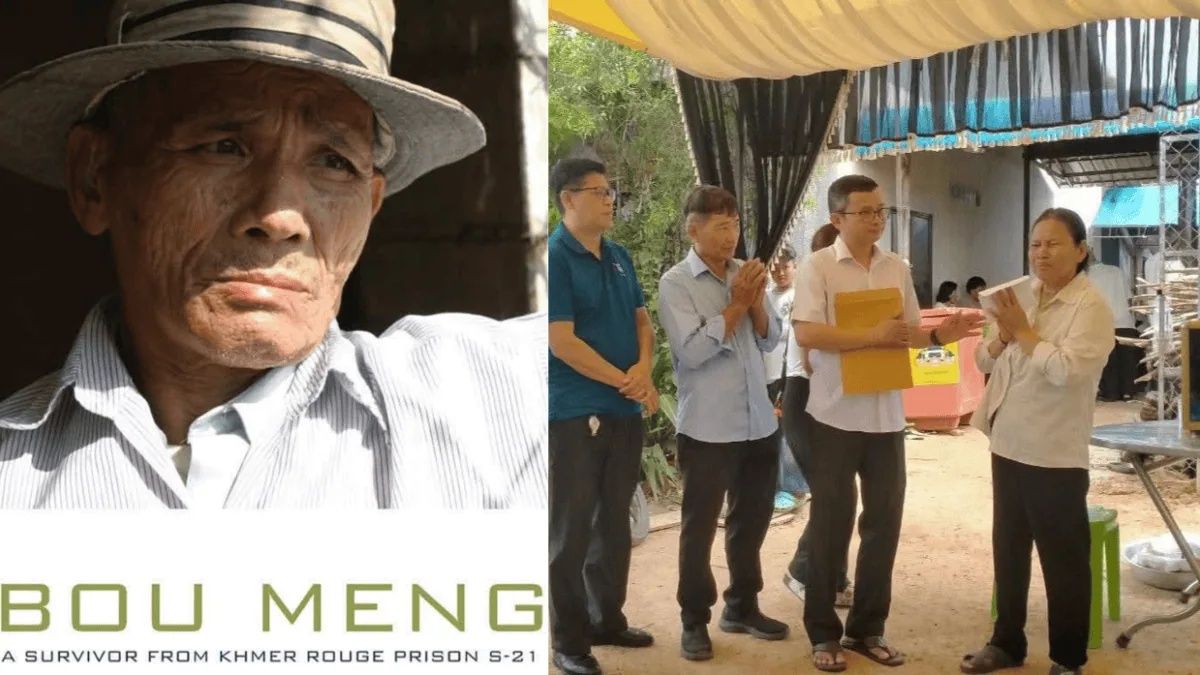
Cambodia has lost a rare living witness to one of the twentieth century's darkest chapters. Bou Meng, one of merely seven documented survivors of the Khmer Rouge's S-21 prison complex—formally known as Tuol Sleng—died on Friday, August 14, 2026, at the age of 85. The Tuol Sleng Museum announced his passing with recognition of his singular role as a historical bearer of testimony to crimes that few lived to recount.
The detention centre, which operated from 1975 to 1979 under the command of Kaing Guek Eav, known as Comrade Duch, processed thousands of prisoners. Of the estimated 12,000 to 20,000 people held there, only a handful survived interrogation and torture to witness the regime's collapse. Bou Meng's longevity as a survivor—both during the ordeal itself and across the decades that followed—made him an irreplaceable source of evidence about what occurred within those walls. The museum's statement acknowledged that his death represents the loss of "a crucial historical witness" whose lived experience could never be replicated in records or documents alone.
Bou Meng's story of survival hinged on an accident of fate that preserved him when most perished. Imprisoned alongside his wife in 1977, both underwent the systematic torture and interrogation that S-21 inflicted on detainees. Their children were torn from them and sent to a separate camp for young prisoners. Unlike many others deemed disposable, Bou Meng possessed a skill that his captors valued: he was a painter. This technical ability, rather than any mercy on the part of the regime, kept him alive. Guards recognised his usefulness and deployed him to create propaganda artwork and documentation. In the machinery of the Khmer Rouge, utility meant the difference between execution and another day of survival.
His wife and children never returned. This personal devastation—the unknowable loss of loved ones—was a wound Bou Meng carried for nearly fifty years. The psychological weight of being a sole survivor among one's own family members added another dimension to the trauma that characterised the lives of genocide survivors. Yet from this devastation, his testimony would eventually emerge as a cornerstone of justice efforts decades later.
The Extraordinary Chambers in the Courts of Cambodia (ECCC), established in 2006 as a hybrid tribunal to prosecute surviving Khmer Rouge leaders, benefited immensely from Bou Meng's willingness to testify. He appeared as a witness in the trial of Comrade Duch, the commandant directly responsible for S-21's operations and the abuse of prisoners within it. His first-hand accounts of conditions, interrogation methods, and the fates of those detained provided the tribunal with crucial corroboration from someone who had endured the system himself. This testimony carried weight precisely because it came from one of the vanishingly few who could speak to the interior reality of the prison.
Beyond his role in courtroom proceedings, Bou Meng became a living archive for the Tuol Sleng Museum, which now operates as a memorial and educational institution on the grounds of the former prison. In his final years, he dedicated considerable energy to meeting visitors, many of them young Cambodians, international scholars, and tourists seeking to understand the genocide. Through his presence and narration, he transformed the museum from a static collection of photographs and documents into a space where history could be encountered through human testimony.
His decision to engage in this public-facing work, despite the profound pain involved in revisiting trauma, reflected a deliberate choice to ensure that future generations would grasp not merely the abstract facts of the Khmer Rouge period but the lived reality of its victims. In an era where genocide denial and historical revisionism pose ongoing threats, his voice served as an inoculation against forgetting or minimising what occurred.
The death of Bou Meng underscores the urgency facing historians, justice advocates, and educators across Southeast Asia. With each passing of a genocide survivor, the direct link to eyewitness memory weakens. Oral testimony, once gone, cannot be fully replaced by archives or secondary sources. The regional ramifications extend beyond Cambodia; survivors of similar atrocities in Vietnam, East Timor, and other nations face the same mortality that now claims another irreplaceable voice.
For Malaysia and the broader Southeast Asian region, Bou Meng's life and death carry implications for how societies reckon with mass violence and preserve historical truth. His example raises questions about how nations memorialise trauma, support survivors, and ensure that educational institutions continue work begun by those who lived through horror. The Tuol Sleng Museum must now find ways to sustain its educational mission without the presence of survivors who can testify from personal experience.
Bou Meng's legacy rests not only on what he survived but on what he chose to do with his survival. Rather than withdrawing into private grief, he became a custodian of collective memory, offering his painful knowledge to those who had not lived through the Khmer Rouge terror. His passing marks the end of an era in which the genocide could be witnessed through the voice of those who endured it—a transition that demands renewed commitment from institutions, governments, and citizens to preserve and transmit the lessons his life embodied.

