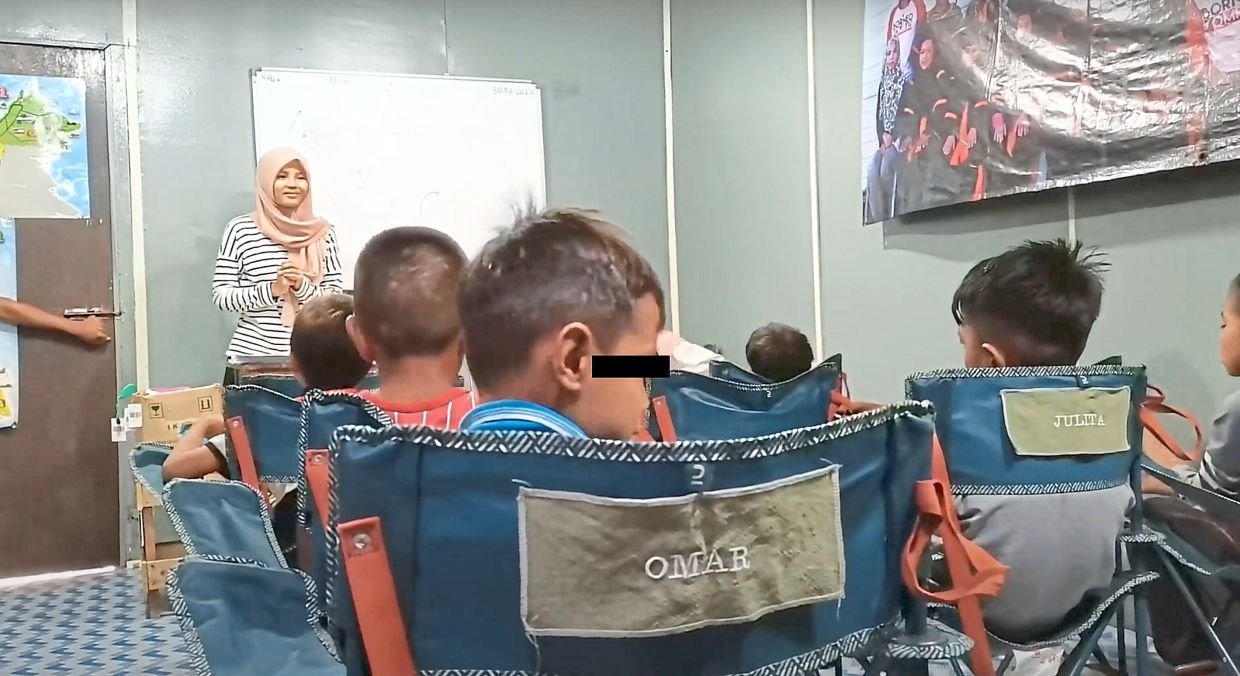
The question is deceptively simple yet profoundly consequential: should a child born and raised in Malaysia, attending Malaysian schools and knowing no other home, be denied citizenship simply because their parents were not married at the time of birth? A recent Court of Appeal ruling has brought this thorny constitutional issue into sharp focus, highlighting tensions between legal formalism and the lived reality of families in modern Malaysia.
The court's decision in two separate cases upheld a strict reading of Malaysia's Federal Constitution regarding citizenship. Both children in question were born in Malaysia to Malaysian fathers and foreign mothers from Indonesia and the Philippines respectively. Despite DNA confirmation establishing their biological paternity beyond doubt, the Court of Appeal ruled that because the parents lacked a legal marriage certificate, the children's citizenship status must follow their mothers' nationality. The mothers had departed Malaysia when the children were very young, leaving them to be raised entirely by their Malaysian fathers with no meaningful connection to their mothers' countries of origin.
This interpretation reveals a critical gap between constitutional intent and contemporary circumstance. The citizenship provisions in question were drafted decades ago, in an era when establishing paternity was difficult and marriage was the primary mechanism for legitimising family relationships. Modern DNA technology has fundamentally altered this landscape, making biological paternity verifiable with near-perfect accuracy. Yet Malaysian law continues to treat the marriage certificate as the decisive legal artifact, essentially rendering biological confirmation irrelevant in cases where wedlock is absent. The question now facing Malaysian society is whether this legal fiction serves any meaningful purpose in 2026.
Child rights advocates and civil society organisations have responded with alarm to the ruling's implications. The Development of Human Resources for Rural Areas (DHRRA) points out that Malaysia stands alongside only one other nation in denying citizens the ability to automatically confer nationality on their children born outside wedlock. This places Malaysia in a shrinking minority of countries that have failed to modernise their citizenship frameworks to reflect evolving family structures and gender equality principles. The argument advanced by these organisations centres on the principle that children should not be penalised for circumstances entirely beyond their control or agency.
Historically, many legal systems have treated children born outside marriage as having diminished rights, affecting their standing in inheritance, family name, and legal recognition. However, over recent decades, there has been a pronounced global shift away from such stigmatisation. The underlying logic is straightforward: while the law serves many purposes, including deterrence of wrongdoing by adults, it should not visit lifelong consequences upon children for adult choices. A person who commits a traffic violation receives a fine; the consequence terminates. Someone who evades taxes faces a penalty that can be paid. But a child denied citizenship carries that burden indefinitely, affecting every aspect of their legal existence and life prospects.
The distinction between marriage and citizenship deserves closer examination. Marriage is fundamentally a voluntary commitment between consenting adults, a choice that reflects personal circumstances and values. Citizenship, by contrast, is not chosen—it is conferred and determines the fundamental legal identity and belonging of a human being. These two institutions serve entirely different purposes and should not be conflated. To deny citizenship based on marital status essentially treats the legal relationship between parents as more important than the child's actual connection to a country, their presence within it, and their practical integration into its society.
The practical consequences of statelessness or ambiguous citizenship status are severe and well-documented. Children in such situations face barriers to formal education, healthcare access, and legitimate employment. They cannot easily open bank accounts, obtain driving licenses, or secure housing through regular legal channels. As these children mature into adulthood, they remain marginalised, trapped in informal economies and vulnerable to exploitation. The social costs extend beyond individual hardship to encompass lost human potential, reduced tax bases, and communities weakened by the exclusion of some of their members. From a purely pragmatic standpoint, Malaysia benefits from ensuring every child born and raised within its borders has secure legal status.
This is not a novel issue emerging suddenly in 2026. It has surfaced repeatedly across different contexts—foundlings whose parentage is unclear, children born in remote indigenous communities where birth registration infrastructure is inadequate, undocumented births in marginalised communities. The specific circumstances vary, but the core pattern remains consistent: children find themselves in legal limbo through mechanisms entirely beyond their comprehension or influence. Each case represents a potential lifetime of bureaucratic struggle and social disadvantage.
Parliament has already demonstrated willingness to reform citizenship law when circumstances warrant. In 2024, the Constitution was amended to allow Malaysian mothers to automatically pass citizenship to children born overseas, a change that Parliament recognised as necessary to align laws with contemporary values of gender equality and practical family realities. That precedent suggests the institution is capable of reflecting upon its citizenship framework and updating provisions that no longer serve their intended purpose. The question is whether Parliament possesses the political will to extend similar recognition to these children.
The fundamental query underlying this debate transcends legal technicality: does this child belong in Malaysia? For a child who has spent their entire life here, formed their earliest memories here, developed their identity within Malaysian culture and society, the answer seems self-evident. Yet the law currently provides a different answer, privileging a documentary certificate over biological reality, actual residence, and demonstrated belonging. In asking whether Malaysia can do better by its children, one is not arguing for reckless disregard of borders or citizenship standards. Rather, the argument is that a child raised in Malaysia with a confirmed Malaysian parent should not face statelessness or legal exclusion based on administrative circumstances their parents created before birth. That would represent both justice and practical wisdom.

