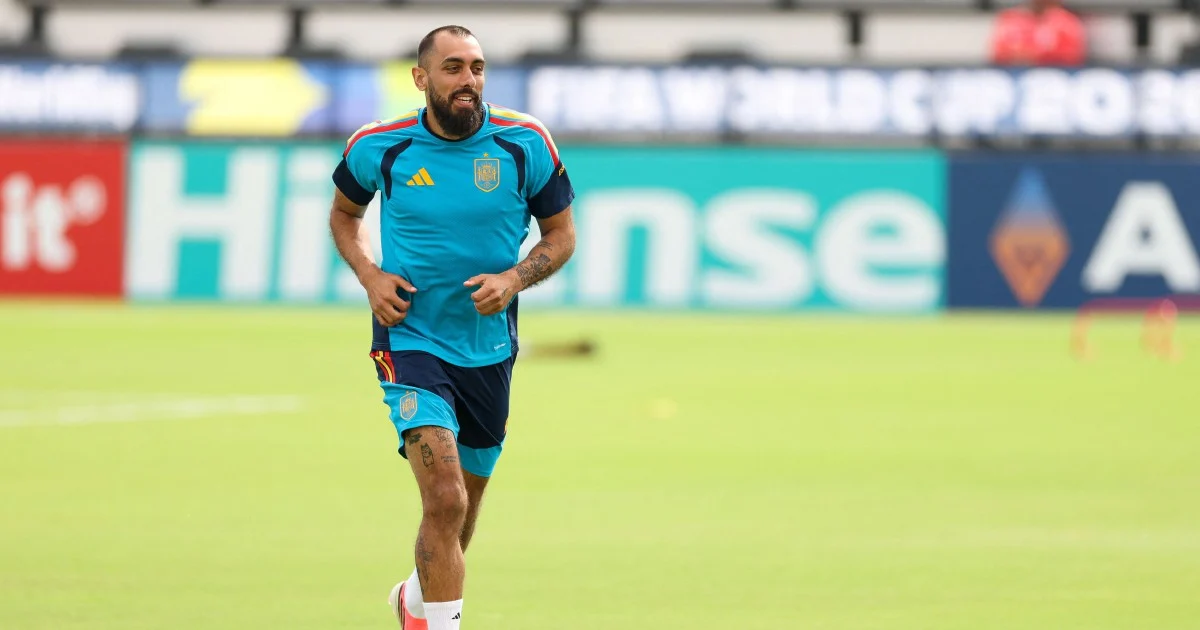
Borja Iglesias stands apart in professional football not because of his goal-scoring prowess alone, but because he possesses a rare willingness to engage with uncomfortable truths that many of his peers avoid. The Spanish striker, who featured prominently in his country's World Cup campaign, has earned a distinctive reputation—and the tongue-in-cheek label "the alien of football"—for his refusal to remain silent on matters of social injustice. From his openly painted nails to his forthright commentary on geopolitical crises and systemic discrimination, Iglesias embodies a footballer determined to use his platform for something beyond the pitch.
The nickname itself reflects how unconventional his approach appears within an industry where athletes are typically encouraged to stay within carefully managed public personas. In an era where most professional footballers curate their image with the precision of marketing departments, Iglesias' candour registers as almost extraterrestrial in professional sports circles. Yet this characterisation, meant partly in jest, obscures a more serious point: that a footballer speaking openly about justice represents such a departure from sporting norms that it becomes newsworthy simply for its authenticity.
Iglesias' willingness to address the Gaza conflict demonstrates how even international sports figures often navigate geopolitical issues with extreme caution. Many athletes shy away from Middle Eastern politics entirely, wary of commercial consequences or public backlash. The Spanish striker's decision to engage with this issue reflects a growing expectation, particularly among younger sports fans and within progressive circles, that public figures should not compartmentalise their values. For Malaysian and Southeast Asian readers, this resonates particularly, given the region's own diverse populations and their sensitivity to issues of occupation and displacement.
Equally significant is Iglesias' approach to homophobia within football. The sport has long struggled with homophobic culture, from terraces to dressing rooms, despite growing acceptance in wider society. Players openly identifying as LGBTQ+ remain extraordinarily rare at professional levels, suggesting systemic barriers and cultural resistance persist. By speaking candidly about this issue, Iglesias challenges the assumption that football must remain a space where such concerns are invisible or unspoken. His willingness to broach the topic heads-on distinguishes him from countless colleagues who silently benefit from a system they do not interrogate.
The physical expression of his convictions—painting his nails—carries symbolic weight in a sport historically defined by rigid masculinity. This seemingly small aesthetic choice becomes a statement in an environment where conformity remains the default. Football has slowly evolved in accepting diverse expressions of identity, yet Iglesias' actions still provoke commentary and curiosity. Such visibility matters, particularly for Southeast Asian footballers who may inhabit more conservative sporting cultures where personal expression remains constrained by tradition and expectation.
Spain's recent World Cup performance provided Iglesias with an enhanced platform to articulate his values. The Spanish national team, competing at sport's highest level, commands global attention and media scrutiny. Iglesias' presence in that squad meant his voice carried amplified reach. Rather than treating international competition as purely sporting theatre, he demonstrated that athletes at this level possess the agency to inject substance into their participation. This approach reframes the World Cup experience from mere competitive spectacle to an opportunity for meaningful cultural intervention.
The Spanish football context itself matters here. Spain has produced generations of thoughtful, articulate players and coaches willing to discuss football as a social phenomenon rather than merely a technical pursuit. The country's relatively progressive political culture and strong journalistic tradition have perhaps created more space for footballer activism than exists in some other nations. Yet even within this context, Iglesias represents a more radical openness than his peers typically demonstrate.
For Southeast Asian sports audiences, Iglesias' model raises important questions about what we expect from professional athletes. Do we want them as purely performative entertainers, or as fully realised humans with convictions? The region's own sporting culture often prizes obedience and respect for hierarchy, potentially discouraging the kind of independent thinking Iglesias embodies. Yet pressures for greater athlete activism are growing, particularly around environmental issues and governance in sports.
The commercial implications of Iglesias' stance deserve attention too. His willingness to court controversy through social commentary potentially impacts sponsorship deals and marketing opportunities—the financial lifeblood of modern professional athletes. That he proceeds regardless suggests genuine commitment to principle over profit. This calculation differs markedly from carefully timed activism designed to boost brand equity, which increasingly characterises some athlete engagement with social causes.
Iglesias' prominence also reflects broader shifts in how younger athletes approach their public roles. Generation Z footballers, conscious of social media amplification and audience expectations, increasingly recognise that silence itself constitutes a choice with moral dimensions. The Spanish striker exemplifies this consciousness, understanding that his platform creates responsibility rather than merely opportunity for self-promotion.
Ultimately, the fact that Iglesias requires a dehumanising nickname simply for speaking his mind highlights football's deeper cultural challenges. In industries and societies where genuine integrity and authenticity appear alien, the problem lies not with the principled individual but with the system that renders their honesty so remarkable. His example demonstrates that spaces exist, even within rigid institutional frameworks, for athletes willing to exercise moral agency and public conscience.

