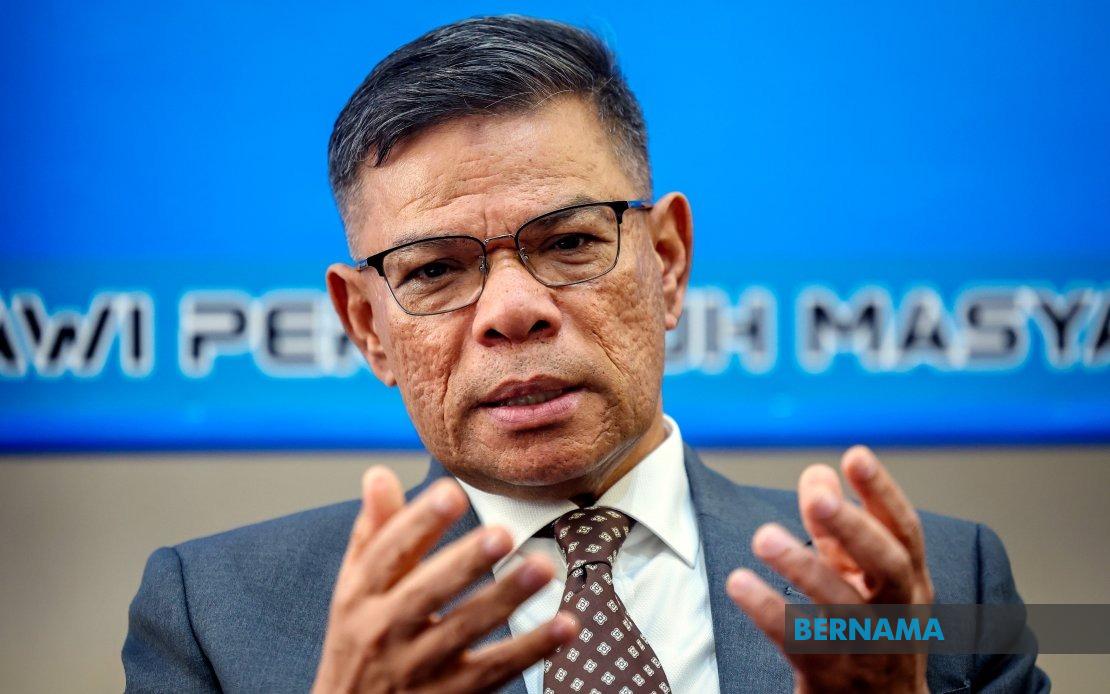
The major entry points connecting Malaysia and Singapore functioned without significant disruption on Wednesday as the Johor state election unfolded, according to reports from Home Minister Datuk Seri Saifuddin Nasution Ismail. The Sultan Iskandar Building and Sultan Abu Bakar Complex—the peninsula's primary gateways between the two countries—maintained steady traffic throughout the morning as approximately 2.6 million eligible voters participated in the 16th state legislative contest. Officials credited careful coordination and advance planning for preventing the bottlenecks that often materialise during major events requiring cross-border movement.
The Home Minister's assessment came based on real-time intelligence from the Malaysian Border Control and Protection Agency, which maintains continuous oversight of frontier operations. Saifuddin Nasution posted updates on social media detailing the situation at both checkpoints, accompanied by video documentation showing the conditions firsthand. The confirmation mattered considerably given the logistical challenge posed by voters based in Singapore who needed to return home to cast ballots. Such movements typically create strain on border infrastructure, particularly when concentrated into a single day.
Anticipating potential congestion, AKPS had implemented an enhanced operational framework well before polling commenced. The agency activated extended processing capacity at both crossing points, including dedicated fast-track lanes, hybrid counters combining manual and automated clearance, and contra-flow arrangements permitting bidirectional traffic adjustment based on demand patterns. This infrastructure expansion represented a proactive response to expected volume rather than a reactive crisis measure. The special lanes operated continuously from midnight until midnight on polling day, demonstrating the commitment to maintaining uninterrupted passage.
The logistics of managing cross-border voter movement reflected broader organisational demands placed on Malaysia's electoral machinery. The Johor contest represented a substantial undertaking, with 172 candidates competing across 56 state assembly constituencies. Election officials established 1,076 polling centres nationwide, each equipped with multiple voting channels to prevent queuing and ensure rapid processing. The simultaneous opening of all 4,889 voting channels at 8 am required meticulous coordination across state and federal agencies.
Election authorities had set an ambitious turnout projection of approximately 70 per cent, underscoring expectations that voter engagement would remain robust. Achieving such participation demands efficient administrative systems capable of processing hundreds of thousands of people within compressed timeframes. The quick passage through border checkpoints represented just one component of this larger electoral ecosystem. Voters who experienced seamless transit between countries could then proceed to voting venues without unnecessary delay, potentially supporting higher overall turnout.
The scheduling of special lane operations reflected careful temporal calculation. Running services from 12:01 am until 6 pm on election day positioned the infrastructure to catch voters returning from night shifts or morning commutes while remaining accessible through the afternoon. The previous day's 24-hour operation provided additional capacity for those choosing to cross before the main polling period. This staggered approach recognised that not all cross-border voters would arrive simultaneously, allowing the system to distribute traffic more evenly.
For Malaysia-Singapore relations, smooth border operations carry symbolic importance beyond the immediate electoral context. The two nations maintain one of the world's busiest land frontiers, with hundreds of thousands of people crossing daily for work, commerce, and family purposes. Demonstrating the capacity to manage exceptional circumstances while maintaining routine traffic flow reinforces confidence in bilateral infrastructure and cooperation mechanisms. Disruptions create economic friction and political tension, whereas seamless operations affirm the maturity of institutional frameworks.
The Johor election itself held significance extending beyond state-level governance. As the largest and most economically developed Malaysian state, Johor's political direction influences national political calculations. The ruling coalitions' ability to mobilise voters and sustain turnout affects broader federal dynamics. The successful management of cross-border voter movement thus contributed to the credibility of the election process itself, demonstrating that logistical challenges did not prevent eligible citizens from participating fully.
Results from the contest were expected to emerge by 10 pm, allowing the Election Commission to complete counting and determine the composition of the state legislature within hours of polls closing. This timeline depended partly on the operational efficiency of voting and tabulation processes, which benefited from the smooth border passages that facilitated voter arrival at polling stations. The interconnection between frontier management and electoral administration highlights how multiple government functions must align for successful democratic processes.
Looking forward, the operational success at border checkpoints during the Johor election provides a template for managing future events requiring cross-border voter participation. The agency's investment in flexible infrastructure—hybrid counters, moveable lanes, and adaptable traffic patterns—demonstrated that congestion need not inevitably accompany high-volume periods. Lessons from this coordinated effort may inform improvements to border operations and inter-agency coordination mechanisms more broadly.

