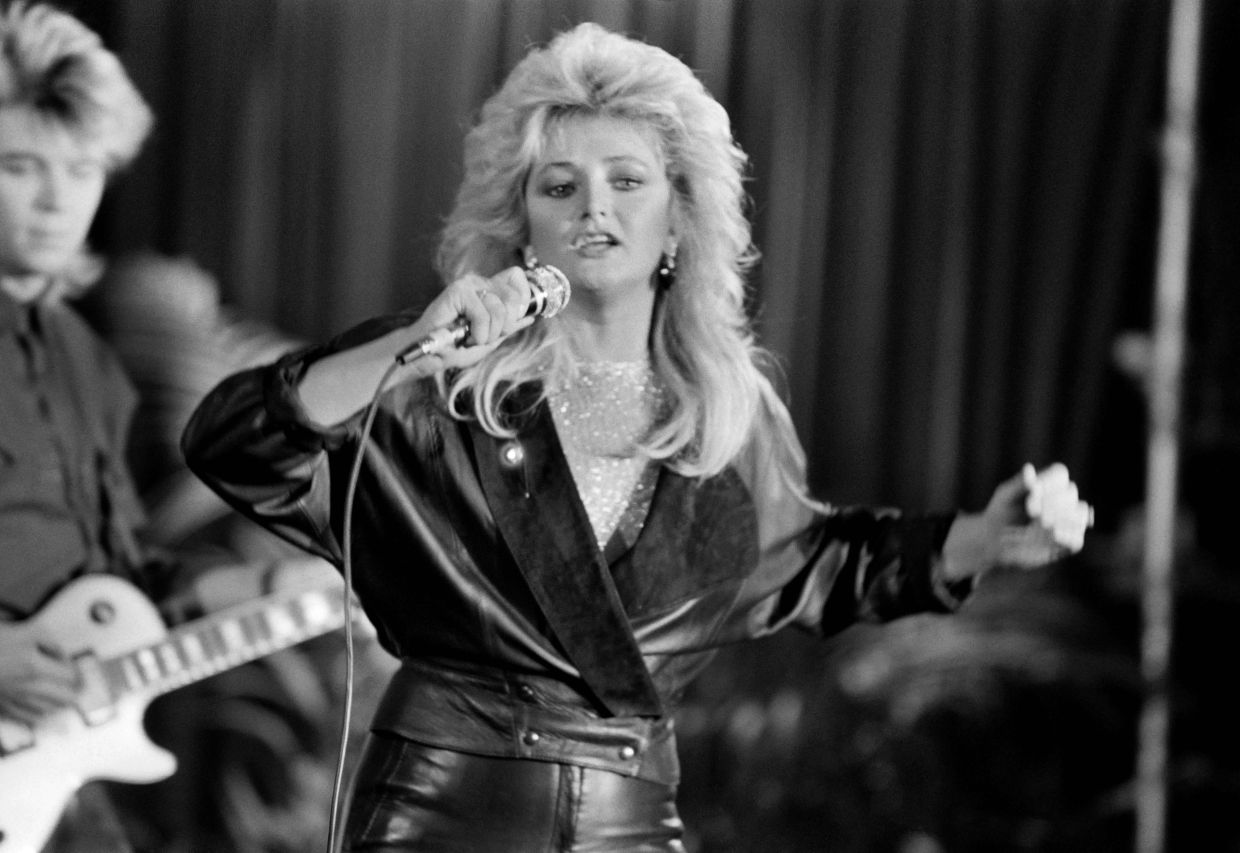
Bonnie Tyler, the Welsh-born vocalist whose distinctive husky voice anchored one of pop music's most recognisable power ballads, has passed away at the age of 75. The Grammy-nominated artist died unexpectedly at a hospital in Portugal where she was undergoing treatment for an unspecified illness, her family announced Thursday through a statement on her official website. Tyler had been hospitalised in Faro, where she maintained a residence, for emergency intestinal surgery in May before being placed into an induced coma from which she did not recover.
While Tyler's recording career spanned four decades and produced multiple chart successes, her legacy remains inextricably bound to "Total Eclipse of the Heart," the 1983 chart-topper that has transcended its era to become a cultural touchstone. The song spent four weeks at number one on the charts, its accompanying music video accumulated over one billion views, and streaming platforms have logged more than one billion plays—numbers that continue climbing during eclipse seasons, when renewed public interest in the track drives fresh waves of listeners to the ballad. The song's theatrical grandeur and emotional intensity so impressed music critics that Stereogum retrospectively declared it an "extinction-level event rendered in musical form," describing it as "pop music as heart-pounding, chest-thumping, blood-gargling, heavens-falling passion explosion."
Tyler's influence on popular culture extended well beyond initial release, with the song appearing in films including 2001's "Bandits" and 2003's "Old School," covered by artists ranging from Nicki French and Westlife to One Direction, and remaining a staple of cultural moments decades after its premiere. Her contributions to music earned recognition from the British establishment, including three Grammy nominations and an MBE awarded by Queen Elizabeth II in 2023 for services to music. She also represented Britain at the Eurovision Song Contest in 2013, finishing 19th with the country-inflected "Believe in Me."
Born Gaynor Hopkins in Skewen, Wales, a small community approximately seven miles outside Swansea, Tyler grew up in modest circumstances as the daughter of a coal miner in public housing without indoor plumbing. The household comprised her parents and five siblings—three sisters and two brothers—an environment she later credited with fostering her artistic sensibility. As a child, she developed a profound attachment to popular music, with the Beatles' "A Hard Day's Night" serving as her first album purchase and the Swinging Blue Jeans' "Hippy Hippy Shake" marking her first independent acquisition at age thirteen. She developed habits of religiously watching "Top of the Pops," sometimes recording episodes on a reel-to-reel machine and meticulously transcribing song lyrics, while she performed into a hairbrush to artists she admired including Janis Joplin, Nina Simone, Tina Turner, Wilson Pickett and Otis Redding.
A formative moment arrived in 1976 when Tyler underwent surgery to remove nodules from her throat—a procedure that paradoxically furnished her with the distinctive husky vocal timbre that would become her signature. Working initially as a soul band vocalist under the stage name Sherene Davis, she caught the attention of talent scout Roger Bell, who facilitated her relocation to London for demonstration recordings. Her persistence through industry rejection eventually yielded interest from RCA Records, which signed her under the stage name Bonnie Tyler. Her 1977 debut album "The World Starts Tonight" generated her first chart entry with "Lost in France" and earned a nomination for a breakthrough artist award at the Brit Awards, followed by a number three hit in 1978 titled "It's a Heartache."
Despite initial momentum, Tyler's commercial trajectory plateaued through the early 1980s until she signed with Sony Records and witnessed a live performance by Meat Loaf executing "Bat Out of Hell." Inspired by the production spectacle, she pursued a collaboration with the song's creator Jim Steinman, whose artistic vision would reshape her career. Steinman offered her his composition "Total Eclipse of the Heart," which became the debut single from her fifth studio album, "Faster Than the Speed of Night." The producer recycled a lyric line—"Turn around, bright eyes"—from his 1969 student musical "The Dream Engine," originally conceived during his studies at Amherst College in Massachusetts, and positioned the composition as emanating from a planned musical adaptation of the vampire film "Nosferatu."
Steinman's production methodology proved revolutionary within Tyler's artistic framework. "Jim liked to put down a basic rhythm track, do nine takes of the song, choose the best one and then put the kitchen sink on there, like Phil Spector used to," Tyler explained in a 2023 Guardian interview, noting that she and Steinman selected the second take after reviewing cassette recordings in her hotel room. The track featured contributions from the E Street Band, with Roy Bittan on piano and Max Weinberg on percussion, creating a sonic foundation for Tyler's vocal examination of romantic devastation: "Once upon a time there was light in my life / But now there's only love in the dark."
The accompanying music video, filmed in a derelict psychiatric asylum in Surrey with a gothic ambiance that reportedly deterred guard dogs from descending to lower levels where patients had received electroconvulsive therapy, became iconic across early MTV programming. The visual presentation synthesised disparate theatrical elements—slow-motion released doves, numerous candles, performers in ninja costumes, leather-jacketed dancers, fencers, gymnasts, wind machines, and bare-chested dancers in swimming goggles experiencing water jets—all while Tyler performed in exaggerated shoulder-padded garments characteristic of 1980s fashion excess. The album containing the song earned Tyler a Grammy nomination for best rock vocal performance, losing to Pat Benatar's "Love Is a Battlefield," while "Total Eclipse" itself received nomination for best pop vocal performance, ultimately ceding to Irene Cara's "Flashdance—What a Feeling."
While Tyler never achieved commercial peaks matching "Total Eclipse of the Heart," she remained professionally active and culturally relevant through soundtrack contributions including "Holding Out for a Hero" featured in 1984's "Footloose" and "Here She Comes" from that year's "Metropolis." She demonstrated artistic flexibility by venturing into country music territory with 2013's "Rocks and Honey," recorded in Nashville and featuring collaborations with Vince Gill, while simultaneously earning recognition through collaborations with established acts including Rod Stewart, Cliff Richard and Status Quo's Francis Rossi on her 2019 album "Between the Earth and the Stars." Her final years included performing at a Vatican Christmas concert before Pope Francis, reflecting both her sustained professional engagement and the international dimensions of her artistic legacy.
For Malaysian and Southeast Asian audiences, Tyler's passing marks the exit of a figure whose music accompanied formative cultural moments across multiple generations. The perennial resurgence of "Total Eclipse of the Heart" during astronomical events demonstrates how popular music can transcend original commercial contexts to acquire mythic significance, becoming intertwined with natural phenomena and collective experience. Tyler's trajectory from modest Welsh origins to international recognition through artistic persistence and collaboration with visionary producers offers an instructive narrative about career longevity and cultural impact that extends far beyond chart positions or awards ceremonies.

