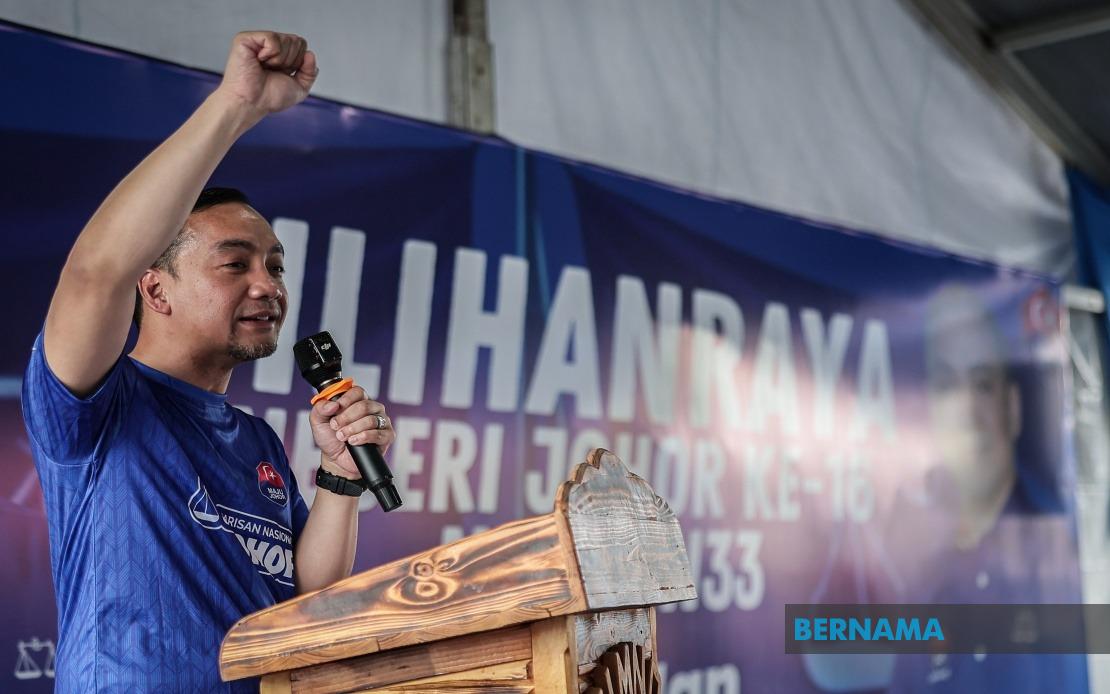
The Barisan Nasional coalition appears to be gaining traction in the Johor state election campaign, with party leaders attributing their optimism to unexpectedly warm voter reception for Endau candidate Alwiyah Talib, a high-profile defector from the opposition who switched back to BN's fold ahead of the July 11 polling day. BN chairman Datuk Onn Hafiz Ghazi, speaking during a campaign event in Mersing, described the grassroots response to Talib as particularly encouraging, signalling that her controversial party-hopping appears to have secured local approval rather than generating the backlash some political observers might have anticipated.
Alwiyah Talib's return to the BN represents a notable moment of coalition regeneration in Johor politics. The Endau incumbent, affectionately known by constituents as "Kak Awi", originally won the seat under the BN banner during the 14th General Election before subsequently joining Bersatu, the party that forms part of Perikatan Nasional. She successfully defended her constituency in 2022 running under the PN ticket with a comfortable majority of 3,041 votes in a five-way contest. Her decision to rejoin BN carries symbolic weight beyond just Endau, as it reflects broader attempts by the coalition to consolidate electoral strength ahead of a state election that could significantly reshape Johor's political landscape.
Onn Hafiz explicitly framed Talib's homecoming within UMNO president Datuk Seri Dr Ahmad Zahid Hamidi's "Rumah Bangsa" philosophy, a concept emphasising unity and inclusiveness as fundamental to BN's contemporary political project. The Menteri Besar's comments suggest that BN leadership views the Endau race not merely as a contest for one constituency but as a test case for the broader coalition's ability to reabsorb political figures from rival camps without hemorrhaging grassroots credibility. The "Rumah Bangsa" framing attempts to legitimise Talib's switch as consistent with principled coalition-building rather than opportunistic carpet-bagging, a distinction that likely matters considerably to voters in a state where party loyalty has proven notoriously volatile.
The campaign machinery in both Endau and the neighbouring Tenggaroh state seat appears fully mobilised, with Onn Hafiz emphasising that BN's organisational capacity and volunteer commitment remain intact despite the compressed campaign timeline. The Johor Menteri Besar's confident tone reflects a coalition that has successfully avoided the internal fractures that threatened party unity in earlier election cycles. Unlike previous state contests where defections and leadership disputes generated public acrimony, the 2023 campaign has proceeded without reported major incidents or visible ruptures within BN's ranks across the two targeted constituencies.
Alwiyah Talib's political journey encapsulates the fragmentation and realignment that has characterised Malaysian electoral politics over the past decade. Her initial representation of Endau under BN, followed by her transition to Bersatu and now her return to the coalition, mirrors broader patterns of voter volatility and personality-driven politics that have reshaped state and federal contests. However, her successful 2022 defence of the seat while wearing PN colours suggests that her personal standing with constituents transcends party affiliation—a crucial asset for any politician seeking to navigate coalition politics in contemporary Malaysia. The fact that Onn Hafiz explicitly highlighted her track record of service regardless of party colours suggests BN strategists are gambling that voters prioritise competence and accessibility over factional loyalty.
The July 11 Johor election carries implications that extend beyond the state boundary, as Johor has historically served as a bellwether for broader Malaysian political sentiment and as a training ground for national leadership cadres. The state's electoral dynamics directly influence the federation's overall political temperature, with shifts in Johor support proving consequential for federal government stability and opposition momentum. A BN victory in strongholds like Endau would reinforce the coalition's claim to possess enduring grassroots support and effective state-level governance, particularly important given the coalition's mixed fortunes in recent electoral cycles nationwide.
Early voting has been scheduled for July 7, providing party machines with compressed timelines to consolidate support among undecided voters and solidify turnout among their respective bases. In Malaysian state elections, weather patterns and unexpected logistics issues can significantly impact voter mobilisation, particularly in semi-rural constituencies like Endau where transport infrastructure and population density differ markedly from urban centres. The four-day window between early polling and main polling day provides relatively limited opportunity for course correction if either campaign senses momentum slipping.
Onn Hafiz's emphasis on campaign smoothness and the absence of untoward incidents carries implicit political messaging, contrasting BN's conduct with perceptions of opposition volatility or internal discord. In recent Malaysian elections, campaign conduct has become an increasingly significant variable in voter decision-making, with many citizens showing sensitivity to perceived violations of political decorum or accusations of unfair practices. By highlighting BN's disciplined campaign approach, the Menteri Besar attempts to position the coalition as the mature, responsible choice for voters concerned about governance quality and institutional stability.
The Tenggaroh seat, where BN fielded Mohd Youzaimi Yusof, received less detailed commentary from Onn Hafiz during his remarks, possibly indicating either higher perceived confidence in that contest or alternatively, resource allocation patterns that prioritised Endau messaging. Constituency-level campaign dynamics can shift rapidly based on local developments, candidate visibility, and opposition momentum, making single-snapshot assessments potentially misleading as polling day approaches. The two-seat focus represents a measured rather than expansive BN ambition in this particular election cycle.
Alwiyah Talib's political narrative will likely persist as a significant campaign talking point throughout the remaining campaign period, with opposition forces potentially seeking to weaponise accusations of opportunism while BN emphasises her demonstrated commitment to constituent service. In Malaysian electoral politics, narrative dominance often proves as consequential as policy differences in determining outcomes, particularly in state contests where voters may lack detailed familiarity with candidates' legislative records or governance achievements. The extent to which Talib's personal brand can overcome ingrained voter scepticism about defectors will substantially influence whether BN's campaign optimism translates into actual victory margins on July 11.

