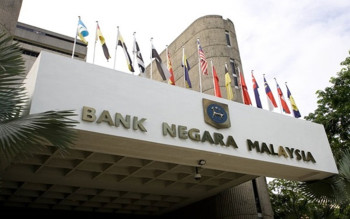
Bank Negara Malaysia has reaffirmed that its advisory interventions with Tabung Haji form an integral part of its broad financial stability responsibilities enshrined in the Central Bank of Malaysia Act 2009. The clarification comes as the central bank faces scrutiny through an ongoing Royal Commission of Inquiry into the pilgrimage fund's troubled financial position, with BNM seeking to explain the legal and operational basis for its engagement with an institution it does not directly supervise.
The central bank's authority to advise Tabung Haji derives from its overarching mandate to identify and monitor risks that could threaten the stability of Malaysia's financial system as a whole. This surveillance function extends beyond the traditional banking sector to encompass major non-bank financial institutions that maintain significant operational and structural connections to the broader financial ecosystem. Tabung Haji, as one of Malaysia's largest faith-based financial institutions managing pilgrim savings and investment funds, clearly falls within this category of systemically important entities.
Under the Central Bank of Malaysia Act 2009, BNM established the Financial Stability Executive Committee to operationalise this mandate. Through this committee's ongoing assessments and surveillance activities, the central bank gains visibility into the financial health and risk exposures of major non-banking players across the Malaysian financial landscape. The FSEC serves as the institutional mechanism through which BNM can translate its surveillance insights into concrete policy actions, including the provision of formal advice to boards and responsible government ministers when concerning trends emerge.
Crucially, BNM emphasised that providing advice to Tabung Haji's Board of Directors and the Minister responsible for the institution operates as a precautionary safeguard. Even though Tabung Haji remains outside BNM's direct regulatory jurisdiction, the central bank views advisory engagement as a proportionate and necessary intervention to maintain the institution's financial soundness. This approach reflects a pragmatic recognition that allowing a major financial player to deteriorate unchecked could create cascading effects throughout the financial system, affecting depositors, the government's fiscal position, and broader economic confidence.
The urgency of BNM's concerns became evident in its issuance of five separate warning letters addressed to Tabung Haji's leadership and the Minister of Religious Affairs. These communications specifically flagged the growing and troubling gap between the institution's assets and its accumulated liabilities, signalling deteriorating financial health that demanded immediate attention. The fact that BNM felt compelled to send multiple warning letters underscores the severity of the issues it identified and the seriousness with which it viewed the risks posed by the fund's mounting imbalances.
BNM's early warnings were subsequently validated by Malaysia's Auditor-General, who issued his own rebuke in the 2017 Financial Statements Report. This alignment between the central bank's surveillance findings and the independent audit office's assessment strengthened the case that Tabung Haji's financial deterioration was not a matter of subjective interpretation but rather an objective reality supported by multiple authoritative sources. The convergence of concerns from different oversight bodies suggested systemic management failures within the institution that required urgent remediation.
The government's decision to establish a Royal Commission of Inquiry in 2021, with formal member appointments confirmed on January 20, 2022, represented an escalation in the official response to Tabung Haji's problems. The appointment of the RCI signalled that the issues had transcended routine administrative correction and entered the realm of requiring high-level investigation into potential misconduct, governance failures, or systemic breakdowns. This institutional investigation culminated in the presentation of findings to the Yang di-Pertuan Agong on August 30, 2022, placing the matter firmly within constitutional processes.
For Malaysian readers, understanding BNM's legal mandate is essential to appreciating the appropriate scope of central bank authority in safeguarding financial stability. The central bank's interventions with Tabung Haji represent neither overreach nor interference but rather the legitimate exercise of powers explicitly granted under legislation. The distinction between direct supervision and advisory engagement reflects a tiered regulatory approach where BNM maintains proportionate oversight of all systemically significant financial entities, regardless of sectoral classification.
The Tabung Haji situation also illustrates the interconnectedness of Malaysia's financial ecosystem. A fund serving millions of Muslim Malaysians in fulfilling their pilgrimage obligations carries substantial systemic importance because its collapse would generate not only direct losses for depositors but also potential spillover effects on the wider financial system. BNM's proactive stance in providing early warnings demonstrated that modern financial regulation requires continuous monitoring and coordinated action among multiple oversight agencies.
Looking forward, the case reinforces the importance of governance reforms within major non-banking financial institutions and the need for enhanced accountability mechanisms. BNM's experience with Tabung Haji illustrates that advisory mandates, while valuable, have limitations when institutions resist reform. The central bank's statutory framework provides the tools for surveillance and advice, but ultimate authority for corrective action rests with boards, management, and responsible ministers. Balancing the central bank's stabilising role with institutional autonomy remains a fundamental tension in financial regulation that Malaysia's policymakers must continue addressing.

