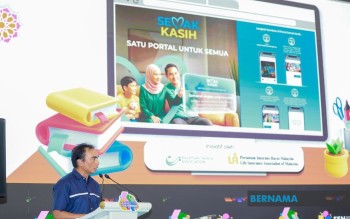
Bank Negara Malaysia (BNM) has introduced the Semak Kasih portal, a digital platform designed to address a significant gap in Malaysia's insurance and takaful landscape: thousands of unclaimed benefits that rightfully belong to grieving families. The initiative, launched in Kuala Terengganu, represents a coordinated effort between the central bank, the Life Insurance Association of Malaysia (LIAM), and the Malaysian Takaful Association (MTA) to reconnect beneficiaries with financial protection they may not even know exists.
Deputy Governor Adnan Zaylani Mohamad Zahid underscored the gravity of the issue during the unveiling at the Terengganu Financial Literacy Carnival. According to estimates from LIAM and MTA, approximately 50,000 insurance policies and takaful certificates carrying death benefits languish unclaimed in company records. This represents not merely administrative oversight but real financial hardship for families who could be utilising these safety nets during vulnerable moments—medical emergencies, property disasters, or the sudden loss of a breadwinner.
The portal addresses a persistent communication challenge within the insurance industry. Despite traditional outreach efforts including postal correspondence and agent visits, beneficiaries frequently remain unaware of protective coverage taken out by deceased relatives. This knowledge gap stems partly from poor financial record-keeping within households and the private nature of insurance arrangements. The Semak Kasih platform democratises access to this information by allowing anyone to verify whether their deceased loved ones held relevant policies and to initiate claims without requiring direct contact with insurers beforehand.
For Malaysian households navigating economic pressures and volatile living costs, unclaimed insurance represents squandered financial protection. Adnan Zaylani emphasised that insurance and takaful coverage serves as a critical buffer against catastrophic events—hospitalisation costs, accidents, fires, and business disruptions. In an environment where many families operate without substantial savings cushions, these instruments provide institutional support precisely when personal resources run dry. The portal's introduction signals regulatory recognition that claiming these benefits should be as straightforward as filing a tax return.
Beyond the immediate portal launch, BNM's broader financial resilience agenda emerged throughout the announcement. The central bank continues channelling support to micro, small, and medium enterprises through multiple financing mechanisms. Microfinance facilities offering up to RM100,000 without collateral requirements address credit market gaps for entrepreneurs lacking traditional banking relationships. Simultaneously, the SME Stabilisation Relief Facility, backed by RM5 billion in central bank allocation, provides working capital financing of up to RM750,000 for companies disrupted by regional geopolitical tensions. These measures reflect policymakers' recognition that economic fragility extends beyond household finances into small business operations.
The iTekad initiative demonstrates measurable progress in elevating MSME standards. Over 14,000 programme participants nationwide, including approximately 600 in Terengganu, have experienced tangible income and lifestyle improvements. This initiative bridges financial education with practical economic opportunities, preparing entrepreneurs to operate in increasingly digitalised markets while building genuine wealth accumulation capacity.
Yet regulatory concern extends to consumption patterns and digital financial behaviour. Research data presented at the carnival revealed troubling trends: 37 per cent of Malaysians engage in impulsive online purchasing, whilst 26 per cent report unsustainable debt burdens. These statistics highlight a paradox within Malaysia's digital economy—technological advancement creates unprecedented economic access whilst simultaneously enabling financial self-harm through unplanned spending and credit accumulation. The proliferation of buy-now-pay-later platforms, digital payment systems, and online commerce has democratised consumption but not necessarily fostered corresponding financial discipline.
Adnan Zaylani's emphasis on early financial education reflects this concern. The MyDuitStory competition and the newly launched FEN Proaktif 2.0 Programme, developed jointly with Universiti Malaysia Terengganu, represent institutional efforts to embed financial prudence within formative educational stages. By cultivating disciplined saving and spending habits before young Malaysians enter employment, these initiatives attempt to counteract the impulsive consumer behaviour patterns evident in current data.
The Financial Education Forum (FEN), now expanding through a more inclusive website platform, explicitly targets historically marginalised groups including persons with disabilities. This accessibility focus acknowledges that financial literacy cannot remain confined to privileged populations if the nation aims to achieve broad-based prosperity. A one-stop financial education resource reaching diverse communities strengthens the foundation for household financial decisions across socioeconomic strata.
Adnan Zaylani's closing remarks encapsulated the regulatory philosophy underpinning these initiatives. While Malaysian households cannot control global economic cycles or technological disruption, they exercise agency over daily financial choices. This philosophy—emphasising individual responsibility within a supportive policy environment—positions financial prudence as a controllable variable despite external volatility. Consistent saving from youth onwards compounds into substantial wealth accumulation over decades, providing security independent of economic circumstances.
The Semak Kasih portal thus represents more than administrative convenience; it embodies a holistic approach to financial protection spanning institutional support through insurance systems, enterprise financing for wealth creation, and educational foundations for rational decision-making. For Malaysian families, the portal offers immediate practical value by recovering lost benefits. For the broader financial system, it signals commitment to transparency, accessibility, and ensuring that protective mechanisms actually serve their intended purpose rather than languishing as dormant liabilities in corporate records.

