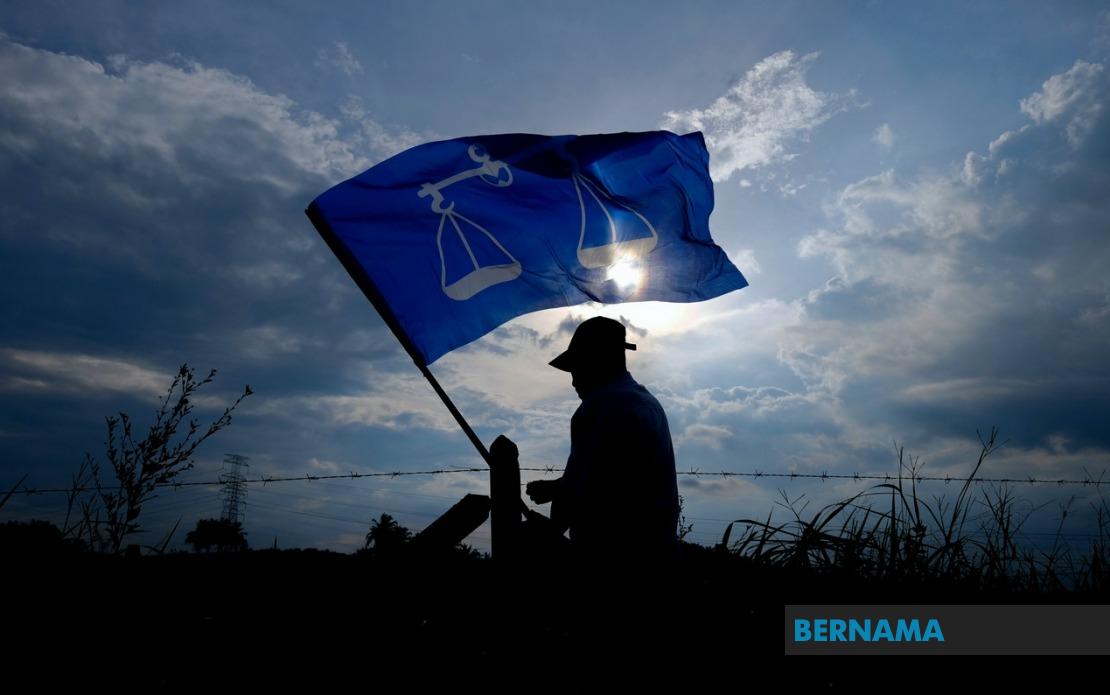
The Barisan Nasional coalition will recalibrate its political strategy for the upcoming Negeri Sembilan state election to reflect the state's unique demographic composition and electoral behaviour, according to BN chairman Datuk Seri Dr Ahmad Zahid Hamidi. Speaking in Kuala Lumpur on July 13, the Deputy Prime Minister indicated that BN recognises Negeri Sembilan presents a markedly different political landscape compared to other Malaysian states, necessitating a bespoke approach to both candidate selection and campaign messaging.
Ahmad Zahid, who holds the concurrent position of UMNO president, explained that the party's one-size-fits-all approach would prove insufficient for Negeri Sembilan's particular circumstances. He stressed that variations in the number of state assembly seats, the ethnic and socioeconomic makeup of the electorate, and established voting tendencies all demand careful reconsideration of BN's formula. This acknowledgment represents a shift towards granular, state-level political planning rather than imposing centrally determined strategies, reflecting lessons learned from electoral fluctuations across Malaysia's diverse regions.
The timing of this announcement carries significance for BN's broader political momentum. The coalition had recently secured a decisive victory in the Johor state election, which Ahmad Zahid attributed to the party's mental resilience and creative problem-solving throughout the campaign period. That success, however, does not guarantee a straightforward replication in Negeri Sembilan, where different voter demographics and political traditions require careful study. By explicitly acknowledging these differences now, BN appears intent on avoiding complacency and demonstrating adaptive political management to both internal party members and the broader electorate.
Candidate selection remains the most visible test of BN's flexibility. Ahmad Zahid confirmed that the coalition would announce its slate of candidates during the week following his statement, suggesting that internal deliberations over candidate placement had reached an advanced stage. The specificity of this timeline indicates that BN has already concluded its assessment of local conditions and made key decisions regarding which candidates would best resonate with Negeri Sembilan voters. This methodical approach contrasts with rushed candidate announcements that sometimes generate internal dissent and public criticism.
Cooperation with PAS, the Islamist party that has emerged as a significant player in Malaysian politics, remains fluid and contingent rather than cemented by formal agreement. Ahmad Zahid was notably cautious when discussing BN-PAS discussions regarding a potential candidate for the Negeri Sembilan Menteri Besar position, emphasising that no binding accord existed between the two coalitions. He cautioned against treating preliminary discussions as definitive arrangements, stressing that parties were still navigating an evolving understanding that had not yet crystallised into concrete commitments. This measured language suggests that negotiations continue and that surprises remain possible before final candidates are unveiled.
The distinction between formal agreements and informal understandings carries practical implications for coalition politics. By refraining from announcing a binding deal, BN and PAS preserve negotiating flexibility and avoid locking themselves into arrangements that could generate grassroots backlash within either party. For BN, this approach allows the coalition to calibrate candidate selection based on emerging electoral intelligence and internal party dynamics. For PAS, it permits continued posturing as an independent force rather than a subordinate partner, which holds appeal for its electoral base that values the party's distinctive Islamic credentials and ostensible independence from UMNO-dominated structures.
Internal Unity Government dynamics also featured in Ahmad Zahid's remarks, particularly regarding calls for Housing and Local Government Minister Nga Kor Ming to resign over statements attributed to DAP. Ahmad Zahid defended Nga Kor Ming, noting that certain political criticism might be acceptable for opposition parties but becomes counterproductive when coalition partners inhabit government together. By framing the controversy through the lens of governmental unity and personal friendship, Ahmad Zahid sought to depressurize the situation and discourage further public recriminations among governing partners. His assertion that all parties are working cohesively until the administration concludes projects an image of stability and functionality that becomes increasingly important as the government approaches mid-term.
The Unity Government configuration, comprising UMNO-led BN, PAS, and DAP, remains fragile despite frequent assertions of harmony and professional conduct. Public disagreements between component parties, whether over policy, ministerial conduct, or ideological positioning, risk exposing underlying tensions that could eventually fracture the coalition. By personally intervening to defend Nga Kor Ming and emphasising the need for restraint, Ahmad Zahid attempted to model the comportment he expects from other senior leaders. This proactive management of coalition relations reflects recognition that the government's legitimacy depends partly on demonstrating that diverse political forces can collaborate effectively.
For Malaysian political observers and stakeholders in Negeri Sembilan, the immediate significance lies in candidate announcements and the subsequent campaign dynamics. However, the broader implications extend to how Malaysian politics manages coalition governance, regional variations in electoral politics, and the mechanisms through which diverse parties negotiate shared power. BN's willingness to tailor strategy to Negeri Sembilan's particular conditions signals a degree of sophistication in political planning that contrasts with earlier eras of party politics. Simultaneously, the continued ambiguity surrounding BN-PAS arrangements and the need for coalition managers to intervene in internal disputes underscores the persistent fragility of Malaysian coalition politics.
Negeri Sembilan's election will serve as a crucial test of whether BN's adaptive strategy and careful coalition management translate into electoral success. The state has 36 state assembly seats and a population composition that differs notably from the three largest states by population. Understanding local nuances—whether relating to rural versus urban voter sentiment, ethnic demographics, or long-standing community concerns—could prove decisive in competitive constituencies. BN's explicit recognition of these factors suggests the party has learned from electoral setbacks in other states and is attempting to apply contextualised political strategies rather than rote application of centrally designed campaigns, a lesson increasingly important in Malaysia's diverse and regionally differentiated political landscape.

