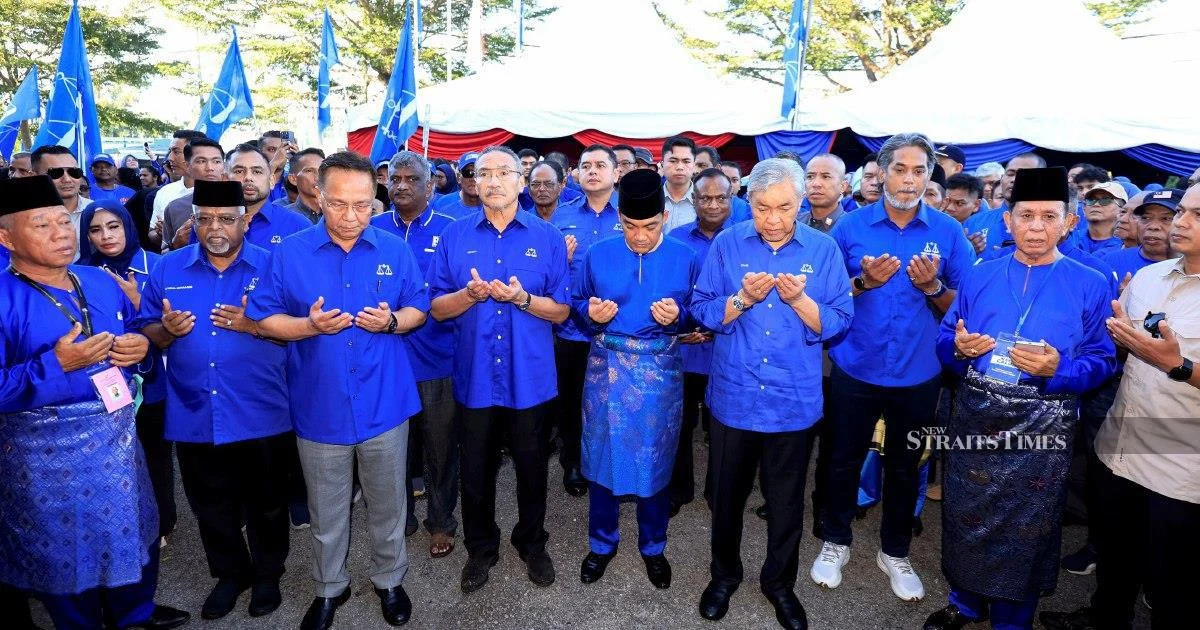
The political establishment in Johor received a significant boost this morning when multiple senior leaders from Barisan Nasional converged at the Simpang Renggam District Council, delivering a coordinated display of backing for Datuk Onn Hafiz Ghazi. The high-profile gathering underscored the coalition's investment in securing its position within the state, one of Malaysia's most strategically important political battlegrounds.
The appearance of multiple BN heavyweights at a single event carries substantial symbolic weight in Malaysian politics. When senior party figures cluster around a particular candidate or official in this manner, it serves dual purposes: demonstrating internal party cohesion to their own supporters whilst simultaneously conveying to the broader electorate that the leadership has confidence in the direction being pursued. The Simpang Renggam visit exemplifies how BN continues to deploy its traditional strength in ground organisation and resource mobilisation during politically significant moments.
For Datuk Onn Hafiz specifically, the arrival of top-tier BN endorsement strengthens his position within both the state government machinery and the national party structure. Onn Hafiz has served as Johor's Menteri Besar, a position that makes him central to BN's electoral fortunes in the state. The visible backing from party elders suggests the coalition views him as a critical asset in maintaining its hold on Johor, a state it has historically dominated but where political dynamics have shifted considerably in recent years.
Johor's political significance extends well beyond state boundaries. As Malaysia's second-largest state by population and a major economic contributor to the federation, Johor serves as a crucial testing ground for political trends. Any weakening of BN's grip here reverberates through national politics, influencing calculations in Putrajaya and affecting the confidence of coalition members nationwide. This reality explains why senior leaders would invest time and effort in publicly demonstrating solidarity with state-level figures during politically sensitive periods.
The timing of such demonstrations often carries tactical implications. District councils like Simpang Renggam serve as local administrative bodies with direct contact to voters and community leaders. By holding a gathering at this level, BN was engaging with grassroots opinion leaders and making visible their commitment to addressing local concerns. The choice of venue suggests a deliberate strategy to project strength and accessibility simultaneously, countering any narrative that the party has become distant from ordinary Malaysians.
Regional competition within the peninsula shapes Johor's political dynamics considerably. The state shares borders with Selangor, which has undergone significant political transformation in recent years. Johor's status as a BN stronghold becomes all the more valuable if opposition parties are consolidating power in neighbouring states. The appearance of national BN figures in Simpang Renggam can be read partly as an assertion that the coalition retains formidable capacity to mobilise resources and maintain organisational strength where it matters most.
Within the broader Southeast Asian context, Malaysia's coalition politics offer lessons in party discipline and unity projection. While internal tensions inevitably exist within any political alliance, the ability to present a united front during critical moments strengthens negotiating position for individual components. The BN gathering thus reflected not merely support for Onn Hafiz but also reinforced the coalition's internal messaging that unity and coordinated action remain paramount strategic objectives.
The composition of which specific figures attended this gathering carries additional intelligence for political observers. Senior leaders who make such appearances are typically signalling their own continued relevance and their confidence in particular outcomes. The cross-factional nature of BN means that turnout at such events can indicate which power centres within the coalition have prioritised particular states or candidates as crucial to their broader political strategies.
For Malaysian voters in Johor and beyond, such displays of leadership unity offer mixed signals. They demonstrate organisational capacity and presumably reflect confidence in prevailing strategies, yet they may also be interpreted as symptomatic of a party establishment attempting to manage anxieties about electoral performance. The frequency and intensity of such public solidarity missions sometimes correlate with underlying concerns rather than simple confidence.
Looking forward, the significance of this Simpang Renggam gathering will likely become apparent only when electoral outcomes are finally determined. If BN strengthens its position in Johor, such events will be cited as examples of effective leadership mobilisation. If electoral fortunes disappoint, observers will scrutinise whether such public shows of support masked inadequate responses to substantive voter concerns about service delivery, economic opportunity, or governance quality. The event exemplifies how Malaysian politics deploys symbolism and organisation as instruments of political communication, even as underlying voter preferences remain dynamic and often unpredictable.

