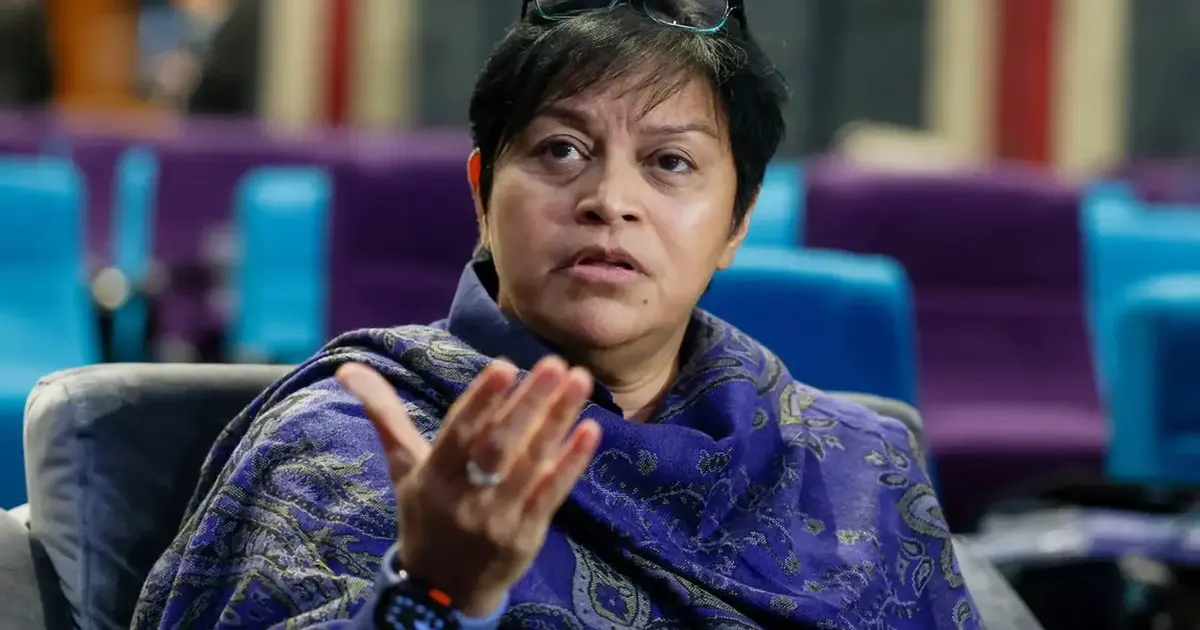
The federal unity government remains intact despite a political realignment at the state level in Negeri Sembilan, according to Umno information chief Azalina Othman Said, who drew a clear distinction between governance arrangements at different tiers of the Malaysian political system. Her remarks come as Barisan Nasional and Perikatan Nasional have joined forces in the state, a development that observers initially viewed with caution given the federal coalition's composition and history of political tensions.
Azalina's position reflects a broader understanding within Umno that state-level political manoeuvring need not automatically cascade upwards to destabilize the federal compact. The unity government, established following the 2022 general election, comprises multiple political factions working together on a federal platform. The arrangement has, despite its inherent contradictions and occasional friction, provided relative stability for national governance over the past two years. Azalina's framing suggests that the leadership views the Negeri Sembilan development through a pragmatic lens focused on state-specific considerations rather than as a harbinger of wider coalition breakdown.
Her assertion that state and federal political dynamics operate independently carries particular weight in the Malaysian context, where sub-national politics have historically pursued trajectories distinct from national coalitions. Numerous instances throughout Malaysia's history demonstrate how state governments have operated under different political alliances than their federal counterparts. Perak, Selangor, and Johor have all experienced periods where the ruling state coalition differed substantially from the national government. This precedent provides historical grounding for Azalina's claim that a BN-PN partnership in Negeri Sembilan does not inherently signal fractures in the federal structure.
The Negeri Sembilan alliance reflects calculations specific to the state's political economy and demographic composition. Negeri Sembilan, with its relatively smaller population and electoral base compared to peninsula powerhouses like Selangor or Johor, occupies a distinctive position within Malaysian federalism. State-level politics there are shaped by local power dynamics, resource distribution, and regional leadership structures that may not align neatly with federal party hierarchies. The BN-PN combination may represent a strategic consolidation of state-level support rather than a fundamental realignment of national political forces.
For Umno specifically, Azalina's remarks signal confidence that the party can maintain its federal commitments while allowing flexibility at the state tier. This compartmentalization strategy serves several functions: it permits state branches to pursue locally advantageous coalitions, it demonstrates political adaptability to regional actors, and it theoretically prevents domino effects that might cascade from one state to others. However, the effectiveness of this approach depends substantially on whether other states view the Negeri Sembilan precedent as acceptable or as an opening for their own realignments.
The unity government itself has demonstrated resilience despite facing multiple challenges since its formation. The coalition has absorbed defections, policy disagreements, and occasional public criticism from member parties without fundamentally fragmenting. This durability suggests that individual state-level arrangements, absent a coordinated national strategy to unwind the federal partnership, may indeed remain compartmentalized. Azalina's statement essentially argues that the Negeri Sembilan development should be evaluated on its own merits rather than as symptomatic of broader coalition instability.
Malaysian political observers note that such reassurances serve important signalling functions to foreign investors and domestic stakeholders concerned about political uncertainty. The explicit insistence that state and federal politics remain separate matters—even when delivered by a senior party official—aims to project governmental stability and predictability. International markets and domestic business confidence partly depend on perceptions of political coherence, even if underlying structures contain apparent contradictions.
The Perikatan Nasional's participation in both federal government and state coalitions with different partners illustrates the complexity of modern Malaysian politics. The party operates within the federal unity framework while simultaneously pursuing state-level partnerships that may not mirror federal arrangements. This multidirectional engagement reflects broader trends in post-2022 Malaysian politics, where rigid party bloc thinking has given way to more fluid, pragmatic arrangements calibrated to specific contexts.
Looking forward, whether Azalina's assurances prove durable depends on whether the Negeri Sembilan arrangement remains isolated or becomes a template for other states. Should multiple states adopt BN-PN alliances or pursue other non-unity government combinations, the federal coalition's coherence would face genuine pressure. Conversely, if Negeri Sembilan represents a localized accommodation that does not spread, Azalina's framing will have been vindicated. The coming months will likely reveal which trajectory unfolds and whether state-federal separation can genuinely function as a stabilizing mechanism or merely postpones consolidation pressures.
For Malaysian observers tracking the broader political landscape, this episode underscores the continuing evolution of consensus-building in post-election politics. The unity government model itself represents an experiment in managing multiparty coalition governance without clear ideological coherence. Azalina's statement, in this context, represents Umno's attempt to maintain its federal commitments while demonstrating sufficient political agility to prevent regional restlessness from undermining the entire arrangement. Whether this calculated approach succeeds will significantly influence Malaysian governance dynamics in the coming years.

