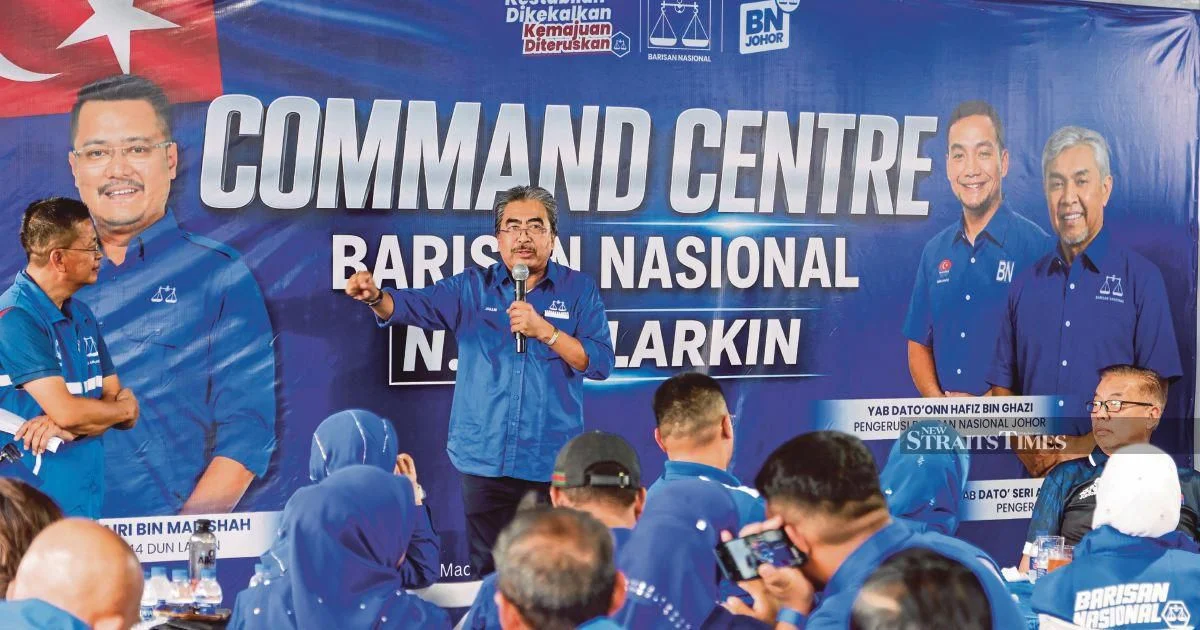
Senior Barisan Nasional strategist Datuk Seri Johari Abdul Ghani has sounded a clear warning to BN's campaign machinery and candidates contesting the Johor state election: squandering energy on confrontations with rival politicians serves only to undermine the coalition's broader mission of connecting with voters across the state.
Speaking in Johor Baru, the veteran BN figure stressed that the party machinery would be better served by channelling its efforts into direct engagement with communities and demonstrating the coalition's track record of delivering tangible benefits to residents. The emphasis on voter-centric campaigning reflects a strategic pivot away from the personalised attacks and mutual recriminations that have historically characterised Malaysian electoral contests, particularly in states where political competition remains fiercely contested.
Johari's intervention carries considerable weight within BN's internal deliberations. As a senior party strategist with decades of experience navigating Malaysia's complex political landscape, his counsel signals leadership concern that the coalition risks losing electoral ground through divisive messaging and candidate behaviour that alienates the very constituencies BN seeks to win over. This warning arrives at a critical juncture, as Johor remains a battleground state where BN's dominance cannot be taken as assured despite the coalition's historical stronghold in the region.
The Johor state election represents a significant test of BN's organisational capacity and cohesion. The coalition's performance in the maritime state carries implications beyond its immediate borders, serving as a barometer for voter sentiment across Malaysia. A fractured campaign characterised by internal disputes would inevitably dampen momentum and provide opposition parties with ammunition to portray BN as a coalition more interested in settling scores than addressing the bread-and-butter concerns of ordinary Johoreans.
Voter priorities in Johor have shifted considerably over the past decade. Citizens increasingly demand tangible evidence of good governance, economic opportunities, and transparent use of public resources. These concerns demand substantive discussion and detailed policy exposition rather than attacks on opposition figures or rival BN candidates. Johari's message implicitly recognises this shift in electoral dynamics and calls for alignment between campaign messaging and the sophisticated expectations of contemporary voters.
The call for discipline within the BN machinery also reflects broader concerns about candidate selection and party discipline. In multi-cornered contests where BN, Pakatan Harapan, Perikatan Nasional, and independent candidates all compete, internal unity becomes a decisive competitive advantage. When BN representatives engage in public disputes with one another or become embroiled in personal attacks on opposition candidates, they inadvertently strengthen rival narratives portraying the coalition as internally divided and focused on short-term political gain rather than long-term governance.
Johari's emphasis on voter engagement over confrontation aligns with international best practices in electoral campaigns. Successful political movements in mature democracies have increasingly abandoned slash-and-burn campaign tactics in favour of issue-based platforms that directly address citizen concerns. By encouraging BN's machinery to adopt this approach, Johari signals that Malaysia's political evolution is moving towards more substantive democratic discourse, where voters evaluate candidates and parties based on their policy positions and demonstrated competence rather than purely on personality-driven partisan attacks.
For Johor's electorate, this directive carries potential benefits extending beyond the election itself. A campaign centred on voter needs rather than inter-party hostilities creates space for genuine policy debate about economic development, education, healthcare delivery, and infrastructure development. Such discussions, conducted with appropriate professional standards, elevate public discourse and empower voters to make informed choices grounded in substantive understanding of each party's vision for the state.
The timing of Johari's remarks suggests concern within BN leadership that campaign momentum may be slipping or that early stages of candidate activity have generated unnecessary controversy. By intervening with this counsel, senior leadership seeks to reset campaign tone and refocus party machinery on the strategic imperatives that drive electoral victory: demonstrating superior governance capacity, responding to voter grievances, and articulating a compelling vision for Johor's future that transcends narrow partisan interests.
Implementing this vision demands sustained discipline across BN's diverse membership. The coalition comprises parties with distinct interests and competing candidates even within individual constituencies. Johari's message constitutes a call for these varied interests to coalesce around a common platform committed to professional, voter-focused campaigning. Such unity would strengthen BN's competitive position against opposition parties and set a positive tone for governance should the coalition emerge victorious.
For political observers monitoring Malaysian electoral trends, Johari's intervention signals maturation within BN's strategic thinking. Rather than relying on organisational machinery and historical advantage alone, the coalition's senior strategists increasingly recognise that contemporary voters demand substantive engagement with their concerns and aspirations. Meeting this demand requires campaign discipline, professional conduct, and strategic messaging that prioritises voter interests over personalised political disputes.

