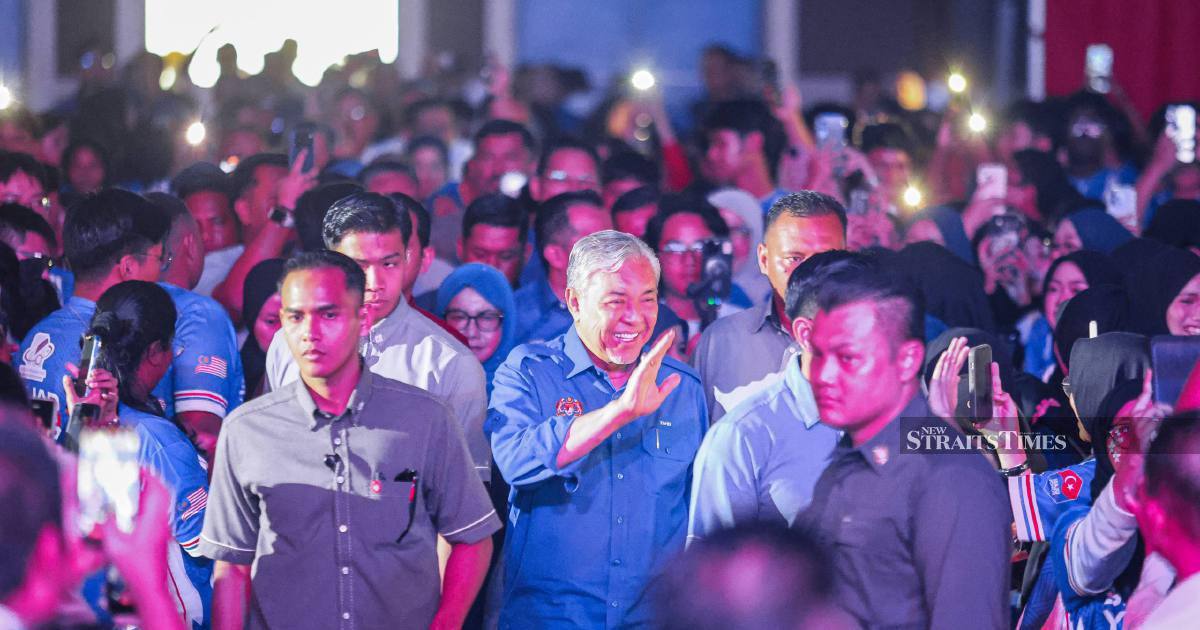
Barisan Nasional is making a direct appeal to Johor's younger electorate to cement their backing for caretaker menteri besar Datuk Onn Hafiz Ghazi as polling day approaches on July 11, with party leaders framing the election as a critical moment to sustain the state's development trajectory. The coalition, which has governed Johor for more than six decades, is banking on Onn Hafiz's popularity among younger voters to secure what would represent a decisive endorsement and maintain its hold on the southern state's political machinery.
The emphasis on youth support reflects broader shifts in electoral demographics across Malaysia, where younger voters increasingly wield decisive influence in determining election outcomes. Recognising this reality, BN has positioned Onn Hafiz as a forward-looking administrator capable of delivering tangible development benefits, particularly infrastructure projects and employment opportunities that directly affect the lives of young professionals and families. The caretaker menteri besar's track record in infrastructure development and economic initiatives in Johor has become the centrepiece of the coalition's campaign messaging, particularly in urban constituencies where younger voters are concentrated.
Johor occupies a strategically important position within Malaysia's political landscape, functioning as the nation's economic and manufacturing heartland while maintaining historical significance as a BN stronghold. The state's economy, which contributes substantially to national GDP and hosts major industrial zones, educational institutions, and technology hubs, makes it essential territory for any party seeking to consolidate national influence. For BN specifically, retaining control of Johor is viewed as foundational to the coalition's broader electoral strategy at the federal level, given the state's substantial parliamentary representation.
Onn Hafiz's elevation as the public face of BN's Johor campaign reflects calculations about which leaders can most effectively mobilise support across demographic segments. His tenure as caretaker menteri besar has allowed him to implement policies and oversee development projects that generate visible change, creating tangible grounds for the coalition's reelection messaging. This approach differs from purely personality-based campaigning, instead tying individual leadership to demonstrable governance outcomes that voters can directly observe in their communities.
The mobilisation of youth voters specifically addresses a potential vulnerability for BN in Johor. Across Malaysia, younger voters have shown greater willingness to support opposition parties and are less influenced by historical party loyalty than older generations. Additionally, youth unemployment, housing affordability, and climate concerns have become increasingly salient issues for this demographic cohort, requiring political parties to present concrete solutions rather than relying on established institutional advantages. BN's strategy of emphasising Onn Hafiz's delivery of infrastructure and economic development aims to demonstrate responsiveness to these concerns.
Geographically, Johor comprises urban centres like Johor Bahru with substantial youth populations employed in retail, services, technology, and manufacturing sectors, alongside more rural constituencies where development gaps and economic aspirations vary considerably. Tailoring messaging to appeal across these diverse settings while maintaining a coherent campaign narrative presents a significant organisational challenge. BN's emphasis on continued development under Onn Hafiz attempts to create a unifying theme that resonates across both urban and rural youth constituencies.
The timing of the July 11 election follows the dissolution of the Johor state assembly and represents an opportunity for BN to consolidate governing legitimacy through the ballot box rather than relying solely on appointed administration. Coalition strategists view an electoral victory as essential for demonstrating renewed public confidence and establishing a fresh mandate for Onn Hafiz's administration going forward. From a governance perspective, electoral victory would provide the menteri besar with enhanced political capital and legitimacy to implement longer-term policy agendas without concerns about administrative transition.
BN's regional influence extends throughout Southeast Asia's development initiatives and economic corridors, with Johor serving as a gateway to the broader ASEAN economic community and Singapore's integration with Malaysian markets. Sustained BN governance in the state facilitates continuity in cross-border economic arrangements and infrastructure connectivity projects that benefit the entire region. For Malaysian businesses and investors with regional operations, political stability in Johor—the gateway to major markets—represents a valuable asset.
Opposition parties have similarly mobilised youth-focused campaigns, creating competitive dynamics that will likely shape the election outcome. The extent to which Johor's younger voters prioritise economic development and incumbent governance performance against calls for political change and policy alternatives remains an open question. This election will provide significant evidence regarding which messages resonate most powerfully with Malaysia's increasingly influential youth electorate and whether established ruling coalitions can effectively compete for support among voters less anchored to historical party loyalties.
The youth engagement strategy adopted by BN in Johor reflects recognition that contemporary electoral success requires not merely administrative competence but active mobilisation of support through narratives that align with specific demographic priorities. Whether Onn Hafiz and the coalition can successfully translate this positioning into electoral victory on July 11 will have implications extending well beyond Johor, potentially signalling broader patterns in Malaysian electoral behaviour and the relative strength of established political institutions versus emerging challenger movements.

