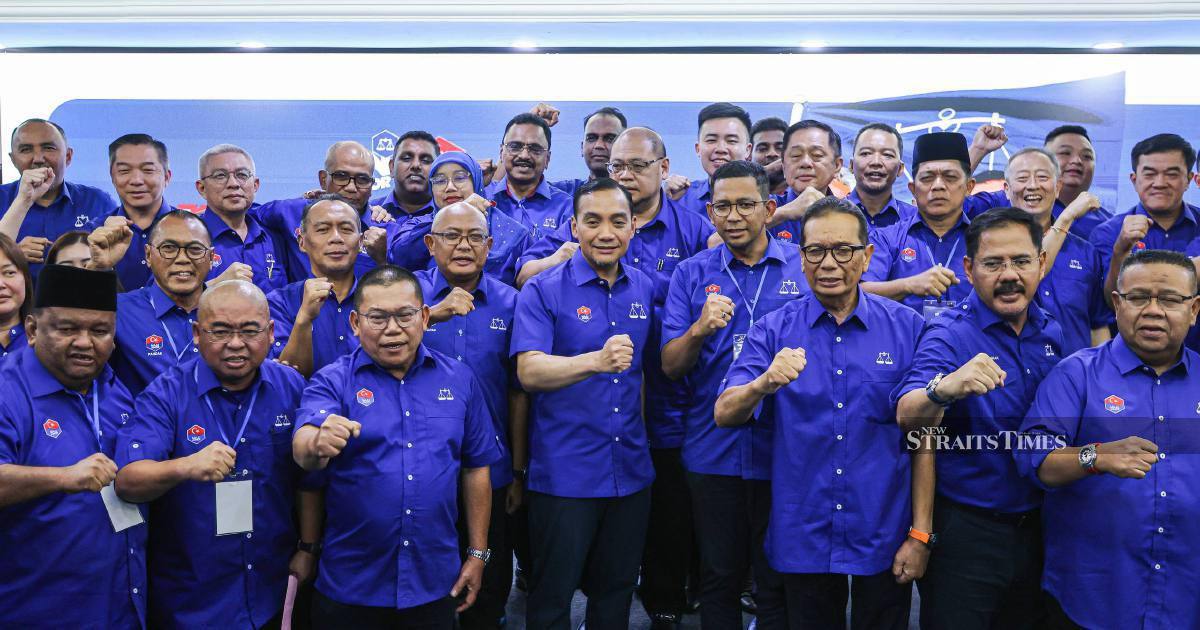
Barisan Nasional (BN) has drawn a clear line in the sand regarding its political intentions in Johor, with the ruling coalition's state leadership unequivocally rejecting the possibility of sharing power with other political parties in any post-election arrangement. The stance comes amid shifting political dynamics across Malaysia, where coalition and power-sharing arrangements have become increasingly common as electoral fragmentation has made majority governments harder to secure. Johor's firm declaration suggests BN is approaching the upcoming state election with confidence in its electoral prospects and a determination to govern on its own terms without the constraints that typically accompany multi-party coalitions.
The statement carries significant weight given Johor's status as one of Malaysia's economically important and politically influential states. The southern state has historically been a BN stronghold, though recent electoral cycles have demonstrated that no state can be taken for granted. By publicly ruling out coalition partnerships now, BN Johor is essentially signalling to voters that they can expect a decisive, single-party administration focused on implementing its own policy agenda without the compromises that coalition governance frequently demands. This approach differs notably from other states where BN has worked alongside smaller parties and independents to form government.
The no-coalition position reflects broader strategic thinking within BN's leadership structure. The coalition has been attempting to rehabilitate its image following the dramatic 2018 federal election loss that ended its six-decade dominance of national governance. In Johor specifically, demonstrating strength and unity—rather than appearing forced into coalition arrangements—may be seen as advantageous for reconnecting with voters. The message of governance without the complications of managing multiple coalition partners appeals to voters fatigued by complex political arrangements and seeking governmental stability.
This declaration arrives within a context of significant political competition in Johor. The state has attracted attention from multiple political camps seeking to strengthen their respective positions in one of Malaysia's key regions. By declaring in advance that it will govern alone, BN removes ambiguity and sends a clear signal to potential coalition partners that their services are not required. This could prove instrumental in consolidating BN's support base among voters who might otherwise harbour concerns about power-sharing arrangements diluting BN's policy objectives or governmental autonomy.
The timing of such announcements carries tactical importance. Making the no-coalition stance explicit before rather than after an election demonstrates confidence and provides voters with transparent information about what they can expect from BN governance. It also preempts any speculation about potential kingmaker scenarios that might emerge in a fragmented electoral outcome. Malaysian voters have grown accustomed to complex post-election negotiations and coalition formations that sometimes feel opaque or driven by opportunistic political calculations rather than coherent governance philosophies.
For political observers, BN's hardline position raises questions about contingency planning. Electoral mathematics can be unpredictable, and projections do not always translate into actual results. If BN's performance falls short of securing an outright majority, its refusal to countenance coalition partnerships would create a substantial political problem. The coalition would then face either accepting a humiliating reversal of its public position or facing the prospect of relinquishing government. This binary outcome suggests either very confident internal polling or a calculated gamble that the party leadership believes justified the risk.
The implications extend beyond Johor's borders within Malaysia's political ecosystem. Other states and the federal level are watching how BN's electoral strategy plays out in Johor. The state election functions as something of a testing ground for political messaging and electoral approaches that could subsequently influence national dynamics. A successful outcome for BN in Johor under this framework would likely inspire similar confident declarations elsewhere. Conversely, any shortfall would raise awkward questions about overconfidence and strategic miscalculation among BN's senior leadership.
For Malaysian voters, particularly in Johor, this statement represents an opportunity to understand what they are choosing when they cast their ballots. The clarity regarding governance arrangements—rather than the common scenario where post-election negotiations determine the shape of government—allows voters to make more informed decisions about which party or coalition they prefer to entrust with Johor's affairs. This transparency arguably strengthens democratic processes by reducing uncertainty about governmental outcomes.
The economic dimensions of Johor governance also merit consideration. As a state with significant commercial importance, automotive manufacturing, petrochemical industries, and port operations, Johor's government shapes policies affecting billions of ringgit in investment and hundreds of thousands of jobs. A single-party BN government would theoretically be able to implement economic policy more swiftly and coherently than a coalition arrangement where multiple parties might disagree on priorities. Whether this concentrated decision-making authority proves beneficial or problematic may significantly influence how Malaysian voters assess BN's governance record.
Regional observers and investors will pay attention to how this political arrangement develops. Johor's government maintains relationships with Johor Bahru's sister cities, engagement with Singapore on various fronts, and economic integration within the broader Southeast Asian region. The assurance of stable, single-party governance could potentially be attractive to international investors and regional partners seeking predictable policy environments. Conversely, instability resulting from overconfident electoral positioning would create unnecessary uncertainty in a competitive regional context.
The coming weeks leading to the Johor election will likely involve other parties and observers testing whether BN's resolute public position reflects genuine internal confidence or represents a strategic communication designed to deter opposition mobilization. The election itself will provide definitive answers about whether BN's approach proves politically sound or whether the coalition has overestimated its electoral appeal and underestimated the political viability of alternatives in a changing Malaysian landscape.