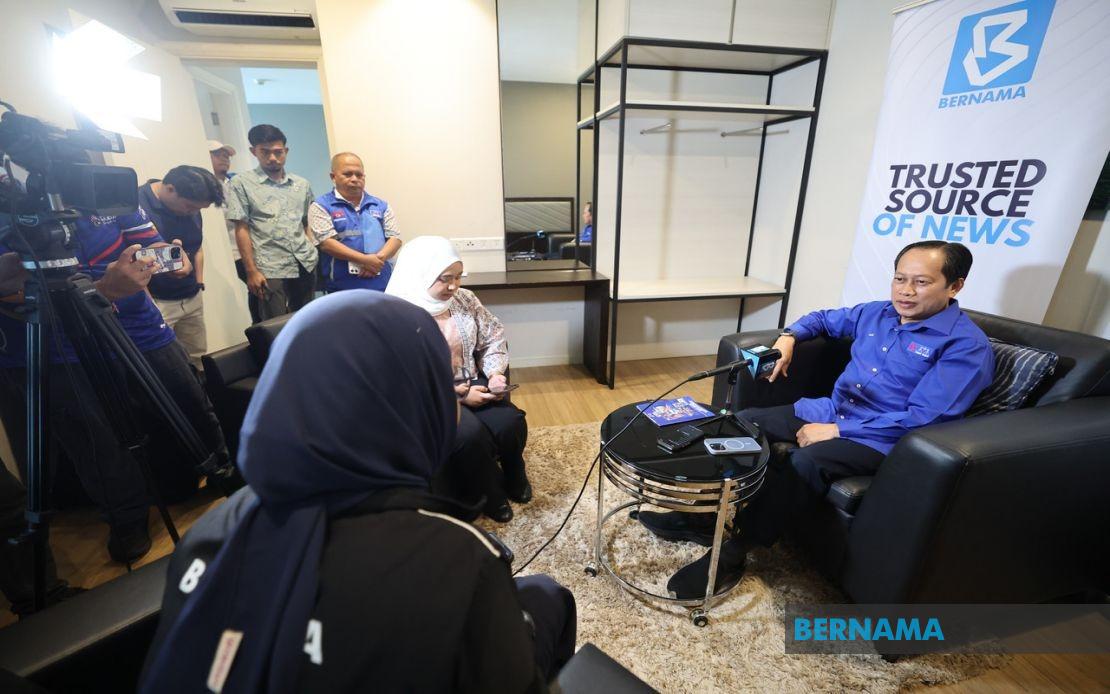
Barisan Nasional is projecting confidence in its prospects for the Johor state election scheduled for July 11, with party officials expressing belief that the coalition will secure sufficient seats to form the next state government and maintain administrative continuity in Malaysia's most developed southern state. Datuk Seri Dr Ahmad Maslan, who serves as deputy liaison committee chairman for Johor UMNO and chief of the Pontian division, outlined the coalition's strategic objective of capturing more than 40 of the 56 seats available in the State Legislative Assembly, a threshold that would provide a comfortable governing majority.
Ahmad's assessment of BN's electoral position is grounded in direct observation and hands-on involvement in grassroots campaigning across Johor's parliamentary divisions. He has participated in campaign activities spanning 25 of the state's 26 parliamentary constituencies, giving him extensive exposure to voter sentiment and the operational capacity of BN's field organization. This ground-level perspective, he contended, demonstrated that the coalition was positioned advantageously for the contest. The confidence reflected in his analysis stems from multiple factors that party strategists believe are working in BN's favour as polling day approaches.
The coalition's optimism is substantially anchored in the machinery-driven approach that has long characterized BN's electoral strategy in Malaysia. At the district level, through the District Polling Centre system that functions as the backbone of BN's campaign operations, activity has remained consistently intensive. Ahmad described an environment of continuous engagement, from dawn until late evening, encompassing traditional house-to-house canvassing, systematic analysis of voter demographics and preferences, campaign simulation exercises, and centralized coordination of field activities. This perpetual mobilization of resources and personnel reflects the organizational discipline and logistical capacity that BN has traditionally leveraged in state contests.
Beyond the assessment of internal machinery, Ahmad identified the quality of candidate performance and the broader appeal of BN's campaign messaging as complementary factors supporting the coalition's winning prospects. The response from voters encountered during campaign interactions appeared encouraging, suggesting that the party's candidates were effectively communicating their platforms and connecting with constituents. This combination of strong organizational presence and perceived campaign effectiveness created, in Ahmad's judgment, conditions favourable for BN to cross the 40-seat threshold.
A notable aspect of BN's campaign strategy in Johor involves the deployment of reinforcement teams drawn from other Malaysian states, a tactic designed to infuse the local campaign with fresh tactical approaches and perspectives beyond those typically employed within Johor. These rotating teams from other states bring accumulated electoral experience and alternative strategies that party strategists believe can enhance the appeal of BN's campaign to undecided voters. The Pahang contingent, for instance, has been assigned to assist in multiple constituencies within the Pontian parliamentary zone, including Pulai Sebatang, Benut, Kukup, and Pekan Nanas state seats.
Ahmad emphasized that the contribution of these external reinforcement teams extends beyond simple numerical strengthening of campaign personnel. The different perspectives and methodologies they introduce, informed by electoral contexts and voter dynamics in their home states, supply what party officials characterize as fresh input and innovative approaches to voter engagement. In the case of the Pahang team, leadership from that state's Chief Minister brought not merely additional hands for campaign work but conceptual frameworks and strategic thinking shaped by governance and electoral experience in a different Malaysian state. This cross-pollination of campaign ideas represents an attempt by BN to synthesize best practices across multiple regional contexts.
The confidence expressed by Ahmad must be understood within the context of Johor's political significance to Malaysia's overall political economy. As the nation's most industrialized southern state and a critical economic zone, control of Johor state government carries implications beyond electoral mathematics. Maintaining BN's governance of Johor ensures continuity of policy frameworks and administrative arrangements that have evolved over decades. For the coalition, retaining the state is presented as essential to sustaining developmental momentum and ensuring stable governance during a period of broader national political fluidity.
The intensive campaign organization Ahmad described reflects awareness among BN strategists that Johor, despite historical dominance by the coalition, cannot be taken for granted in Malaysia's contemporary electoral environment. The specificity of targeting 40 seats—more than the 28 required for an outright majority but substantially more—suggests internal modeling by BN that accommodates scenarios of closer-than-expected results or tactical losses in particular constituencies. This cushion above the bare minimum for control indicates that while confidence is evident, strategists have factored in potential vulnerabilities.
As the state moves toward polling day, the campaign intensity Ahmad described will likely escalate further, with BN's organizational apparatus working to convert the apparent voter receptiveness he observed into actual ballot-box support. The coordination between local Johor machinery and the reinforcement teams from other states will be tested in the final campaign phase, where the conversion of positive voter interactions into actual votes becomes the definitive measure of campaign effectiveness. For BN, the next two weeks represent the critical period in which the confidence expressed by party officials will be validated or challenged by actual electoral results.

