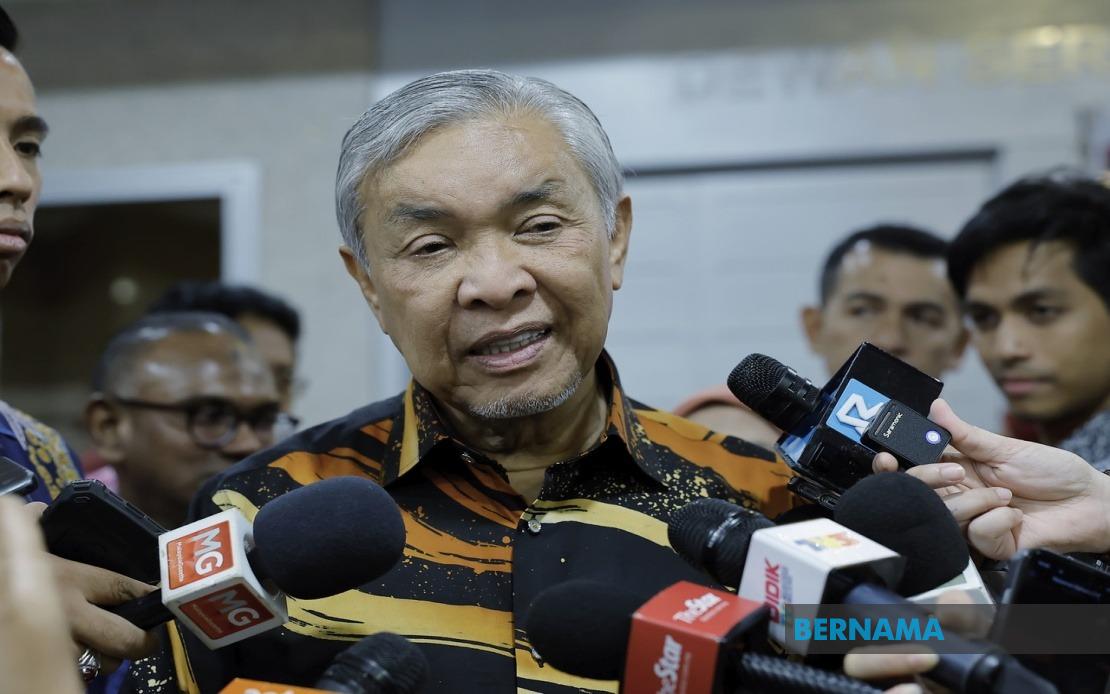
Deputy Prime Minister Datuk Seri Dr Ahmad Zahid Hamidi, speaking in his capacity as Barisan Nasional chairman, has declared that the coalition and UMNO will maintain an uncompromising stance against any breach of trust or administrative failures within Tabung Haji. His remarks, made after the Rural and Regional Development Ministry's monthly gathering in Putrajaya, underscore mounting political pressure to address governance lapses at the pilgrim fund that have eroded public confidence in one of Malaysia's most significant Islamic institutions.
The statement carries particular weight given the escalating scrutiny surrounding Tabung Haji's financial deterioration. Ahmad Zahid stressed that individuals implicated in wrongdoing or mismanagement within government agencies and statutory bodies must face full accountability, signalling that the coalition will not shield officials from consequences regardless of their positions or affiliations. This public repositioning reflects the political imperative for BN to demonstrate commitment to clean governance, especially as the government faces growing civil society demands for institutional reform.
The Royal Commission of Inquiry, which concluded its investigation into Tabung Haji's management and operational practices between 2014 and 2020, painted a troubling picture when it released its findings on July 29. The inquiry uncovered suspicious transactions and deliberate concealment of information, along with investment decisions that precipitated a substantial erosion of the fund's asset base. These discoveries have intensified calls for systemic overhaul at an institution entrusted with managing savings from millions of Malaysian Muslims preparing for the Hajj pilgrimage.
Critically, the RCI has recommended a comprehensive forensic audit into historical investment decisions that directly contributed to Tabung Haji's financial deterioration. This recommendation signals that the inquiry concluded ordinary auditing procedures proved insufficient to uncover the full extent of mismanagement, suggesting systemic failures that permeated investment governance structures. The forensic approach typically involves meticulous examination of financial records, transaction trails, and decision-making protocols to identify irregularities and potential misconduct that standard audits might overlook.
For Malaysian Muslims, the implications extend beyond financial loss. Tabung Haji serves as the primary savings vehicle for Hajj-bound pilgrims, many of whom are middle-income earners placing their trust in the institution with their life savings. Asset deterioration directly translates to reduced returns on contributions and diminished financial security for future pilgrims. The governance failures uncovered by the RCI therefore represent a fundamental breach of fiduciary responsibility to a vulnerable stakeholder population.
The parliamentary debate scheduled for August 11 provides the first formal legislative opportunity to engage with the RCI's findings comprehensively. This special session will allow lawmakers to examine the inquiry's recommendations, debate accountability measures, and potentially signal legislative intent regarding institutional reform. Given the sensitive nature of an Islamic financial institution and its significance within Malaysia's Muslim community, the parliamentary proceedings will likely attract intense public and media scrutiny.
Ahmad Zahid's positioning on the issue must be understood within the broader political context. As Deputy Prime Minister and BN chairman, his statements carry implications beyond Tabung Haji alone. Demonstrating intolerance for malfeasance within government institutions serves multiple political objectives: it reassures voters of commitment to governance standards, provides cover against opposition criticism regarding state accountability, and strengthens BN's narrative around institutional performance and competence. However, the coalition's credibility will ultimately depend on translating rhetorical commitment into concrete enforcement actions against identified perpetrators.
The pathway forward involves several critical junctures. Following the parliamentary debate, appropriate investigative and prosecutorial bodies must pursue individual accountability based on the RCI's findings. Simultaneously, institutional reforms addressing governance frameworks, investment oversight mechanisms, and transparency protocols must be implemented to prevent recurrence of identified vulnerabilities. The forensic audit will likely reveal specific transactions warranting further legal scrutiny, potentially leading to criminal charges against implicated officials.
Southeast Asian observers should note that Tabung Haji's institutional challenges reflect broader governance pressures affecting religiously-affiliated financial institutions across the region. Malaysia's experience—encompassing both the governance failures themselves and the subsequent institutional response—may provide instructive lessons for other Muslim-majority nations managing similar instruments. The effectiveness of Malaysia's accountability mechanisms and reform initiatives will likely influence regional expectations regarding governance standards for Islamic financial institutions.
From a regulatory perspective, the Tabung Haji situation underscores the importance of robust independent oversight mechanisms for statutory bodies managing public assets, particularly those serving specific religious or demographic constituencies. The gap between formal governance structures and actual operational practices that the RCI uncovered suggests that statutory autonomy, when insufficiently constrained by transparency requirements and external auditing protocols, can facilitate rather than prevent misconduct.
The coming weeks will prove decisive in determining whether Ahmad Zahid's pronouncements translate into substantive action. The parliamentary debate will signal legislative intent, but true accountability requires prosecutorial follow-through, institutional restructuring, and genuine empowerment of oversight mechanisms. For Malaysian Muslims who contributed to Tabung Haji in good faith, the test of governance reform will ultimately be whether lost assets are recovered, responsible officials face consequences, and reformed institutional structures protect future pilgrims from similar failures.
Moving forward, the government faces competing pressures: the political imperative to demonstrate accountability through enforcement, the institutional complexity of reforming a sensitive Islamic financial entity, and the practical challenges of recovering assets or securing criminal convictions based on complex financial investigations. How effectively the coalition navigates these pressures will substantially influence both Tabung Haji's restoration and broader public confidence in Malaysia's institutional governance capacity.

