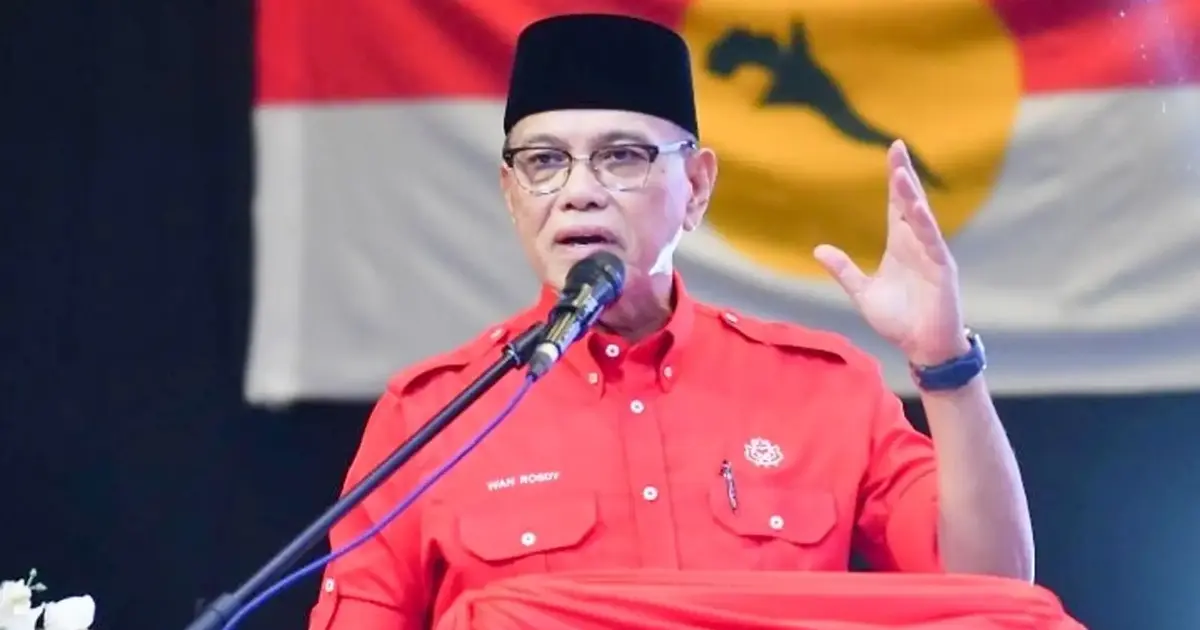
With the next general election potentially years away, Malaysia's major political coalitions show no indication of entering formal discussions about potential cooperation, according to Umno's second-highest ranking party official. Wan Rosdy, serving as vice-president of the party that anchors Barisan Nasional, stated this week that dialogue between BN and Perikatan Nasional has not begun, signalling that Malaysia's fractured political landscape may remain unsettled for some time.
The absence of coalition talks reflects the current priorities facing both alliances, which have been preoccupied with consolidating power at state and federal levels following the most recent electoral cycle. For BN specifically, the focus has shifted toward stabilizing Negeri Sembilan's nascent state administration, which requires immediate attention and resource allocation from party leadership and their counterparts. This inward focus suggests that larger strategic questions about future electoral cooperation remain on the backburner, at least publicly.
The broader context of Malaysian politics reveals significant fragmentation that makes future coalitional arrangements uncertain. Barisan Nasional, once the dominant federal force under Umno's leadership, has suffered considerable erosion since 2018, losing its long-standing parliamentary majority. Meanwhile, Perikatan Nasional has emerged as a significant force, having secured considerable representation and even led government formation talks. The question of whether these two coalitions might eventually find common cause remains one of Malaysia's most consequential political uncertainties.
Wan Rosdy's statement carries weight not merely because of his rank within Umno's hierarchy, but because Umno's internal dynamics continue to shape BN's trajectory. The party has been navigating fractious internal debates over leadership, strategy, and coalition positioning. By emphasizing the immediate work required in Negeri Sembilan, the vice-president effectively sidestepped any suggestion that merger or cooperation discussions are imminent, keeping such possibilities at arm's length from public discourse.
The timing of such statements matters considerably for Malaysian electoral observers. With general elections theoretically capable of being called at various intervals depending on parliamentary arithmetic and political developments, both coalitions operate under conditions of perpetual uncertainty. No coalition currently commands sufficient confidence that they can determine the electoral calendar unilaterally, meaning negotiations between major political players could potentially accelerate rapidly if circumstances shift.
Regional watchers note that Malaysia's political volatility has intensified since the mid-2010s, with coalition formations and realignments occurring with surprising speed. Previous assumptions about permanent alignments have repeatedly proven wrong, suggesting that current statements about non-cooperation should not be interpreted as permanent policy positions. Political environments in Southeast Asia shift quickly, and Malaysian politicians maintain flexibility in their strategic calculations.
The emphasis on Negeri Sembilan specifically highlights how state-level politics continues to occupy significant bandwidth among national leaders. The peninsula state's government formation and subsequent consolidation represents a critical test case for BN's ability to govern effectively outside the federal sphere. Success in Negeri Sembilan could bolster BN's electoral prospects nationally, while failures could accelerate political realignments that might eventually force cooperation discussions whether current leaders desire them or not.
For observers tracking potential future coalitions, Wan Rosdy's remarks suggest that public positioning favours maintaining distance between BN and PN for the present moment. This stance serves multiple purposes: it allows both coalitions to govern their respective territories without operational complications that might arise from pre-election agreements, it preserves each coalition's ability to claim legitimacy independently, and it avoids the domestic political complications that would arise from announcing cooperation deals before conditions demanded them.
Yet beneath the surface of formal political statements, informal channels and exploratory discussions frequently occur among Malaysian politicians across coalition lines. The fact that no formal talks are occurring does not necessarily indicate that backchanel communications have ceased, or that various political personalities are not contemplating scenarios in which cooperation might become advantageous. Malaysian politics operates simultaneously at multiple levels, with what leadership says publicly often diverging substantially from what party members consider privately.
The broader implications for Malaysia's political system remain significant. A genuine alliance between BN and PN would substantially alter the electoral landscape, potentially creating formidable obstacles for Pakatan Harapan and other opposition coalitions. Conversely, continued fragmentation benefits smaller parties and potentially increases volatility. Whether such cooperation emerges depends on factors ranging from internal party dynamics to changes in public sentiment and electoral calculations that may not manifest for months or years.
For now, Malaysian politics continues its drift, with major coalitions occupied by immediate governance concerns and the consolidation of existing power bases rather than grand strategic negotiations about future electoral arrangements. Wan Rosdy's statement, in this sense, accurately reflects the current preoccupations of BN's leadership while leaving considerable room for future developments that might force reconsideration of positions that today seem settled.

