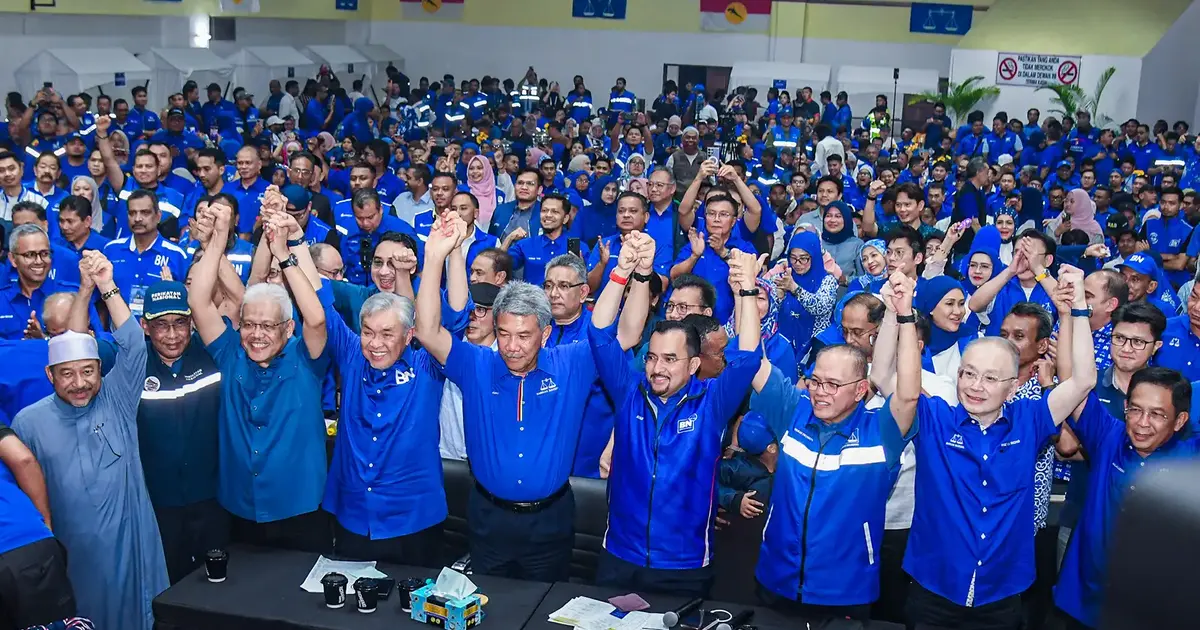
The stability and electoral prospects of a reinvigorated Barisan Nasional-Perikatan Nasional alliance hinge critically on resolving fundamental disagreements over parliamentary seat allocation and the identity of the prime ministerial candidate before campaigning intensifies, according to political analyst Tawfik Yaakub. With Malaysia's electoral system growing increasingly complex and voter sentiment more volatile than in previous cycles, delaying such crucial negotiations could invite internal fractures that undermine the partnership's cohesion and electoral appeal.
Tawfik emphasizes that the sheer logistical and political complexity of orchestrating a nationwide general election—coordinating campaign messaging across multiple parties, managing state-level negotiations, resolving competing territorial claims, and addressing grassroots expectations—demands that foundational matters be settled far in advance. Unlike smaller-scale elections or by-polls, a general election creates cascading timelines where decisions made at coalition headquarters ripple downward through state assemblies, divisional bodies, and constituency-level structures. Any ambiguity about seat distribution or the party from which the next Prime Minister will emerge inevitably creates vacuum spaces where speculation, resentment, and rival factions mobilize.
The analyst's counsel reflects hard-won lessons from previous coalition experiments in Malaysia. Historical precedent shows that alliances built on vague understandings or postponed decisions tend to unravel precisely when the partnership is most critical. When the rank and file remain uncertain about their party's role within the alliance or harbour doubts about the leadership arrangement, they struggle to project genuine enthusiasm during campaigning. Voters detect this underlying anxiety and respond with reduced turnout or tactical voting against the coalition.
For Barisan Nasional, which has governed Malaysia for decades but suffered electoral reverses in recent years, a clear partnership framework with Perikatan Nasional represents a pragmatic calculation to consolidate the Malay-Muslim vote and recapture suburban and rural constituencies. Yet this strategic rationale only materializes if both parties can present unified positioning to the electorate. Ambiguity about who holds ultimate authority—whether at ministerial, cabinet, or prime ministerial level—introduces friction points that opposition parties will relentlessly exploit through social media, ceramah, and targeted voter outreach.
The question of the prime ministerial candidate carries particular weight in Malaysian politics, where personality-driven followership remains influential. Supporters of one party may feel demotivated if they perceive that their preferred leader has been sidelined or offered a subordinate role. Conversely, if coalition negotiators announce the PM candidate too late, they forfeit months of promotional opportunities to build public familiarity and positive brand association around that individual. Perikatan Nasional's relative youth as a political force compared to the more established Barisan machinery means that early clarity about leadership could help the newer formation build legitimacy and voter confidence.
Tawfik's warning also addresses the practical challenge of candidate selection and nomination filings. A general election typically involves thousands of candidates across hundreds of constituencies, each representing either Barisan or Perikatan component parties. If seat allocation remains fluid well into the campaign cycle, confusion spreads regarding which party should field candidates in particular areas, creating opportunities for intracoalition conflicts that bog down campaign momentum and absorb leadership attention that should focus on messaging and voter persuasion.
The analyst's perspective underscores that strategic patience—settling disputes before the formal campaign period—paradoxically accelerates electoral success. Constituencies benefit from clear party deployment, making ground-level campaign teams more effective. Voters receive consistent messaging about the coalition's vision and governing priorities rather than conflicting signals about internal power dynamics. Media coverage sharpens around policy substance rather than coalition stability speculation.
Moreover, early resolution of seat distribution and PM candidacy carries implications beyond the immediate election. These arrangements establish the foundational architecture for a future coalition government, signalling to potential coalition partners, foreign governments, investors, and civil society organisations how the alliance intends to govern. A process marked by transparent negotiation and timely resolution projects confidence and competence, whereas prolonged bargaining or last-minute horse-trading signals weakness and invites skepticism about the coalition's capacity to manage complex governance challenges.
The Malaysian electorate has demonstrated increasing sophistication and willingness to punish coalitions perceived as fractious or self-serving. Voter engagement with media, social networks, and community discussions means that grassroots sentiment can shift rapidly based on perceptions of coalition dysfunction. For both Barisan Nasional and Perikatan Nasional, therefore, Tawfik's counsel represents not merely tactical advice but a strategic imperative that shapes electoral outcomes and, ultimately, Malaysia's political trajectory for the coming five-year parliamentary term.

