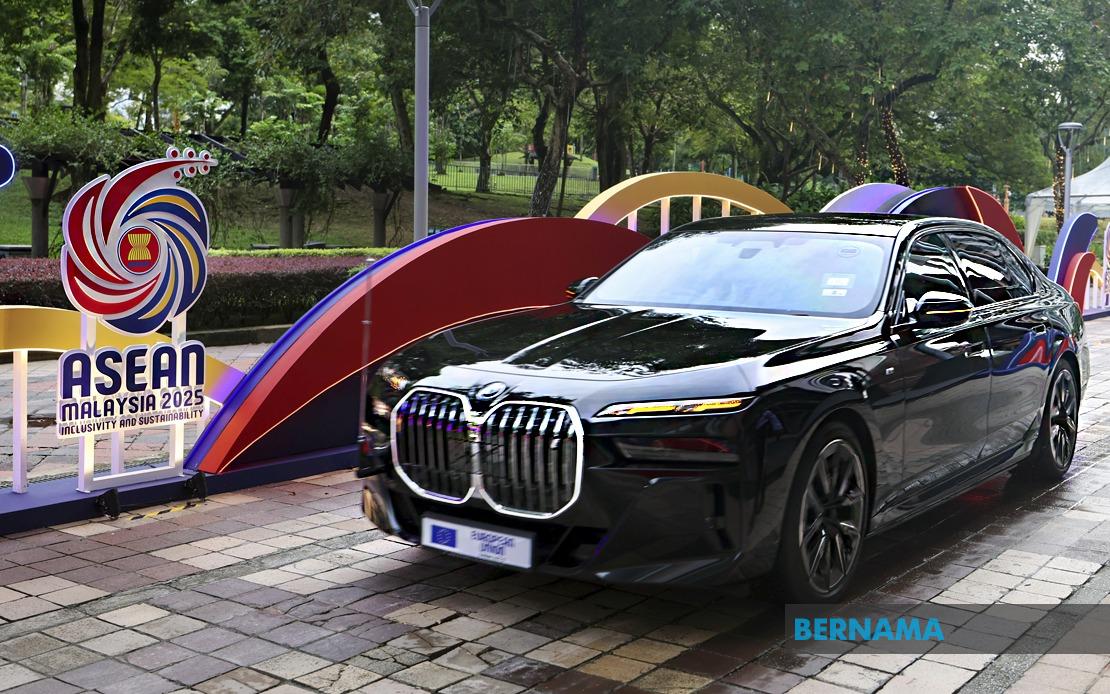
The Prime Minister's Department has moved to quash recent social media speculation by confirming that the BMW luxury vehicle used by Prime Minister Datuk Seri Anwar Ibrahim is an existing government asset rather than a newly procured official car. The clarification came through a joint statement issued by the Prime Minister's Department and the Ceremonial and International Conference Secretariat Division, known as BIUPA, addressing public concern about the vehicle's origins and procurement.
BIUPA, the division responsible for managing Malaysia's diplomatic and ceremonial affairs, has maintained supervision over the BMW as part of its broader portfolio of assets dedicated to official government logistics. The vehicle falls within a specialized category of official transport designed to serve the nation's international obligations and diplomatic requirements. Its primary function centres on supporting Malaysia's hosting of visiting heads of state and government leaders who hold the rank of president or prime minister.
The decision to deploy this particular asset stems from rigorous international security protocols and established standards that govern the movement and protection of state visitors at the highest level. Malaysia, as a nation that regularly receives dignitaries and conducts bilateral summits with international leaders, maintains specific vehicles equipped to meet these demanding protocol requirements. The BMW has been configured with advanced security features that extend beyond conventional protection measures.
According to the official statement, the vehicle possesses specially engineered security specifications designed to withstand significant ballistic threats and explosive devices. Modern security risks, including those posed by drone technology and unmanned aerial systems, have also been factored into the vehicle's defensive capabilities. These stringent requirements reflect the evolving threat landscape that protective services worldwide now confront when safeguarding senior state officials.
The clarification emphasized that the Prime Minister's current use of the BMW represents a temporary arrangement implemented on the assessment and recommendation of the Royal Malaysian Police's security division. This distinction is significant, as it underscores that the vehicle deployment was not a permanent reassignment but rather a pragmatic response to immediate security considerations. The temporary nature of the arrangement suggests that the situation may be subject to review once circumstances change.
The fundamental reason for this temporary transition centres on maintenance requirements affecting the Prime Minister's primary official vehicle. That vehicle, which was a gift from the Yang di-Pertuan Agong, is presently undergoing routine servicing and maintenance procedures. Such maintenance schedules are essential for ensuring the continued functionality and safety of official transport, and the temporary substitution with the BMW permits the Prime Minister's movement schedule to proceed without disruption during this period.
The public statement was necessitated by widespread speculation circulating across social media platforms, where unverified claims about the vehicle's ownership and acquisition had gained traction. In an era where misinformation can rapidly proliferate through digital channels, government agencies have increasingly adopted the practice of issuing timely clarifications to address rumour and speculation before they crystallize into entrenched public perception. The JPM's swift response reflects an understanding that speculation about government assets and official expenditure can undermine public confidence if left unaddressed.
For Malaysian readers, this episode highlights broader questions about the intersection of state security, official protocol, and public accountability. The existence of specialized security vehicles reflects Malaysia's engagement with the international community and the genuine risks associated with protecting senior officials. However, such assets also inevitably invite public scrutiny regarding their cost, necessity, and usage patterns. The government's decision to provide detailed explanation demonstrates recognition that transparency surrounding official transport serves the public interest.
The incident also illuminates the practical complexities of maintaining official vehicles for ceremonial and security purposes. International standards for protecting heads of government impose specific technical requirements that cannot be met by standard commercial vehicles, necessitating either specialized procurement or the strategic deployment of existing assets. Malaysia's approach of maintaining dedicated assets within BIUPA for this purpose offers an efficient model that avoids repeated acquisitions while ensuring readiness for international events and visits.
The clarification carries implications for understanding how Malaysia manages its official resources and responds to public concern. In Southeast Asia, where government transparency remains an evolving practice, the willingness to explain asset usage and security decisions represents a positive development. The statement's specificity regarding security protocols and the vehicle's purpose demonstrates an attempt to educate the public about the legitimate reasons underlying government asset deployment.
Looking forward, the incident underscores the importance of proactive communication from government agencies regarding matters that attract public curiosity. By providing comprehensive explanation before speculation hardens into accepted narrative, authorities can maintain public understanding of necessary security measures. The temporary nature of the BMW's deployment suggests that once the Prime Minister's gifted vehicle completes maintenance, normal arrangements will resume, returning the BMW to its designated role within BIUPA's international protocol portfolio.

