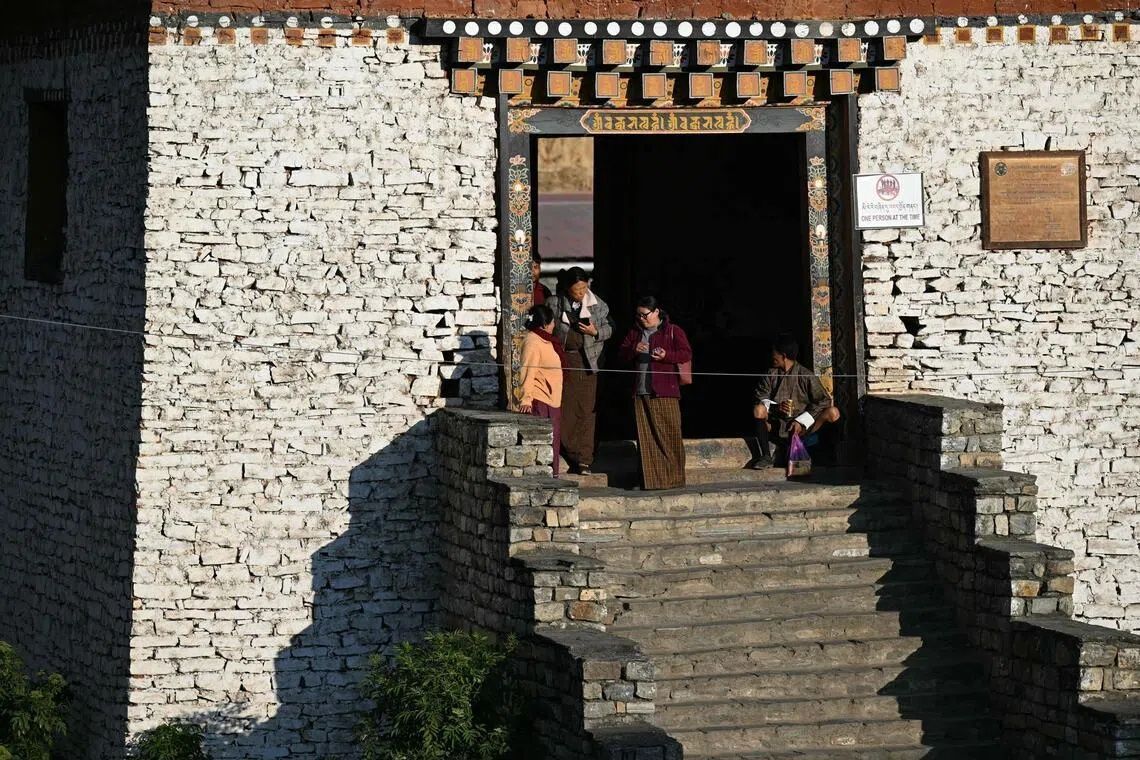
Bhutan is confronting a demographic emergency that threatens to undermine its economic viability and social stability. The Himalayan kingdom, home to fewer than 800,000 people nestled between India and China, is implementing an ambitious intervention: the "Third Child Plus" programme launched in June, which provides families with monthly cash payments of $105 for each third or subsequent child until age three. The initiative represents a dramatic pivot from the nation's historical approach to population management and reflects growing alarm among policymakers about the trajectory of the country's population.
The urgency of Bhutan's situation becomes evident when examining recent demographic trends. Annual birth numbers have contracted by more than 25 percent over the past decade, while concurrent waves of youth migration abroad have accelerated the depletion of the country's working-age population. Prime Minister Tshering Tobgay has repeatedly used stark language to characterise this phenomenon, describing it as an "existential" crisis that demands immediate government intervention. In his introduction to the new programme, Tobgay emphasised that Bhutan's fertility rate has fallen to approximately 1.8 children per woman—a figure hovering at or below the replacement level of 2.1 children needed to maintain a stable population without immigration.
The statistical projections underlying the government's alarm paint an unsettling portrait of Bhutan's demographic future. The share of citizens aged 65 and older is projected to climb from roughly six percent today to 17 percent by 2050, according to UN estimates. Meanwhile, births of third or more children—the specific focus of the new incentive scheme—have plummeted 27 percent since 2020 alone. These figures are not merely academic abstractions; they represent structural threats to Bhutan's economic productivity and the sustainability of public finances. Fewer working-age people will need to shoulder the burden of supporting a larger elderly population, while simultaneously generating the tax revenues necessary to maintain government services and social infrastructure.
The outflow of Bhutanese citizens to opportunities abroad represents a parallel and compounding challenge. As of May 2026, more than 71,000 Bhutanese nationals were residing outside the country, with approximately 55 percent of them concentrated in Australia. This migration pattern is particularly damaging because those departing tend to be young adults in their prime working and reproductive years. The government's policy briefing on the Third Child Plus programme explicitly acknowledges that while remittances sent home by overseas workers provide financial benefits, the sustained emigration of reproductive-age cohorts further constrains the labour force, suppresses domestic fertility rates, and undermines long-term population dynamics.
However, the efficacy of cash incentives alone remains deeply uncertain. Khandu Wangmo, a 35-year-old civil servant, articulated the scepticism felt by many Bhutanese. While acknowledging that the scheme represents a positive step in encouraging larger families, she pointed out that financial payments may prove insufficient to reverse fertility decline if the broader cost structure of raising children remains prohibitively expensive. The expense of childcare, housing, and education constitute formidable barriers that monthly cheques cannot fully address. This concern resonates with the lived experience of citizens like Preeti Nirola, 34, who expressed a desire for additional children but felt constrained by the practical and financial realities of family expansion.
The complex, multifactorial causes underlying Bhutan's fertility decline extend beyond economic hardship. Changing social values, increased female educational attainment and workforce participation, delayed marriage patterns, and shifting personal priorities all contribute to families opting for fewer children. These are structural shifts that reflect broader developmental progress and individual autonomy rather than mere poverty or deprivation. The UN Population Fund, which supported Bhutan's new programme, advocates an alternative policy framework: rather than purely attempting to boost birth numbers through financial incentives, the organisation recommends expanding choices for citizens through affordable childcare, comprehensive social support systems, and policies that enable women to balance parenthood with education and employment.
Bhutan's current predicament stands in striking contrast to its recent history. During the 1974-era "Small Family, Happy Family" campaign, the government actively promoted family planning and lower fertility. This effort succeeded remarkably, compressing within a few decades a demographic transition that took other nations generations to complete. Anthropologist Shawn Rowlands, who teaches in Thimphu, notes that Bhutan's fertility rate has dropped from approximately 6.6 children per woman in the 1990s to 1.8 today—a historically unprecedented velocity of demographic change. This rapidity reflects both the effectiveness of past family planning initiatives and the more recent, powerful pull of international migration opportunities.
The 1990s witnessed another pivotal moment in Bhutan's demographic history: the expulsion and emigration of more than 100,000 ethnic Nepali-speaking citizens, constituting roughly one-sixth of the kingdom's population at that time. This traumatic episode coincided with tightened immigration policies and fundamentally reshaped the nation's ethnic composition and population dynamics. Today's government faces the irony of working to retain and encourage its remaining population to reproduce, after decades of enforcing strict population controls and restrictive migration policies.
Government officials frame addressing the exodus as inseparable from solving the fertility crisis. Prime Minister Tobgay has identified overseas migration as Bhutan's "most pressing challenge" and articulated the policy response: strengthening the domestic economy, creating quality employment opportunities, and materially improving living standards are essential prerequisites for reducing outmigration. Without such complementary measures, the cash incentives programme risks becoming merely a palliative that fails to address root causes driving young Bhutanese to seek livelihoods elsewhere.
Yet a contrarian perspective warrants consideration. Rowlands and other analysts question whether a declining population necessarily constitutes a crisis requiring urgent reversal. Bhutan has built its international identity around the concept of "Gross National Happiness" rather than relentless economic growth maximisation, and the nation maintains carbon-negative status—a rare environmental achievement. In this context, population stabilisation or modest contraction might be compatible with, or even supportive of, the nation's distinctive development philosophy and environmental commitments. Fewer people could potentially ease pressures on Bhutan's ecosystems while maintaining or improving living standards through productivity gains and more equitable resource distribution.
Nonetheless, the structural realities of an ageing population without sufficient working-age cohorts present genuine fiscal and social service delivery challenges that cannot be dismissed as philosophical abstractions. The tension between Bhutan's espoused values and its demographic necessities remains unresolved. The Third Child Plus programme represents an attempt to navigate between these competing imperatives, though its ultimate success will likely depend on whether it forms part of a broader policy ecosystem addressing living costs, childcare, education, and employment opportunities—or whether it functions as an isolated, insufficient gesture.

