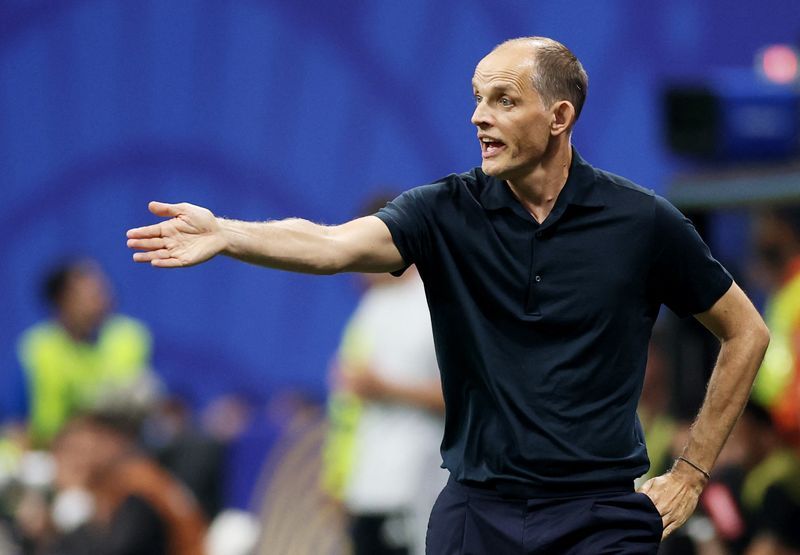
Thomas Tuchel walked into the England job with significant fanfare and considerable expectations. When the Football Association announced his appointment as Gareth Southgate's successor in October 2024, Mark Bullingham, the FA's Chief Executive, declared that Tuchel represented the nation's best opportunity to finally capture a major tournament title. By January, the former Chelsea manager had taken the helm and publicly pledged to secure a second World Cup star for England's jersey—a reference to the nation's solitary triumph in 1966. Yet that aspirational mission collapsed dramatically during England's semi-final encounter with Argentina, leaving Tuchel besieged by a storm of recriminations from media commentators and football analysts questioning his in-game management and strategic approach.
The narrative surrounding Tuchel's downfall, however, oversimplifies the circumstances of England's defeat and overlooks the formidable nature of the opposition they faced. England were not merely contending against a competent international side but rather the tournament's defending champions, still animated by Lionel Messi—widely regarded as the sport's greatest contemporary talent. This fundamental context frequently disappears from the barrage of criticism that has engulfed Tuchel since the final whistle. The German coach's decision to shift to a more defensive formation following Anthony Gordon's opening goal provided an easy target for armchair tacticians, yet it represented only one variable within an infinitely more complex sporting contest.
Among the more measured critiques, former manager Alan Pardew suggested on talkSPORT that Tuchel's tactical adjustment inadvertently nurtured a fearful, reactionary mentality within the squad. Pardew argued that a negative psychological framework had infected the team's collective consciousness, undermining any technical systems the manager might have implemented. This psychological dimension proved particularly consequential during the dying stages of the match, when England's possession metrics became strikingly lopsided—attempting a mere two passes in Argentina's half across a twenty-minute window while Argentina completed 111 such passes. The numerical disparity tells a compelling story about how the team's defensive posture gradually constricted its capacity for creative expression and proactive control.
Tuchel himself, however, articulated a more philosophical interpretation of England's shortcomings. He suggested that no tactical framework, regardless of sophistication, could have fundamentally altered the outcome given what he perceived as England's deeper architectural weakness. The manager specifically identified possession football as a structural deficiency, contrasting England's approach with the ingrained continental traditions of Spain, Argentina, and Brazil—footballing cultures that have developed generational expertise in controlling matches through sustained ball circulation. This observation gestures toward a cultural and developmental issue that transcends any single manager's capabilities, suggesting that England's problems may run considerably deeper than tactical tweaks or personnel adjustments.
It is essential to acknowledge that Tuchel was undertaking his maiden expedition into elite international tournament football, despite his extensive résumé of club-level accomplishments. His Chelsea side captured the Champions League title under his stewardship, and his managerial credentials remained unquestionable. Nevertheless, international tournaments operate within an entirely distinct ecosystem—one characterised by compressed timescales, relentless media scrutiny, and the psychological weight of national expectations. Tuchel's semi-final berth at least replicated the achievement that Southgate had attained in 2018, suggesting he had navigated the earlier rounds with reasonable competence. The learning curve for international tournament management proves notoriously steep, a reality illustrated by the trajectories of previous world-winning coaches. Didier Deschamps required six years of French national team experience before guiding France to the 2018 World Cup title, subsequently finishing as runners-up four years later. Aime Jacquet, France's 1998 World Cup-winning architect, needed five years of development before orchestrating that triumph. By such historical standards, Tuchel's performance, while disappointing, perhaps warrants contextual assessment rather than blanket condemnation.
Argentina's path to the semi-finals, conversely, demonstrated remarkable resilience and a capacity to overcome adversity that ultimately proved decisive. Lionel Scaloni's squad progressed through their group phase with considerable comfort, yet the knockout rounds subjected them to acute pressure. Cape Verde pushed Argentina to the brink of elimination, while a late-game collapse by Egypt required three successive goals to rescue Argentina's campaign during the round of sixteen. Switzerland, playing with ten men, extended Argentina to extra time in the quarter-finals. These narrow escapes might have devastated a team possessed of weaker character, yet Argentina's players responded with collective determination and mounting intensity. The tournament trajectory suggested a side that refused to acquiesce, a psychological quality that proved decisive when confronting England's increasingly passive defensive structure.
Messi functioned as the beating heart of Argentina's resurrection, a truth that commentary surrounding Tuchel's tactical decisions frequently minimises. The 39-year-old maestro, operating with the accumulated wisdom of his incomparable career, shifted his positioning to the right flank precisely to circumvent England's densely packed rearguard. From this repositioned vantage point, Messi orchestrated the assists for both Enzo Fernandez's and Lautaro Martinez's goals that ultimately sealed England's fate. Thierry Henry, who shared a Barcelona dressing room with Messi for three seasons and possesses intimate knowledge of his capabilities, captured the psychological phenomenon in a subsequent interview with FOX. Henry described how Messi enters a transcendent state when his team requires salvation—a condition where he effectively becomes unstoppable, willing to run extended distances and execute audacious dribbling efforts that smaller men would not conceivably attempt. The former Arsenal striker recounted an anecdote illustrating how Messi's competitive fire ignites when he feels slighted by officials or circumstances, transforming his game into something almost preternatural.
England's encounter with Argentina therefore represented a collision between a talented but structurally inconsistent squad and perhaps the final chapter in the career of football's most transformative individual talent at the moment when that talent needed to manifest with the greatest urgency. Messi continues to propel Argentina toward a second consecutive World Cup title—an achievement unattained since Brazil in 1962—and at each juncture, including against England, he has demonstrated why his claim to historical greatness remains undimmed by advancing age. England, much like Cape Verde and Egypt before them, discovered through painful experience that awakening Messi's competitive instincts produces a player seemingly operating according to different physical and psychological laws than those governing ordinary football practitioners.
Tuchel's contract extension, signed in February, suggests the FA retains confidence in his medium-term project despite the semi-final heartbreak. The criticism currently enveloping him reflects legitimate questions about in-match decision-making and the psychological atmosphere he cultivated during the knockout phases. Yet a more complete accounting of England's defeat must acknowledge that his team confronted opponents of formidable character, led by a player whose individual brilliance has authored chapters of football history that transcend tactical systems and managerial philosophies. The pathway forward for England doubtless involves addressing possession-based structural deficiencies and examining how top international cultures develop technical fundamentals across their academies and grassroots programmes—challenges that Tuchel alone cannot resolve, however imaginative his tactical adjustments might become.

