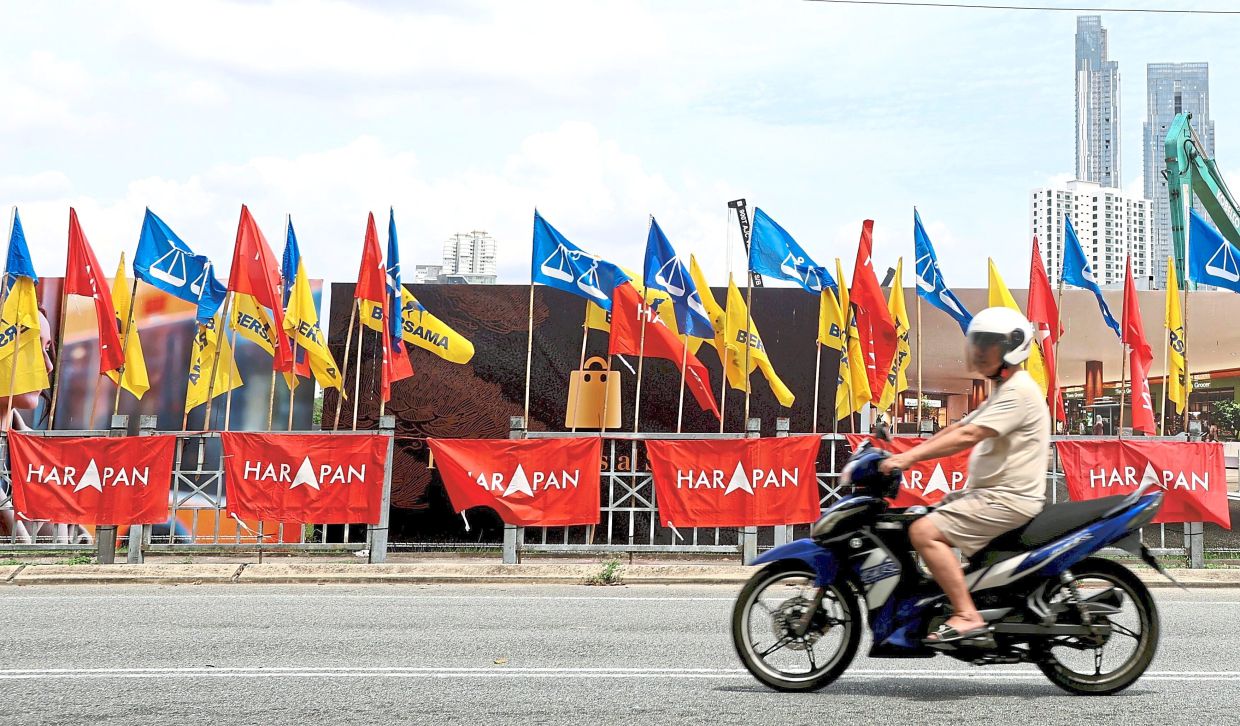
Negri Sembilan's approaching state election has dominated political discourse with familiar arithmetic: 36 seats for absolute control of the State Legislative Assembly, or 29 for a two-thirds majority. Yet beneath this electoral calculus lies a far more consequential number that may ultimately determine the quality of life for millions of Malaysians—65, the proposed retirement age that warrants serious national deliberation rather than partisan dismissal. While election cycles occur every few years, retirement policy shapes the lived experience of citizens across decades, making this question arguably more significant than which coalition secures state power.
The pandemic fundamentally rewired retirement planning across Malaysia between 2020 and 2024. Households systematically depleted accumulated savings, businesses teetered on the brink of collapse, and countless civil servants alongside private-sector workers shelved meticulously constructed financial blueprints. The immediate health crisis may have receded, yet Malaysia's economic trajectory failed to revert to pre-pandemic patterns. Instead, ongoing geopolitical tensions surrounding the Strait of Hormuz in 2025 have intensified energy costs, cascading through transportation and food prices to amplify inflationary stress across Southeast Asia. Malaysian families confronted fresh cost-of-living pressures precisely when rebuilding depleted reserves, creating a compounding financial squeeze that makes retirement planning calculations far more fraught than historical patterns suggest.
Negri Sembilan occupies a distinctive position to lead this discussion. The state has historically balanced traditional communal structures with contemporary economic aspirations, its proximity to Kuala Lumpur, Putrajaya and the Klang Valley drawing residents into metropolitan professional occupations whilst maintaining robust intergenerational family networks where multiple generations routinely provide mutual support. Such social dynamics transform retirement policy from mere administrative reconfiguration into a question touching the material foundations of household stability and community cohesion. For Negri Sembilan voters and residents throughout Malaysia, extending working years to 65 carries implications that transcend bureaucratic reorganisation.
Consider the lived circumstances of Malaysians now approaching their late fifties—cohorts that have navigated the Asian Financial Crisis, the Global Financial Crisis, the Covid-19 pandemic and subsequent geopolitical upheavals. Their professional trajectories have suffered repeated interruptions from external shocks beyond individual control, creating accumulated financial deficits that standard retirement projections rarely account for adequately. Allowing such workers the genuine choice—not mandatory obligation—to continue employment until 65 represents a legitimate policy response to these structural realities rather than merely postponing an inevitable transition.
Artificial intelligence introduces unexpected dimensions to this debate. Contrary to deterministic narratives portraying automation as wholesale labour market replacement, AI may paradoxically strengthen arguments for retaining experienced workers. As algorithmic systems automate routine operations, organisations increasingly prize institutional memory, accumulated judgment, mentoring capacity and ethical reasoning—qualities developed through years of professional engagement rather than acquired in initial training phases. Experienced practitioners become more, not less, valuable as technological transformation accelerates.
Younger Malaysians entering the contemporary workforce face fundamentally different economic conditions than their predecessors. Generation Z confronts rapidly mutating skill demands, compressed employment tenures and intensifying competition from digital technologies. Rather than construing older workers as professional rivals, families might strategically benefit from continued parental and grandparental economic participation providing financial anchors whilst younger members navigate unprecedented workplace fluidity. Intergenerational cooperation transforms from sentimental ideal into practical economic necessity.
This collaborative model would strengthen Malaysia's labour market resilience significantly. Seasoned professionals mentoring junior colleagues whilst simultaneously upgrading personal digital competencies create knowledge transfer loops that isolated age cohorts cannot replicate. Manufacturing workforces gain institutional continuity, healthcare systems benefit from experienced provider guidance, educational institutions preserve pedagogical sophistication and government agencies maintain administrative institutional memory. Such organic knowledge circulation represents competitive advantage that younger-only workforces systematically sacrifice.
Fiscal mathematics reinforce this policy case. Workers extending productive careers continue contributing tax revenue, accumulating retirement savings and sustaining consumer expenditure patterns. This broadens government revenue bases whilst reducing immediate pension system strain and constraining social assistance programme demands. Demographic realities across Southeast Asia suggest that extending productive economic participation provides more sustainable fiscal foundations than policies accelerating dependency ratios through premature retirement cohorts.
Critically, extending retirement age should remain genuinely voluntary rather than compulsory. Workers in physically demanding occupations—construction labourers, agricultural workers, industrial operators—understandably merit earlier retirement options, their bodies having absorbed decades of wear that justify transition to rest or lighter duties. Conversely, professionals in less physically taxing fields—educators, healthcare specialists, engineers, administrators, academics—may rationally prefer continued contribution if maintained health permits. Sophisticated policy architecture accommodates both trajectories rather than imposing uniform age-based transitions.
This flexibility particularly matters across Malaysia's diverse economic landscape. Urban professionals in Kuala Lumpur may embrace extended working lives within air-conditioned office environments, whilst rural agricultural workers require different retirement calculations reflecting distinct occupational demands. Negri Sembilan's mixed economic character—straddling metropolitan spillover zones and traditional resource-dependent sectors—perfectly illustrates why uniform retirement approaches fail Malaysian demographic and occupational realities.
The retirement age question ultimately transcends partisan calculation because its consequences outlast electoral cycles and affect voters regardless of coalition preference. Whether Barisan Nasional, Pakatan Harapan or Perikatan Nasional governs Negri Sembilan, demographic pressures and fiscal realities demanding retirement policy recalibration persist unchanged. This makes comprehensive bipartisan dialogue particularly important—governing coalitions and opposition parties should jointly examine retirement frameworks based on evidence rather than political positioning.
As Negri Sembilan votes, the 36-seat question will dominate media attention and campaign narratives. Yet observers watching longer-term trajectories of Malaysian society, household financial security and intergenerational cooperation might recognise that 65 carries deeper significance. Electoral numbers determine which politicians hold office for the current term; retirement policy shapes whether ordinary Malaysians can maintain dignity, household stability and economic contribution across the decades ahead. Both matter, but one deserves proportionally greater deliberation and national consensus than prevailing political discourse currently affords.

