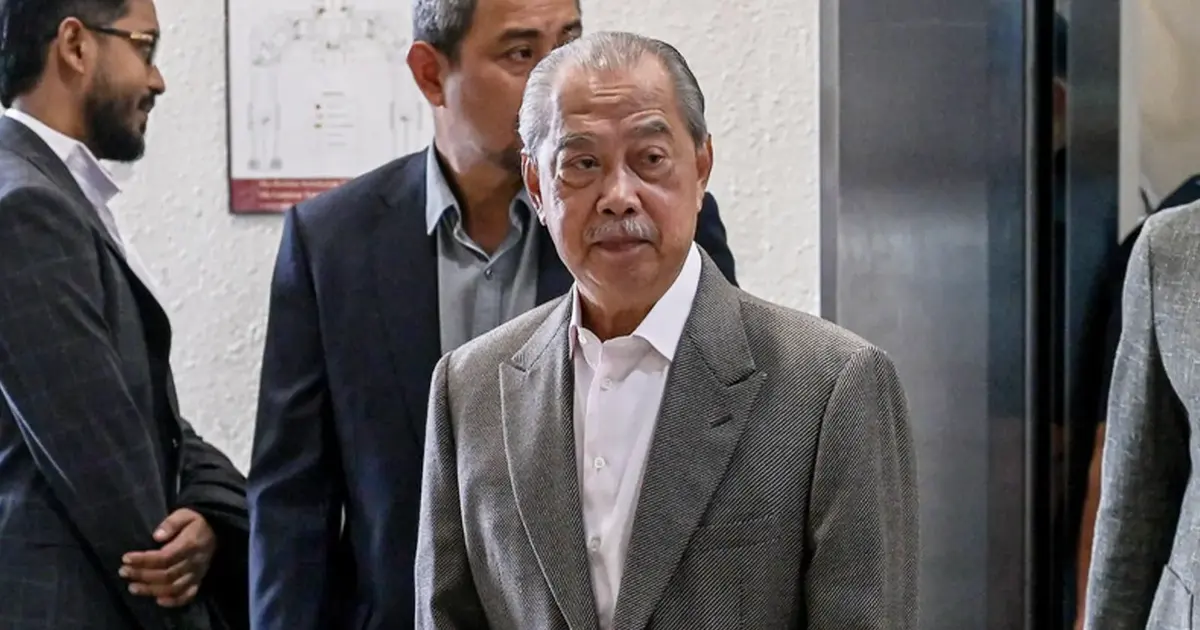
Questions over the true power structure within Bersatu have surfaced during High Court proceedings, with the Deputy Public Prosecutor suggesting that former party chairman Muhyiddin Yassin may have functioned merely as a figurehead without real command over the party's financial apparatus. The challenge to Muhyiddin's effective authority emerged as Zulhelmi Zaulkafly, the party's financial officer, provided testimony before the court regarding how Bersatu managed its money and decision-making processes.
Zulhelmi's testimony painted a picture of distributed financial responsibility within Bersatu rather than centralised control. According to his account, no single individual possessed exclusive authority over the party's financial affairs, suggesting instead a model where multiple parties held sway over monetary decisions and resource allocation. This characterisation becomes significant when set against the backdrop of a former party leader who, on the surface at least, occupied the highest executive position within the organisation.
The DPP's line of questioning appeared designed to establish whether Muhyiddin genuinely exercised leadership prerogatives or whether he operated within constraints that limited his practical authority. By eliciting testimony that financial power was dispersed rather than concentrated, prosecutors seemed to be building a narrative in which the party chairman's role was more ceremonial than substantive. This distinction carries implications for understanding decision-making chains, accountability structures, and who actually wielded influence within Bersatu during Muhyiddin's tenure.
Bersatu, formed in 2016 by former UMNO members dissatisfied with the party's direction, has experienced significant internal turbulence since its establishment. The party gained prominence when it became the backbone of the Perikatan Nasional coalition that governed Malaysia between March 2020 and August 2021, with Muhyiddin serving as Prime Minister. However, the coalition subsequently fractured, and Bersatu's internal coherence has remained contested, with competing factions advancing different visions for the party's trajectory and leadership.
The question of who truly controlled party finances touches on broader governance concerns within Malaysian political organisations. Political parties across Malaysia have faced recurring scrutiny regarding financial transparency, fund sources, and the mechanisms through which money influences policy and decision-making. When a party's money flows remain opaque or dispersed among multiple decision-makers without clear hierarchies, it becomes difficult for members and the public to understand where authority genuinely resides and who should be held accountable for financial stewardship.
Zulhelmi's position as financial officer places him in a position to possess detailed knowledge of how money moved through Bersatu's systems and who authorised significant expenditures. His testimony regarding the absence of exclusive individual control over finances suggests that either collective bodies made financial decisions or that authority was divided among several senior figures. For context, understanding these financial governance structures becomes particularly relevant given Bersatu's role in recent Malaysian politics and its ongoing competition for influence within coalition arrangements.
The DPP's apparent strategy of highlighting gaps between nominal authority and actual control reflects a broader investigative approach aimed at establishing precisely what decisions Muhyiddin could and could not make. If prosecutors can demonstrate that the party chairman lacked genuine financial authority, this could have ramifications for various legal questions, including matters of liability, responsibility for party actions, and the distribution of power within Bersatu's organisational hierarchy. Such findings might reshape understanding of how decisions were actually made during critical periods in the party's history.
For Malaysian political observers, this testimony adds texture to longstanding questions about how power actually circulates through political parties versus how organisational charts suggest it should flow. Many observers have noted that in practice, Malaysian political organisations often feature informal power structures that diverge substantially from their formal structures. Party constitutions might stipulate one arrangement, while actual decision-making authority follows entirely different pathways involving senior donors, factional leaders, or other influential actors.
The implications of Zulhelmi's testimony extend beyond Bersatu to raise general questions about how Malaysian political parties structure themselves internally. If a party's finances cannot be traced to clear individual decision-makers, then understanding party politics becomes significantly more complicated. Voters, party members, and law enforcement all struggle when financial authority is deliberately obscured or genuinely diffused. Transparency in political funding remains an area where Malaysian governance could benefit from strengthened frameworks and clearer accountability mechanisms.
The High Court proceedings continue to unfold as different witnesses provide their perspectives on Bersatu's internal operations. As additional testimony accumulates, a clearer picture should emerge regarding how authority was actually distributed within the party and whether Muhyiddin functioned as a powerful executive or as a consensual figurehead constrained by competing power centres. These details matter not merely for resolving immediate legal questions but for understanding how Malaysian political institutions genuinely operate beneath their formal facades.
The examination of Bersatu's internal power dynamics during this court case serves a broader educative function, illuminating the gap between official structures and operational realities within Malaysian politics. Whether Muhyiddin was truly empowered or merely a rubber stamp remains a question this testimony is helping to address, with implications for how Malaysians evaluate political leadership claims and institutional accountability going forward.

