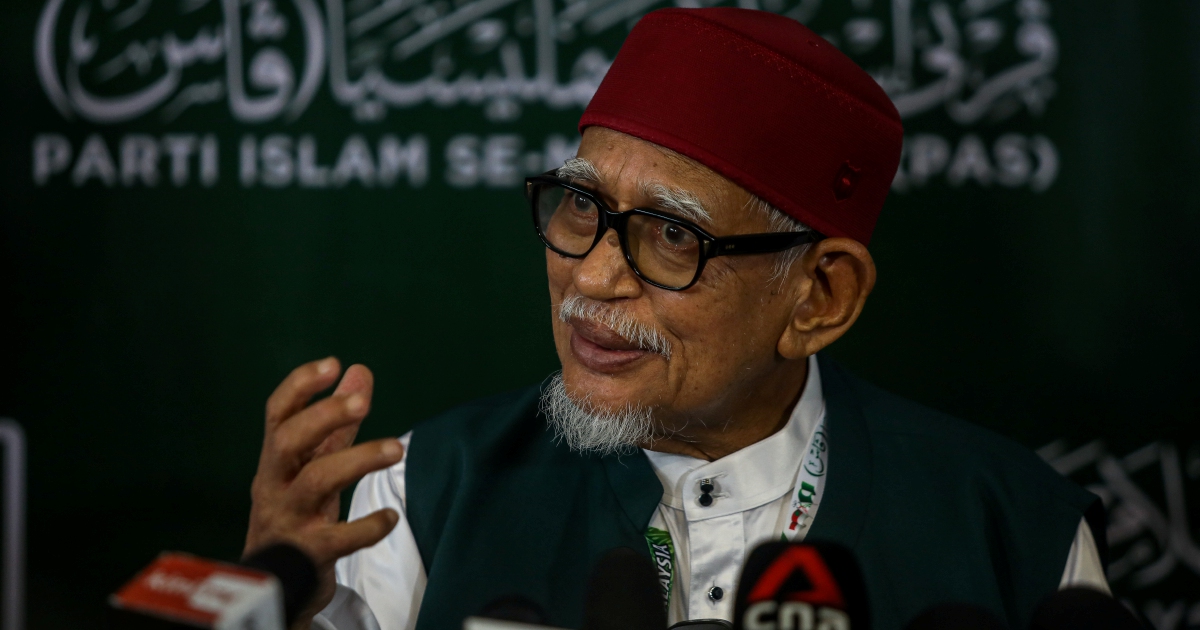
Bersatu's four-year membership in the Perikatan Nasional coalition has effectively ended following Tan Sri Muhyiddin Yassin's public declaration that the party intends to establish its own political coalition. The expulsion was automatic rather than the result of a formal decision-making process, according to Tan Sri Hadi Awang, who leads PAS, the dominant partner within Perikatan Nasional. Speaking in his home constituency of Marang, Hadi characterised the departure as a consequence of Muhyiddin's unilateral move to venture beyond the existing alliance framework.
This development marks a significant fracture within the Malaysian political landscape, particularly given Bersatu's central role in Perikatan Nasional's formation and subsequent electoral performances. Since its establishment as a coalition in September 2020, Perikatan Nasional has positioned itself as an alternative political force, gaining substantial parliamentary representation and governing several states. The coalition had weathered various internal tensions and leadership transitions, but Muhyiddin's announcement of a new coalition appears to have crossed a threshold that Hadi and other PN members deemed incompatible with continued membership.
Muhyiddin's decision to pursue a separate alliance reflects broader strategic calculations within Malaysian politics. As Bersatu's president, he has maintained considerable influence despite his party holding fewer parliamentary seats than PAS. The move suggests Muhyiddin may be positioning himself to negotiate with other political blocs or parties outside the PN framework, potentially seeking greater leverage or accommodation in future government formations. This tactical manoeuvre has created an immediate crisis within the coalition, forcing other members to respond decisively to prevent further erosion of their collective strength.
The automatic nature of Bersatu's removal raises questions about the constitutional and procedural foundations of Perikatan Nasional. Unlike more formally structured alliances with explicit membership criteria, PN's informal architecture appears to operate on principles of mutual commitment rather than binding legal agreements. Hadi's statement suggests that announcing the formation of a competing coalition constitutes an implicit withdrawal of loyalty to PN, triggering automatic consequences. This precedent may have significant implications for how other loose political coalitions manage internal dissent and competing ambitions among member parties.
For PAS, which has positioned itself as PN's stabilising force and principal ideological anchor, this rupture presents both risks and opportunities. The party must now manage a coalition that has lost one of its three substantive members without losing internal cohesion or public credibility. PAS has built considerable grassroots organisation and electoral credibility over the past election cycles, and its leadership appears confident that losing Bersatu does not fundamentally undermine PN's viability. However, the coalition's parliamentary arithmetic becomes more precarious, potentially forcing PAS to make uncomfortable compromises with remaining members or explore new alliances themselves.
Bersatu's exit also reflects deeper ideological and strategic divergences within the coalition. While all PN members present themselves as reform-oriented alternatives to established political structures, their specific policy orientations and political ambitions have increasingly diverged. Bersatu under Muhyiddin has struggled to maintain a consistent political identity, having transitioned from being an establishment party under former Prime Minister Mahathir Mohamad to claiming reformist credentials within PN. This identity confusion may have contributed to Muhyiddin's conclusion that Bersatu's interests are better served through independent repositioning rather than continued subordination within a coalition dominated by PAS.
The Malaysian business and investor communities are likely to view this political fragmentation with concern. Coalition instability traditionally creates uncertainty around policy continuity and governmental effectiveness. Perikatan Nasional had offered a degree of predictability as an organised opposition force with coherent policy platforms. Bersatu's departure, followed potentially by the emergence of Muhyiddin's new coalition, reintroduces unpredictability into the political calculus. This could affect medium-term investment decisions, particularly in sectors dependent on clear regulatory frameworks and stable policy direction.
Regionally, this Malaysian political development contributes to broader patterns of coalition fragmentation and realignment visible across Southeast Asia. Political alliances in the region frequently struggle with durability when they must accommodate competing personal ambitions and divergent strategic visions. Muhyiddin's move demonstrates how individual politicians can unilaterally destabilise established coalitions when they perceive greater advantage in alternative arrangements. This pattern has implications for how regional observers assess the stability of political structures in Malaysia and neighbouring countries.
The immediate question facing Malaysian politics is what form Muhyiddin's new coalition will take and which parties or politicians might join it. The move could potentially attract other parties feeling marginalised within existing coalitions, creating a new force that fragments the opposition vote. Alternatively, it might simply represent a tactical repositioning that eventually leads to negotiations with Perikatan Nasional or the ruling government. What remains clear is that Bersatu's departure represents a significant crack in the Malaysian political edifice, with consequences that will likely ripple through coalition calculations and electoral calculations for the foreseeable future.

