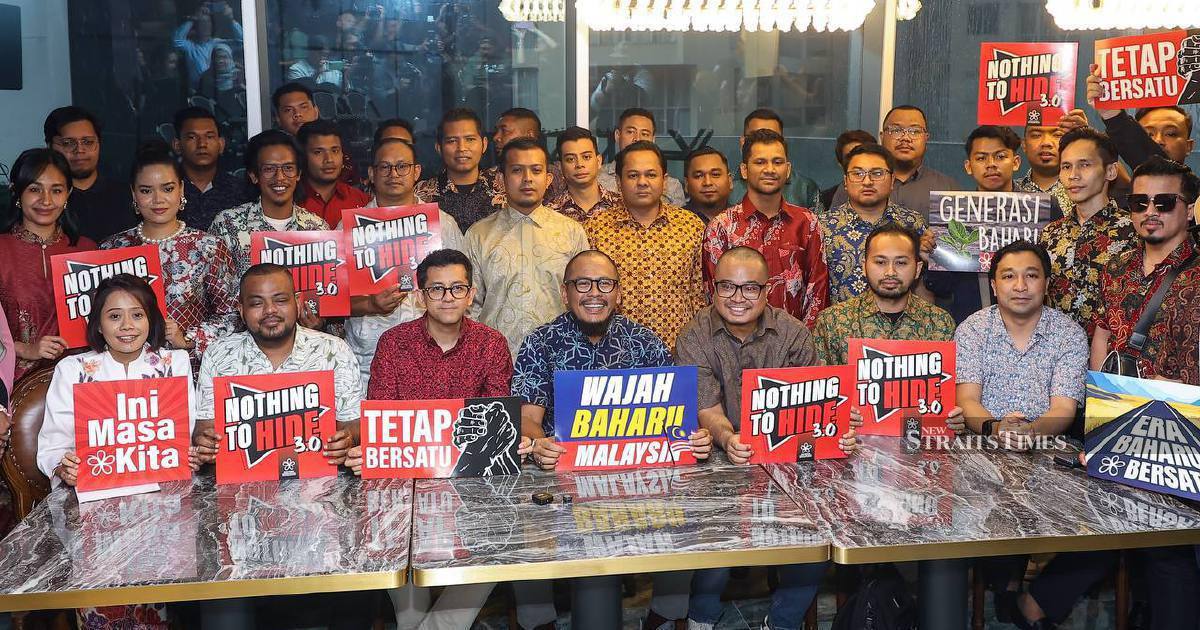
Bersatu's Kota Siputeh assemblyman Mohd Ashraf Mustaqim Abdul Munir has signalled cautious optimism that the Islamic party PAS and his own Bersatu can move beyond their recent disagreements, arguing that the fundamental relationship between these two Perikatan Nasional (PN) partners remains salvageable despite visible cracks in their political alliance.
In an observation that speaks to the underlying resilience some coalition members perceive within PN, Ashraf employed a domestic metaphor to characterise the current standoff, drawing a parallel between the squabbles between PAS and Bersatu and the everyday disputes that occur within married couples who nonetheless maintain their living arrangements. This framing suggests that beneath the public acrimony lies a shared interest in preserving the broader political coalition, even as disagreements surface over specific policy matters or leadership direction.
The comments arrive at a delicate moment for PN, the conservative-Islamist bloc that emerged as a significant parliamentary force following the 2022 general election. Bersatu and PAS, while ideologically distinct—with Bersatu positioning itself as a multi-ethnic Bumiputera party and PAS rooted in Islamic governance—have anchored the coalition's parliamentary presence. However, their partnership has endured friction over ministerial distribution, policy priorities, and competition for influence within the PN framework.
For Malaysian political observers, Ashraf's measured optimism reflects a pragmatic calculation common to coalition politics in the country. The two parties share sufficient overlapping constituencies and political interests that complete rupture would weaken both. PAS commands significant support in rural and semi-rural Malay-Muslim areas, particularly in peninsular states, whilst Bersatu maintains pockets of strength among Bumiputera voters and holds influence in select state governments. Should they formally split, their parliamentary arithmetic would deteriorate, potentially disadvantaging both in negotiations with the government of the day.
The marriage analogy itself carries particular resonance in Malaysian political discourse, where coalition arrangements often develop the character of necessity-driven partnerships. Unlike Western democracies where party mergers or divorces occur with relative regularity, Malaysian political coalitions tend to persist through periods of tension, held together by the gravitational pull of electoral mathematics and the mutual interest in accessing state resources and patronage networks. Partners tolerate friction because the alternative—contesting against one another—typically proves more damaging to both camps.
Ashraf's intervention also signals that frontline PN members, particularly those holding state assembly positions, perceive vulnerability in allowing internal conflicts to escalate publicly. State assemblymen like Ashraf occupy strategic positions where they can observe coalition dynamics on the ground, interact directly with party members and constituents, and assess the political cost of persistent discord. His willingness to articulate a hopeful narrative suggests that ground-level sentiment may favour reconciliation rather than confrontation.
The tensions between PAS and Bersatu have manifested in various forms since PN's consolidation as a major political force. Disagreements over the distribution of ministerial positions, the pace and scope of Islamic law implementation, and competition for control over state governments have periodically erupted into public spats. Yet neither party has taken steps toward formal dissolution of their alliance, suggesting that cost-benefit analyses continue to favour continuity over rupture.
For Southeast Asian readers tracking Malaysian political developments, the PN coalition's resilience despite internal friction illustrates a broader pattern in the region's multi-ethnic democracies. Political alliances often function as vehicles for managing ethnoreligious interests and resource distribution rather than programmatic partnerships based on shared ideology. This institutional reality means that disagreement need not translate into alliance breakdown; instead, tensions may cycle between periods of public disagreement and strategic reconciliation, with members perpetually recalibrating their positions within the coalition framework.
Ashraf's comments also underscore Bersatu's apparent determination to prevent its position within PN from eroding further. The party has struggled with internal organisational challenges and questions about its long-term viability, making continued participation in a strong PN coalition essential to maintaining its parliamentary relevance and access to state-level patronage. From this perspective, his optimism about PAS relations reflects not naïveté but recognition that Bersatu's political survival depends substantially on making the PN arrangement function.
The path to genuine reconciliation between PAS and Bersatu would likely require negotiated compromises on several fronts: clearer protocols for ministerial allocation, agreed parameters for religious legislation, and mechanisms for dispute resolution that do not require public confrontation. Such frameworks are common in other Malaysian coalitions, which suggests that PN partners possess templates for managing their differences more systematically than they have deployed thus far.
Moving forward, the durability of Ashraf's optimism will depend on whether leadership from both PAS and Bersatu can translate sentiment favouring reconciliation into concrete institutional arrangements. The marriage metaphor cuts both ways: whilst marriages can survive quarrels, they can also deteriorate to the point of irreparable breakdown. The critical question facing PN is whether the fundamental interests binding PAS and Bersatu together remain sufficiently strong to overcome the mounting friction between them.

