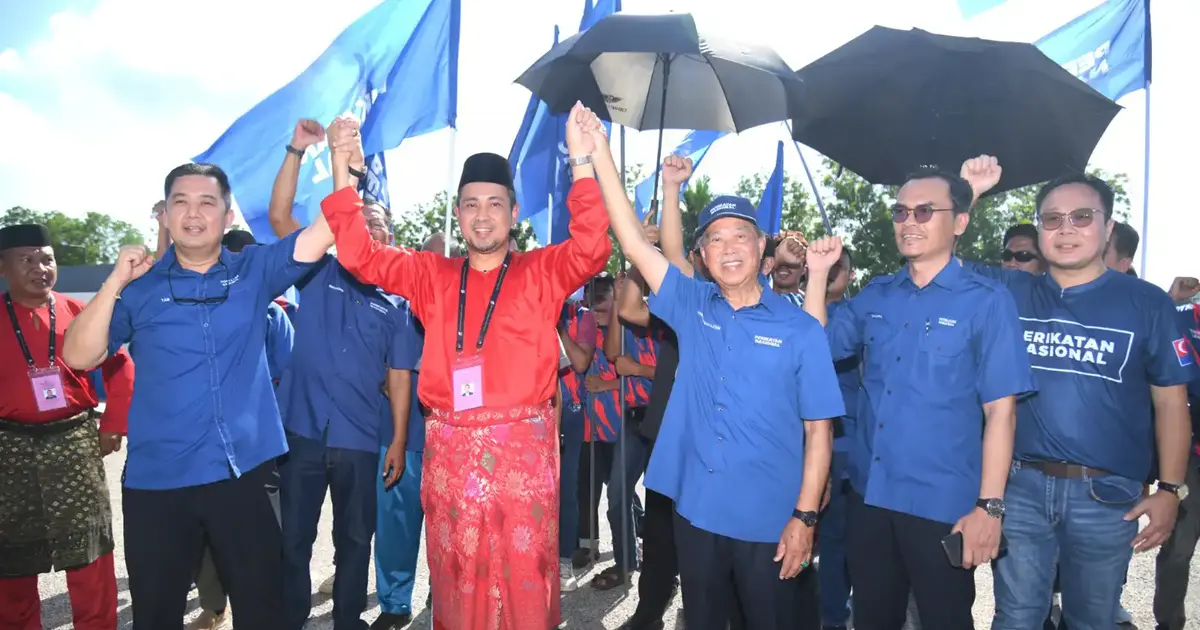
Bersatu's leadership has adopted a measured stance following PAS's decision to restrict the deployment of its party machinery to support Bersatu initiatives, with party president Muhyiddin Yassin suggesting that such setbacks are manageable within the broader framework of coalition politics. Rather than escalating tensions within the Perikatan Nasional alliance, Muhyiddin indicated that Bersatu would navigate the situation without resentment, framing the disagreement as a natural consequence of respecting individual party autonomy.
The apparent friction between the two coalition partners reflects the ongoing complexities that emerge when multiple parties operate under a single political banner. Although mutual cooperation and consistent backing across constituencies remain foundational to the Perikatan Nasional's stated philosophy, Muhyiddin was careful to distinguish between ideals and operational realities. His comments suggest a pragmatic acknowledgement that enforcing compliance among coalition members risks deeper fractures that could undermine the alliance's overall cohesion.
Within Malaysian politics, where coalition dynamics often determine electoral outcomes and legislative majorities, the relationship between Bersatu and PAS carries particular significance. Both parties occupy distinct ideological and demographic spaces—Bersatu drawing primarily from Bumiputera-focused constituencies and the Malay-Muslim middle class, while PAS commands substantial influence among conservative Islamic voters and grassroots networks in rural areas. The tension between them, though presented as manageable by Muhyiddin, points to underlying differences in strategic priorities and resource allocation.
Muhyiddin's decision to frame the issue as acceptable rather than confrontational may reflect strategic calculation. In Malaysian coalition politics, public displays of discord often trigger cascading defections and weaken negotiating positions in parliament. By accepting PAS's withdrawal of machinery support with apparent equanimity, Bersatu avoids providing ammunition to coalition rivals or internal dissidents who might argue that the partnership has become counterproductive. This approach preserves Bersatu's flexibility should future opportunities for cooperation materialise.
The machinery question itself carries weight beyond mere symbolic significance. In Malaysian electoral contests, party machinery—encompassing volunteer networks, grassroots organisers, and voter mobilisation infrastructure—often determines success in marginal constituencies. PAS's extensive rural networks and long-established community connections represent genuine electoral assets that other parties cannot easily replicate. By restricting deployment of these resources, PAS signals that it will not automatically subordinate its interests to broader coalition objectives, even when parties share government benches.
For Bersatu, the implications extend to resource management and electoral planning. Without PAS machinery support, Bersatu must either strengthen its own organisational capacity or rely more heavily on support from other coalition partners. This situation may accelerate pressure within Bersatu to invest in developing deeper grassroots structures, particularly in constituencies where the party contests independently or where it faces strong opposition from rivals. Alternatively, Bersatu might negotiate compensatory arrangements with other coalition members, potentially shifting internal power dynamics.
The broader context of Malaysian coalition politics suggests that such frictions, though manageable in the short term, accumulate over time. Perikatan Nasional emerged as a counter-weight to previous governing arrangements, but its cohesion has never been tested comprehensively across multiple electoral cycles. Bersatu's willingness to absorb PAS's machinery withdrawal without significant protest may indicate confidence in its ability to compete independently, or it may reflect a calculation that confrontation would prove costlier than adaptation. Either interpretation carries implications for the alliance's longevity.
Regional observers of Malaysian politics have long noted that coalition stability depends less on formal agreement and more on the continuous realignment of mutual interests. Muhyiddin's measured response suggests he perceives the current friction as a temporary adjustment rather than a fundamental rupture. Whether this assessment proves accurate likely depends on whether similar incidents proliferate and whether they reflect genuine divergence in strategic vision or merely tactical disagreements about resource deployment.
For Southeast Asian political analysts, the Bersatu-PAS dynamic illustrates broader patterns within regional coalitions where ideologically heterogeneous parties must negotiate shared governance. The ability to absorb disagreement without institutional breakdown distinguishes functioning coalitions from those destined for acrimonious collapse. Muhyiddin's calm response, therefore, may represent either genuine confidence in the alliance's resilience or sophisticated political theatre designed to project stability to sceptical audiences, including investors, civil servants, and wavering MPs who monitor coalition health continuously.
Moving forward, the true test will emerge in how Bersatu performs in constituencies where PAS machinery withdrawal most acutely limits its electoral reach. If Bersatu demonstrates capacity to compensate through alternative strategies, the current disagreement may fade as a historical footnote. Conversely, if electoral performance suffers noticeably in marginal seats, internal pressure within Bersatu may intensify demands for more aggressive coalition management. For now, Muhyiddin has chosen the path of accommodation, betting that pragmatism serves the coalition's long-term interests better than public recrimination.

