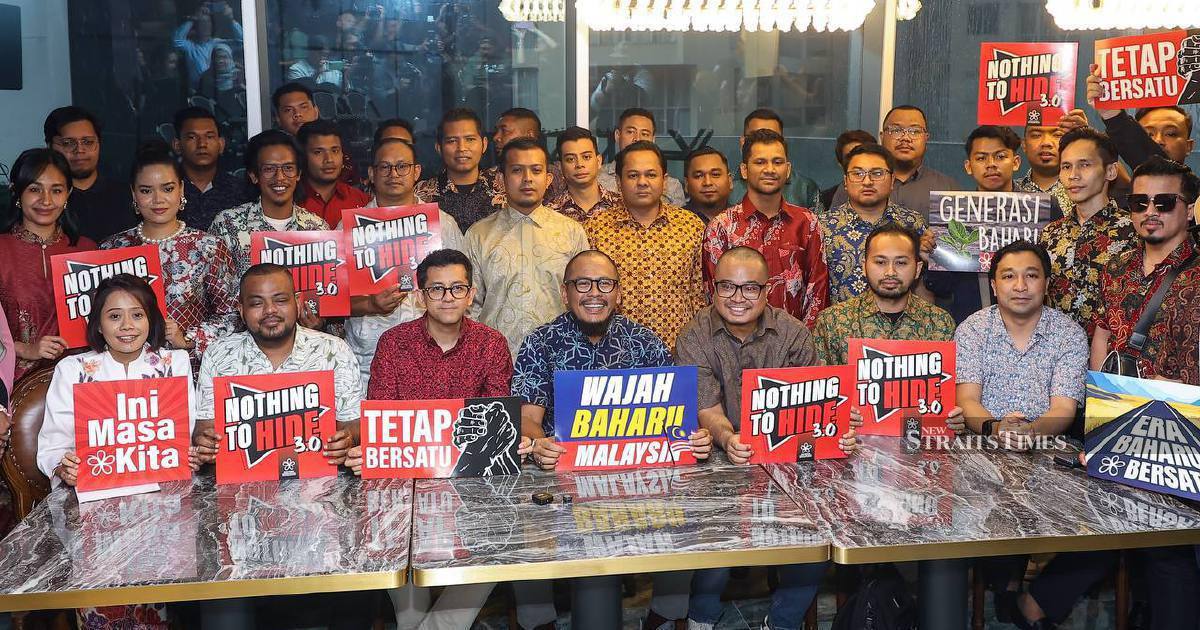
Tensions within Malaysia's Perikatan Nasional coalition appear headed toward resolution, according to a prominent Bersatu figure who downplayed the severity of recent friction between the alliance's two dominant parties. Mohd Ashraf Mustaqim Abdul Munir, who represents Kota Siputeh in the state assembly, suggested in recent remarks that the relationship between Pas and Bersatu remains fundamentally sound despite visible strains, offering a perspective that may reassure stakeholders monitoring the stability of the broader PN partnership.
The assemblyman's optimistic assessment comes at a time when observers have noted deepening cracks in the PN structure, particularly between its ideologically distinct wings. Bersatu, which emerged from Umno dissidents and retains a more centrist orientation, has repeatedly clashed with Pas over policies, strategic direction, and leadership prerogatives within the coalition. These disagreements have generated speculation about the coalition's longevity and its ability to present a unified front ahead of future electoral contests.
Mohd Ashraf's characterisation of the PN tensions as resembling "a married couple bickering" reveals an important political metaphor that captures a core reality: both parties remain bound by formal alliance structures and share overlapping electoral interests, even when tactical disputes arise. The domestic analogy suggests that visible quarrels do not necessarily presage separation or fundamental breakdown, but rather reflect the natural friction that emerges when distinct political entities attempt to coordinate within a shared framework.
For Malaysian political observers, such language from a Bersatu representative carries particular significance. The party has historically positioned itself as a bridge between different political currents, seeking to maintain pragmatic relationships across the ideological spectrum. Its founder Mahathir Mohamad famously used coalition-building as a central political tool, and current Bersatu leadership appears committed to preserving the PN structure despite its internal strains.
The recent Pas-Bersatu friction has been visible across multiple domains, from state-level administration to national policy positions. Disagreements have surfaced regarding issues of governance priorities, religious policy implementation, and the distribution of political benefits within territories where both parties hold significant influence. These disputes, while not unprecedented in Malaysian coalition politics, have generated concern among PN-aligned supporters about the partnership's coherence.
However, the political calculations binding the coalition together remain substantial. Neither Pas nor Bersatu individually commands sufficient parliamentary numbers to govern effectively alone, making interdependence a practical reality. Additionally, both parties face pressure from opposition blocs and maintain competing relationships with Umno, whose own position within Malaysia's coalition landscape has remained volatile. These structural factors create strong incentives for maintaining alliance unity despite tactical disagreements.
The timing of reconciliation signals is strategically significant for Perikatan Nasional's longer-term positioning. State elections in several PN-governed territories are anticipated within the next two years, and any perception of internal collapse could undermine campaign effectiveness and voter confidence. Projecting an image of a functional partnership, even while acknowledging occasional tensions, serves both parties' electoral interests.
Pas leadership has similarly indicated in recent statements an openness to dialogue with coalition partners, though the Islamic party has sometimes adopted more confrontational rhetoric toward perceived slights or policy disagreements. The party's core constituency includes voters deeply concerned with religious and moral governance questions, which can create pressure on Pas negotiators to maintain distinctive positioning within the broader coalition.
Bersatu faces complementary pressures from its own supporter base, which expects the party to maintain influence proportional to its parliamentary representation. The party's recent electoral performance, particularly following the loss of several prominent figures to other political vehicles, has heightened internal focus on demonstrating continued relevance and political weight within PN structures.
The stability of Perikatan Nasional holds broader implications for Malaysia's political equilibrium. With the federal government currently led by a Umno-led coalition, the continued vitality of PN as an opposition force shapes the competitive landscape that determines policy-making possibilities and electoral outcomes. A fractious PN could either accelerate its deterioration into irrelevance or prompt realignments that substantially reshape Malaysia's political configuration.
Regional observers also monitor PN developments, as Malaysia's coalitional politics influence diplomatic positioning and policy coordination across Southeast Asia. A stable PN capable of effectively opposing Umno-led administrations maintains competitive political dynamics that can affect policy directions on regional trade, security cooperation, and institutional development.
The metaphor of domestic quarrels offers both reassurance and caution: while married couples can overcome arguments through communication and compromise, persistent irreconcilable differences can ultimately lead to separation. Whether Pas and Bersatu leadership possesses sufficient common ground and political will to move past current frictions toward substantive reconciliation remains an open question that will unfold through forthcoming interactions and crisis points.

