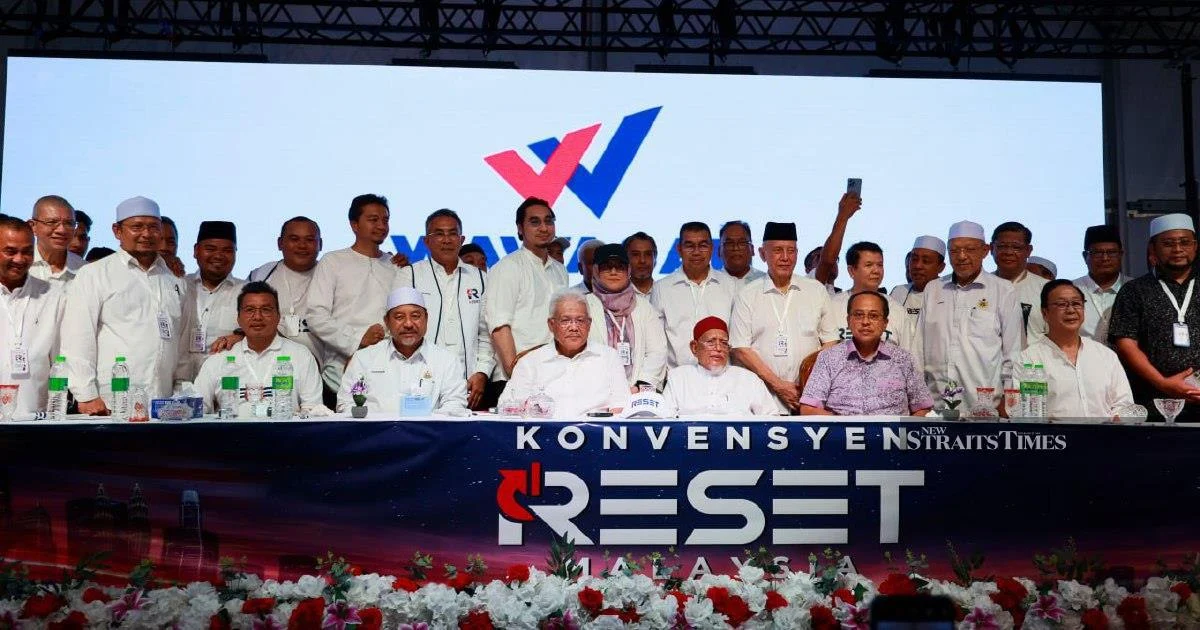
Perikatan Nasional descended into internal discord yesterday as Bersatu intensified its challenge to the legitimacy of Monday night's emergency Supreme Council session, which had rushed through the admission of Wawasan into the opposition alliance. The party's objections centre on whether the PN chairman followed correct procedural protocols when convening and executing decisions at the hastily arranged meeting, casting fresh doubt over the stability of the three-component coalition.
The timing of Wawasan's entry into the PN framework comes amid heightened political manoeuvring across Malaysian politics. Coalition dynamics have become increasingly fluid since the last general election, with parties constantly recalibrating their positioning. For Bersatu, which holds considerable weight within PN's structure, the bypassing of standard approval processes represents a fundamental breach of democratic governance within the partnership. This grievance extends beyond mere procedural grumbling; it strikes at the heart of internal trust and decision-making authority among coalition members.
Bersatu's formal objection signals that party leadership was either insufficiently consulted or deliberately marginalised during discussions leading to the Wawasan decision. In coalition politics, perception matters as much as substance. When one partner perceives that another is unilaterally taking major strategic decisions without adequate consultation, the entire structure becomes vulnerable to collapse. The credibility of the PN chairman's leadership is now under scrutiny, and other coalition members will be watching closely to see how this constitutional question is resolved.
The emergency meeting format itself warrants examination. While such sessions can be necessary in fluid political circumstances, their overuse undermines the collegial decision-making that coalitions require to function effectively. By opting for emergency procedures rather than scheduling a standard meeting, the PN leadership may have saved time but sacrificed legitimacy in the eyes of partner parties. For Malaysian observers accustomed to coalition instability, this episode evokes memories of previous breakdowns that began with procedural irregularities mushrooming into broader splits.
Wawasan's admission to the PN coalition represents a strategic expansion designed to broaden the opposition's parliamentary reach and appeal to specific voter demographics. However, the manner in which this expansion occurred has overshadowed its substantive benefits. Rather than presenting a united front, PN now risks appearing fractious and internally divided on fundamental matters of governance. This perception problem could complicate efforts to build coherent opposition messaging and parliamentary strategy as the political landscape continues to shift.
For Bersatu specifically, the challenge serves notice that it will not be sidelined in coalition decision-making, despite the PN chairman's apparent authority. The party has carved out a significant political space since its formation and departure from the Malay-Muslim establishment, and jealously guards its voice in any partnership. Any further procedural improprieties are likely to face similar resistance. This dynamic reflects broader Southeast Asian coalition politics, where smaller parties often use institutional rules to protect their interests against larger, potentially dominating partners.
The legality question that Bersatu has raised will require careful examination of the PN constitution and standing orders. If the party can demonstrate genuine procedural violations, the Wawasan admission decision could potentially be invalidated or required to undergo further ratification. This scenario would create significant embarrassment and weakness, potentially undermining confidence in the PN coalition's ability to govern if it were to return to power. Conversely, if Bersatu's challenge is deemed procedurally or substantively flawed, the party risks appearing obstructionist and damage to its own standing within the alliance.
The broader political context amplifies the stakes of this internal dispute. Malaysia's opposition coalition has struggled to maintain unity and present consistent messaging since the 2022 general election. PN itself represents an attempt to consolidate opposition forces, but achieving durable consensus among parties with competing agendas has proven elusive. The Wawasan admission episode demonstrates that tensions simmer beneath PN's surface and can erupt when major decisions proceed without adequate buy-in from all stakeholders.
Electoral considerations also loom large. With attention turning toward potential future general elections and state-level contests, any perception of coalition weakness becomes a liability. Voters are unlikely to support a coalition that cannot manage its own internal affairs, let alone form a credible alternative government. Both the PN leadership and Bersatu therefore have incentives to resolve this dispute quickly and with minimum public rancour, though the damage to institutional trust may already be substantial.
Moving forward, the PN coalition faces a critical choice about how to manage internal disputes and maintain procedural legitimacy while retaining operational flexibility. The outcome of the Bersatu challenge will likely set precedent for how future coalition decisions are made and validated. If properly resolved through dialogue and respect for institutional processes, this crisis could actually strengthen the PN framework. However, if it devolves into further acrimony or procedural warfare, the opposition coalition's effectiveness as a political force will be seriously compromised during a period when Malaysian politics remains in flux.