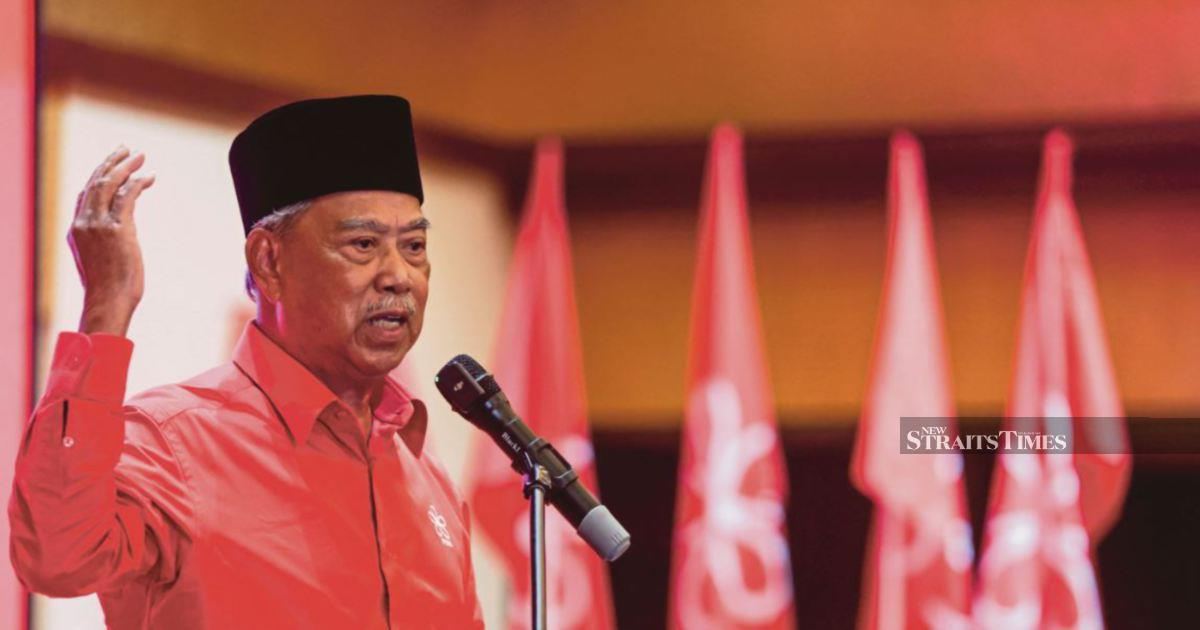
Bersatu is preparing for an unexpectedly fractious election battle in Negri Sembilan, with the Bumiputera-focused party positioned to clash directly with two of its own Perikatan Nasional allies in a significant show of internal coalition tension. The party's decision to field candidates across 24 seats has triggered a three-way contest with PAS and Wawasan in at least eight constituencies, a development that underscores persistent strain within the broader PN alliance despite their joint governance arrangements at federal level.
The announcement reveals deepening complications in how Perikatan Nasional coordinates seat allocation among its constituent parties at the state level. While the coalition maintains unity at the federal administration, state elections have consistently exposed cracks in party discipline and territorial negotiations. Negri Sembilan, a state strategically positioned between Selangor and Johor, has long been a battleground for competing political interests, making its electoral outcome meaningful for understanding PN's operational coherence across Malaysia's patchwork of state governments.
Bersatu's 24-seat selection encompasses roughly two-thirds of the state assembly's total seats, signalling an ambitious approach to capturing legislative control in what is technically a three-way race featuring Pakatan Harapan as the primary opposition. The party's footprint across this many constituencies necessarily overlaps with where PAS and Wawasan have also chosen to stand, creating the eight-seat intersection where direct PN internecine competition will materialise. This structural reality reflects the difficulty of negotiating seat divisions when multiple parties with overlapping geographic bases and voter support coexist within the same political alliance.
PAS, the Islamic party and largest PN component by membership, has maintained a strong presence throughout Peninsular Malaysia's state assemblies, and Negri Sembilan represents a natural area for expansion given its Malay-Muslim demographic profile. The party's decades-long organisational infrastructure in the state provides it with grassroots reach that newer parties sometimes struggle to replicate. Wawasan, meanwhile, represents a smaller but regionally significant element in the coalition's architecture, particularly among certain demographic segments seeking an alternative to larger established parties.
The implications of this three-way split for PN's broader electoral strategy appear mixed. On one hand, the party system fragments opposition support by preventing a monolithic challenger from consolidating anti-government votes. On the other, internal competition risks demoralising members, diluting campaign resources, and creating situations where PN candidates actually disadvantage each other by splitting the anti-Pakatan vote in ways that ultimately benefit PH candidates. Whether the electoral mathematics in each contested seat ultimately favours one PN component over others will depend on local factors that party strategists are undoubtedly modelling extensively.
For Malaysian observers, this competition within Perikatan Nasional mirrors recurring tensions in Malaysian coalition politics. Larger alliances theoretically provide ideological and electoral benefits, but they require complex negotiations that inevitably frustrate individual parties' ambitions. Bersatu's robust 24-seat commitment suggests the party leadership believes it possesses competitive capacity to hold territory against both PN partners and PH challengers simultaneously. However, the presence of eight direct confrontations with partners raises questions about whether some of those seats might have been conceded to PAS or Wawasan in exchange for reciprocal support in other constituencies.
The state's political landscape has shifted considerably since the last election cycle. Negri Sembilan's composition of urban-rural constituencies creates diverse electoral dynamics; some areas respond to Islamic messaging that benefits PAS, while others prioritise economic development narratives that could favour Bersatu's positioning. Urban Seremban voters may weigh candidates differently than those in more rural Tampin or Kuala Pilah territories, introducing granular variations that party strategists must navigate individually for each of the eight contested seats.
Historically, Perikatan Nasional's performance in state elections has been uneven, with coalition fortunes varying considerably across different regions. In some states, PN has dominated convincingly; in others, particularly where federal government implementation has proven unpopular, the alliance has struggled against Pakatan's momentum. Negri Sembilan voters will be assessing not only local state governance questions but also the impact of federal policies on cost of living, employment, and service delivery—factors that transcend state boundaries and reflect national economic performance.
The election timing carries additional weight given Malaysia's broader political trajectory. With federal elections eventually returning to the horizon, how PN components perform and cooperate in Negri Sembilan sends signals about whether the coalition has stabilised institutionally or remains prone to the fragmentation that characterised its earlier years. A harmonious, well-coordinated electoral campaign would suggest mature coalition management; conversely, a contentious internal battle could reinforce perceptions of unstable governance when voters are evaluating whether to continue backing PN federally.
Bersatu's leadership has positioned the party as a Bumiputera-centric alternative within Malaysian politics, distinguishing itself from both PAS's Islamic-focused agenda and Wawasan's specific demographic appeals. This differentiation strategy requires distinct candidate profiles and messaging, which partly explains why territorial overlap remains difficult to negotiate away entirely. Party members in Negri Sembilan likely include activists and aspirants who resist conceding winnable seats to partners they view as ideologically divergent despite coalition membership.
Looking ahead, the eight-seat intersection will probably determine not only which PN component performs best in Negri Sembilan but also generate data about voting patterns that both coalition leaders and opposition analysts will scrutinise carefully. Whether Bersatu's aggressive 24-seat commitment represents strategic confidence or risky overreach will become evident once voters have spoken. The outcome may also influence how future seat divisions are negotiated within Perikatan Nasional for subsequent state elections, potentially establishing precedents about whether internal competition is tolerable or whether coalition discipline requires stricter negotiation frameworks.

