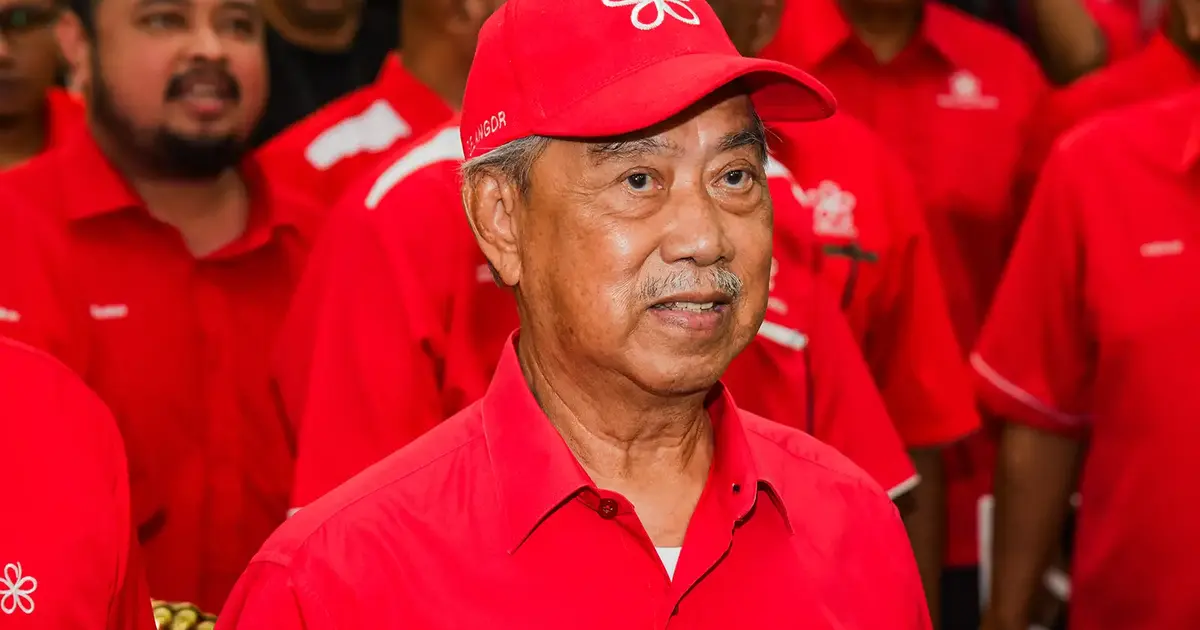
Bersatu's political strategy is undergoing a significant recalibration as party leadership moves away from its alliance with PAS, with the Perikatan Nasional component asserting it can independently attract substantial support from non-Malay communities. Party president Muhyiddin Yassin has indicated that Bersatu's earlier difficulty in penetrating beyond its traditional Malay-Muslim voter base stemmed largely from the electoral liability posed by its association with PAS, whose political positioning and governance approach alienated many voters from other ethnic communities.
The assertion reflects a broader repositioning within Malaysia's complex multiracial political landscape, where coalition partnerships fundamentally shape voter perceptions and electoral outcomes. For years, Bersatu operated as part of a broader Malay-centric political bloc that included PAS, an arrangement that, while consolidating support among certain segments of the Malay electorate, created barriers to cross-community appeal. Many non-Malay voters harbour reservations about PAS's ideological framework and policy orientation, concerns that by extension affected their receptiveness toward coalition partners like Bersatu, even when those parties advocated different positions on specific issues.
This dynamic illustrates a recurring challenge in Malaysian politics: the difficulty for ethnically or religiously defined parties to transcend their core constituencies without fundamental strategic shifts. Bersatu's leadership apparently believes the party possesses inherent characteristics and policy positions that could appeal across ethnic lines, but that these strengths were previously overshadowed or negated by the political baggage associated with PAS membership. Whether this assessment proves accurate will depend significantly on how effectively Bersatu can distance itself from perceptions of religious conservatism and demonstrate inclusive governance credentials.
The timing of this repositioning is noteworthy given Malaysia's recent political volatility and the shifting allegiances that have characterised the post-2018 landscape. With electoral calculations constantly in flux and voters increasingly pragmatic about coalition possibilities, parties face recurring opportunities to redefine their political identities and voter coalitions. Bersatu's move reflects recognition that the previous formula—relying predominantly on Malay-Muslim constituencies while struggling to expand beyond them—provides insufficient foundation for dominant political influence in a country where no single ethnic or religious group constitutes an outright majority.
Historically, Malaysian political parties attempting to broaden ethnic appeal have encountered substantial obstacles rooted in longstanding communal voting patterns and the salience of identity politics. However, there exist counterexamples of parties achieving genuine multi-ethnic support, suggesting the barrier, while substantial, remains permeable under appropriate circumstances. For Bersatu to successfully execute this strategy, the party must articulate policy positions and governance visions that resonate with non-Malay concerns—whether relating to economic opportunity, educational access, infrastructure development, or communal relations—while maintaining credibility among its existing base.
The independent positioning also carries potential risks for Bersatu's relationship with PAS and the broader Perikatan Nasional arrangement. Political coalitions in Malaysia operate on assumptions of mutual benefit and shared electoral objectives; any perceptions that Bersatu is repositioning itself by distancing from PAS could generate tensions within the coalition or with partner parties evaluating the utility of continued collaboration. Additionally, messaging that essentially characterizes one's former partner as an electoral liability, while perhaps strategically shrewd, may complicate future coalition negotiations or undermine trust relationships.
For non-Malay voters and communities evaluating their own political options, Bersatu's repositioning signals that even traditionally Malay-centric parties are acknowledging the necessity of addressing broader demographic interests. This creates potential space for non-Malay communities to engage with such parties on specific policy grounds rather than treating coalition membership with PAS or similar organizations as automatic disqualifying factors. However, skepticism may be warranted regarding the depth of commitment to inclusive politics versus tactical repositioning aimed at capturing additional votes.
The broader implication for Malaysian politics involves potential fragmentation of the Malay-Muslim voting bloc if different parties within that constituency pursue divergent strategies regarding non-Malay appeal and coalition architecture. Such fragmentation could create both opportunities and instabilities: opportunities for more flexible governing coalitions and potentially less identity-defined politics, but also instabilities stemming from unpredictable coalition formations and the possibility of governments lacking clear mandates or coherent policy directions.
Regional observers noting Malaysia's political trajectory will find particular interest in this repositioning, as it reflects ongoing negotiations about the relationship between identity politics and inclusion within Southeast Asian democracies. The outcome of Bersatu's gambit—whether the party succeeds in substantially expanding non-Malay support or whether such expansion proves marginal—will likely influence calculations across the Malaysian political spectrum regarding the viability of cross-community political appeals and the durability of coalition strategies premised on ethnic concentration.

