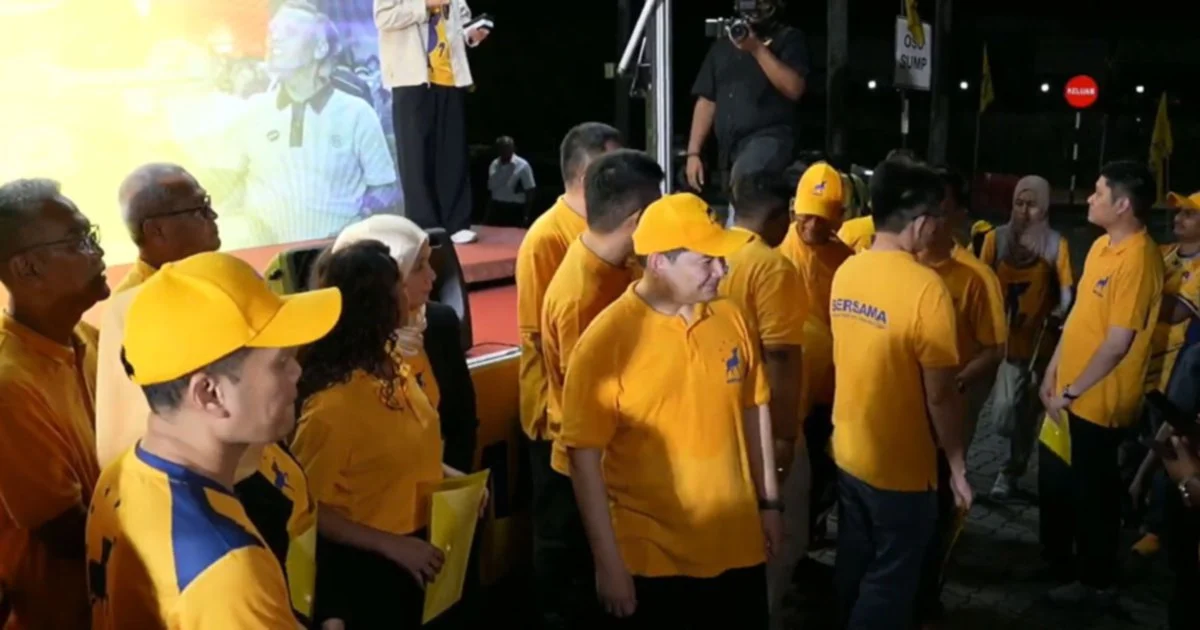
Parti Bersama Malaysia has thrown its hat into the ring for the 16th Johor state election by unveiling a slate of 15 candidates that spans the commercial, retail, and transport sectors, signalling the fledgling party's effort to build appeal across diverse voter demographics in the southern state. The announcement on Friday reflects a strategic attempt to position the party as representing everyday Malaysians rather than relying exclusively on traditional political machinery or elite networks.
The inclusion of entrepreneurial candidates alongside supermarket management and logistics workers underscores Bersama's intended positioning as a party of ordinary citizens navigating the Malaysian economy. This composition mirrors broader political trends in Southeast Asia, where newer entrants challenge established parties by emphasising accessibility and shared economic experience with voters. For Johor specifically, a state with significant manufacturing, retail, and transportation industries, such a candidate profile could resonate with working families and small business owners concerned about cost of living and economic opportunity.
Part Bersama Malaysia itself remains relatively young in Malaysia's political landscape, having emerged as voters increasingly seek alternatives to the established Barisan Nasional and Pakatan Harapan coalitions. The party's decision to field candidates across Johor reflects confidence in its organisational capacity and its reading of voter sentiment in a state that has traditionally been Barisan Nasional stronghold. Johor's political dynamics have nonetheless shifted in recent cycles, with opposition and independent voices making inroads, creating space for smaller parties to compete.
The diversity of the candidate pool—encompassing business ownership, middle management, and blue-collar employment—addresses a notable gap that critics have identified in both major coalitions: the perception that candidates are disconnected from the economic realities of ordinary workers and small entrepreneurs. Supermarket managers, in particular, occupy positions where they interact daily with consumer trends and household budgets, giving them practical insight into retail sector challenges and supply chain dynamics that shape prices on shelves. Similarly, logistics workers possess frontline knowledge of transport costs, infrastructure bottlenecks, and delivery challenges that affect business efficiency and consumer prices.
For Malaysian voters in the economic middle and lower-income brackets, such candidates can offer perceived authenticity and practical problem-solving capability over ideological messaging. This approach has gained traction in other democracies, where political newcomers challenge incumbents by fielding candidates whose professional biographies emphasise competence and relatability rather than family connections or long party service. Bersama's Johor strategy appears to follow this playbook, though success will depend on campaign execution, funding, and whether voters view the party as genuinely distinct from established options.
Johor's electoral landscape has undergone significant reconfiguration in recent years. The state elected a Barisan Nasional government in the 2023 general election, yet subsequent political realignments, including internal party tensions and leadership changes, have created unpredictability. A fractured opposition, once unified under Pakatan Harapan, has splintered into competing factions, potentially creating openings for insurgent parties willing to contest multiple seats. Bersama's decision to field 15 candidates suggests the party is targeting specific constituencies where it believes it can build traction, rather than attempting a wholesale challenge across all state seats.
The party's choice of sectors represented in its candidate pool also reflects Johor's economic structure. The state hosts major port facilities, warehousing hubs, and retail operations that support the entire region's supply chain. Transportation and logistics networks centred on Johor connect Singapore, the Klang Valley, and East Malaysia, making candidates with sector experience potentially valuable assets for advocating infrastructure investment. Supermarket operations, meanwhile, provide direct insight into consumer purchasing patterns and the cost pressures facing household budgets, a perennial concern in Malaysia's electoral politics.
Bersama's candidate announcement comes amid broader repositioning within Malaysia's fractured political ecosystem. The party has sought to establish itself as neither ideologically leftist nor beholden to traditional elites, instead emphasising pragmatic governance and economic inclusion. This positioning appeals to voters fatigued by polarised politics and seeking competence-based alternatives. Whether the party can translate this messaging into electoral success in Johor—a state where traditional political machinery remains entrenched and brand recognition matters—remains uncertain, but the candidate composition suggests a calculated strategy rather than a hastily assembled slate.
The presence of entrepreneurs and professionals alongside workers also signals an attempt to bridge class divisions that have historically complicated Malaysian politics. Rather than fielding candidates exclusively from educated urban elites or appealing solely to working-class constituencies, Bersama appears to be constructing a cross-class coalition. This approach acknowledges that successful candidates must speak to shared concerns about inflation, employment, and service delivery that transcend educational or occupational backgrounds.
As the Johor electoral cycle develops, observers will watch whether Bersama's candidate strategy translates into meaningful vote share or whether the party remains a marginal player in a state election dominated by established coalitions. The next weeks will reveal whether voters view these candidates as genuine representatives of their interests or as a untested alternative lacking the resources and organisation required to deliver on campaign promises. Ultimately, Bersama's performance in Johor will indicate whether Malaysia's political realignment is creating sustainable space for new parties or merely fragmenting the vote in ways that entrench existing power structures.

