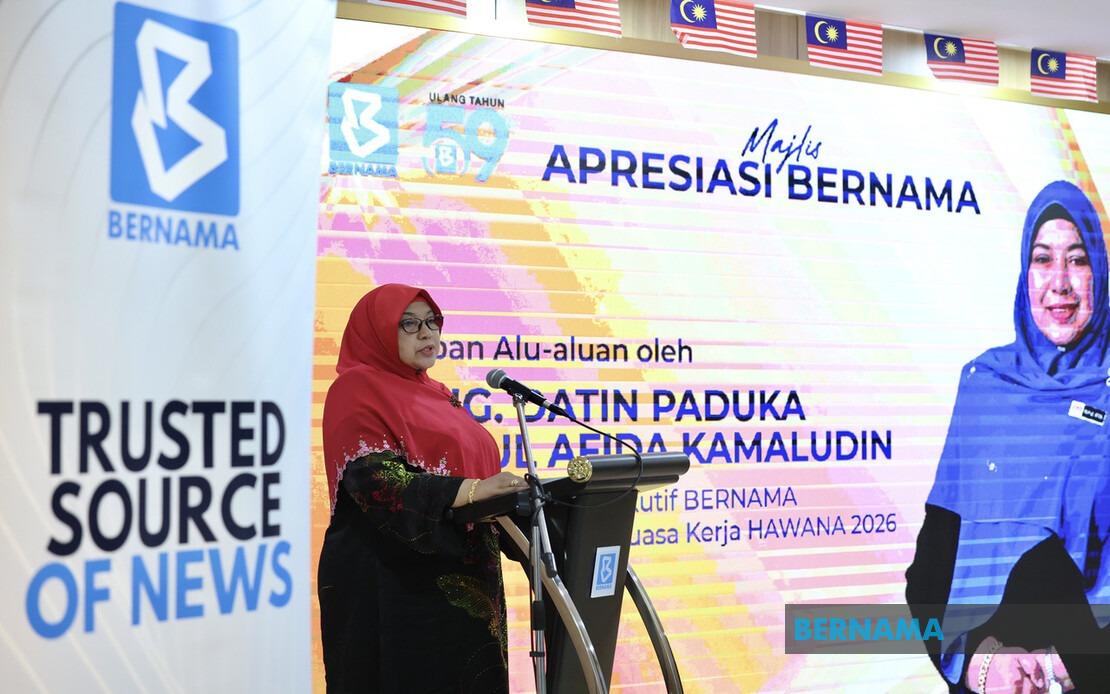
Malaysia's national news agency has pledged to deepen its commitment to nurturing patriotic sentiment among the population in the lead-up to National Day celebrations. Speaking at the Bernama Appreciation Ceremony in Kuala Lumpur this week, the agency's leadership outlined a comprehensive approach to embedding nationalist values both within its organizational structure and across broader public communications.
Datin Paduka Nur-ul Afida Kamaludin, who heads the agency, characterized Bernama's expanded role as a natural extension of its mandate under the Ministry of Communications. Beyond its conventional function as a news distributor, she emphasized that the agency carries institutional responsibility for amplifying government messaging and supporting ministerial initiatives that reach Malaysian communities. This expanded interpretation of Bernama's mission reflects a strategic realignment toward positioning the agency as a custodian of national values rather than merely a neutral information conduit.
The centerpiece of the current campaign involves the Jalur Gemilang, Malaysia's national flag, which has become the symbolic focus of National Month activities. Bernama has decorated its headquarters premises with the flag following the Prime Minister's official launch of National Month in Ipoh, signaling organizational solidarity with the broader patriotic campaign. More significantly, the agency is encouraging its entire workforce to display the flag at their private residences, thereby extending the patriotic message into domestic spaces and personal contexts.
This residential flag initiative operates under the theme "Satu Rumah, Satu Jalur Gemilang" (One House, One National Flag), a campaign designed to normalize the presence of national symbols in everyday Malaysian life. The choice to focus on home displays rather than merely public spaces suggests an intentional strategy to embed nationalism into personal and family spheres, creating a more pervasive cultural atmosphere during the National Month period.
During the appreciation ceremony, Nur-ul Afida distributed Jalur Gemilang flags to representatives of Bernama's primary departments in what organizers described as a symbolic gesture to formally inaugurate the National Month celebrations. This ceremonial distribution, coupled with the introduction of the National Day theme song composed by prominent singer Faizal Tahir, created a multimedia framework for the patriotic campaign. By combining visual symbols, music, and official messaging, Bernama has orchestrated a multi-sensory approach to patriotic communication that extends beyond conventional news reporting.
The agency leadership characterized the appreciation ceremony as a rare opportunity to convene the entire staff at headquarters, a logistical challenge in a distributed organization. Rather than viewing this constraint as problematic, Bernama reframed it as an opportunity to integrate multiple initiatives into a single consolidated event. This practical approach allowed the agency to maximize employee engagement while ensuring comprehensive participation in the National Month festivities despite operational complexities.
For Malaysian readers, Bernama's intensified patriotic campaign reflects a broader institutional emphasis on nationalism during National Month. The national news agency occupies a unique position as both a government entity and the primary disseminator of official messaging to the Malaysian public. Its decision to foreground patriotic themes in its internal operations and external communications carries implications for how national narratives are framed and circulated during this significant calendar period.
The residential flag campaign holds particular relevance for understanding contemporary Malaysian approaches to nationalism. By encouraging private citizens to display national symbols at home, the initiative seeks to transform patriotism from an abstract concept or occasional public commemoration into a daily, visible commitment. This strategy recognizes that sustained nationalist sentiment often requires repeated exposure to national symbols in multiple contexts, not merely during formal ceremonies or state occasions.
From a communications perspective, Bernama's approach reflects evolving strategies for government-media coordination in Southeast Asia. Rather than maintaining strict separation between news functions and promotional activities, Malaysian institutions increasingly integrate patriotic messaging into core communications frameworks. This blending of news reporting with nationalist promotion raises questions about editorial independence and the role of state media agencies in agenda-setting during sensitive political periods.
The timing of this campaign, occurring immediately after the Prime Minister's official National Month launch, demonstrates coordinated messaging between government leadership and institutional communications bodies. Bernama's rapid implementation of flag displays and employee engagement activities suggests pre-planned strategic alignment rather than spontaneous organizational response. This coordination indicates that National Month patriotic campaigns operate according to deliberate government strategy rather than organic institutional initiatives.
For the broader Malaysian public, Bernama's patriotic emphasis during National Month carries subtle implications for how national identity is constructed and communicated. As the official national news agency, Bernama's editorial choices and messaging priorities significantly influence how Malaysians encounter information about national affairs during this period. The agency's decision to prioritize patriotic themes in its internal communications and workforce engagement may indirectly influence the tone and content of news coverage distributed to the public.
Moving forward, Bernama has committed to sustained implementation of these patriotic initiatives throughout the National Month period. The agency's leadership indicated that the appreciation ceremony represented a launching point rather than a culminating event for nationalist campaigns. This sustained approach suggests that Malaysian institutions view National Month not as a discrete temporal occurrence but as an extended period requiring continuous reinforcement of patriotic messaging and symbolic nationalism.
The broader significance of Bernama's campaign extends beyond ceremonial patriotism. It demonstrates how state media agencies actively shape public discourse around national identity during commemorative periods. For Malaysian readers and regional observers, these initiatives illustrate the mechanisms through which government institutions embed nationalist sentiment into public consciousness, using coordinated messaging, symbolic campaigns, and institutional engagement to foster sustained patriotic commitment among both employees and the wider population.

