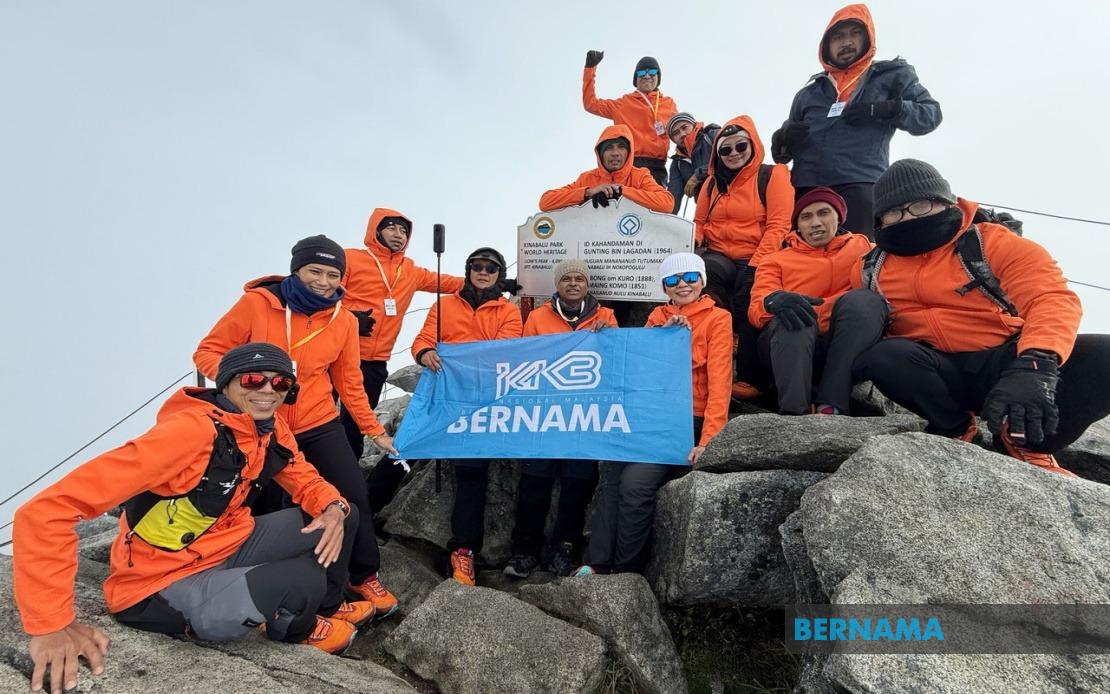
In a significant demonstration of corporate cohesion and national pride, twenty-three staff members from Malaysia's national news agency Bernama reached the 4,095.2-metre summit of Mount Kinabalu on July 1, marking a milestone celebration of the country's National Journalists' Day, known locally as HAWANA 2026. The expedition represented more than a physical challenge, serving as a carefully orchestrated effort to create multiple records and strengthen bonds within the news organisation while drawing attention to the importance of Malaysia's media community.
Leading the mountaineering effort was Bernama Editor-in-Chief Arul Rajoo Durar Raj, whose personal achievement of becoming the first person in that leadership position to successfully conquer Southeast Asia's highest peak added symbolic weight to the initiative. The expedition was structured to pursue two distinct Malaysia Book of Records entries: recognition as the largest contingent of media practitioners from a single organisation to climb the mountain, and documentation of the first media organisation to broadcast news reports simultaneously in four languages from the summit itself. These objectives transformed what might otherwise be a standard team-building exercise into a concerted push for institutional recognition within Malaysia's record-keeping framework.
The composition of the climbing party underscored Bernama's commitment to inclusivity, drawing personnel from across the organisation's operational structure. Reporters, photographers, sub-editors, television production crew members, and administrative staff all participated, reflecting the diverse skill sets and departments that collectively produce Malaysia's domestic and international news output. This cross-departmental participation meant that the expedition functioned simultaneously as a vertical integration exercise, bringing together individuals who might ordinarily work in separate physical and operational spaces.
The actual climb commenced at Timpohon Gate at 10 am on June 30, with participants navigating the demanding terrain before settling at Panalaban for an overnight rest. The team resumed their final push toward the summit at 2:30 am on July 1, reaching the peak at approximately 7:20 am after contending with challenging meteorological conditions including rain, dense mist, and powerful winds. The unpredictable weather patterns typical of Mount Kinabalu in the early morning hours tested both the physical endurance and mental fortitude of the climbers, making their successful summit achievement more notably impressive.
The event was organised by the Bernama Staff Club (known locally as KKB), marking the first occasion this internal organisation took the lead in coordinating such a large-scale expedition. Beyond the record-breaking ambitions, the initiative was explicitly designed to enliven the broader HAWANA 2026 celebration across Malaysia's journalism sector. The expedition simultaneously pursued several secondary objectives: fostering improved teamwork among staff across departmental boundaries, building both physical resilience and mental determination, and promoting health-conscious lifestyle choices among personnel. These broader social and wellness goals reflected an understanding that national media organisations function best when their workforce maintains strong interpersonal connections and shared commitment to institutional mission.
The logistical complexity of transporting and supporting twenty-three climbers on Mount Kinabalu required substantial coordination with external partners. International sportswear manufacturer BMAI provided equipment and technical expertise. Batik Air managed transportation logistics for the team's movement to and from Sabah. Beverage company 100PLUS contributed nutritional support for the climbers. Additional backing came from EHH Food Industry Sdn Bhd, which provided catering; Saloma Bistro; Malaysia Airports; Malaysia Insight; UFL; Sabah Parks; and Marathon Baker. This extensive network of sponsors demonstrated the broader business and organisational ecosystem's willingness to support initiatives that promote Malaysia's media independence and institutional strength.
Mount Kinabalu itself carries significant national and international designation that amplified the symbolic importance of the Bernama expedition. Located within the 754-square-kilometre Kinabalu Park, the mountain received UNESCO World Heritage Site designation in recognition of its geological and biological significance. It forms a cornerstone of the Kinabalu UNESCO Global Geopark, making it not simply a Malaysian natural landmark but an internationally recognised site of environmental importance. By conducting news operations from this elevated location, Bernama simultaneously positioned itself within Malaysia's broader narrative about environmental stewardship and international recognition of the country's natural heritage.
The achievement assumes particular relevance within Southeast Asia's media landscape. As the region's news organisations increasingly compete for digital prominence and international credibility, initiatives like Bernama's Mount Kinabalu expedition demonstrate institutional innovation in storytelling and record-keeping. The simultaneous publication of news reports in four languages from the summit represents a sophisticated multimedia approach that recognises Malaysia's multilingual character and appeal to diverse audience demographics. This technical accomplishment, combined with the physical feat itself, creates a compelling narrative that extends beyond conventional journalism into the realm of experiential reporting.
For Malaysian journalists and media professionals more broadly, the expedition carries symbolic significance regarding workplace engagement and institutional pride. HAWANA 2026, as the national celebration of the journalism profession, provides an annual opportunity for the industry to collectively reflect on its role within Malaysian democracy and public discourse. Bernama's prominent participation through this mountaineering expedition signals to the broader journalistic community that investment in staff wellbeing, team cohesion, and creative institutional expression remains compatible with news organisation's core mission of delivering accurate, timely information to the public.
Looking forward, the expedition's pursuit of Malaysia Book of Records recognition suggests broader aspirations within Bernama regarding institutional legacy and documentary achievement. By positioning its staff's accomplishment within the formal framework of national record-keeping, the organisation ensures that the achievement receives lasting recognition beyond the immediate news cycle. This approach transforms what might otherwise be a single-day event into a permanent part of Malaysia's official record of institutional accomplishments, cementing Bernama's identity as an organisation willing to undertake ambitious, boundary-pushing initiatives in service of its broader mission.

