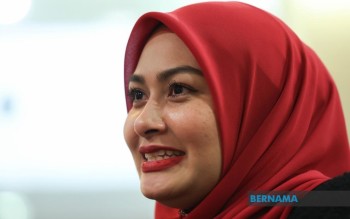
Tabung Haji faces a structural vulnerability in its financial model that demands urgent attention, according to Bentong MP Young Syefura Othman, who has pressed the government to detail its strategy for weaning the pilgrim fund off its dependence on Urusharta Jamaah Sdn Bhd's sukuk investments. Speaking during parliamentary debate on the Royal Commission of Inquiry's findings into the institution, the Pakatan Harapan legislator highlighted that nearly a quarter of TH's annual income flows from this single arrangement—a concentration that creates meaningful financial risk in an institution responsible for the savings and pension funds of hundreds of thousands of Malaysians.
The sukuk arrangement represents a critical structural problem that extends beyond simple portfolio diversification concerns. When one revenue stream accounts for more than a quarter of annual income, any disruption to that source—whether through market conditions, regulatory changes, or early redemption scenarios—threatens the institution's broader financial stability. Young Syefura's intervention reflects growing parliamentary concern that Tabung Haji, following years of scandal and mismanagement, requires a fundamental restructuring of how it generates returns for members rather than merely addressing symptoms. The MP's focus on this specific dependency suggests that policymakers are beginning to grapple with the systemic nature of TH's challenges.
Young Syefura called for greater transparency regarding the mechanics and timeline of the sukuk early redemption process, underscoring that the government must articulate a clear pathway toward reducing this dependency. Her demand signals that parliament expects concrete action rather than aspirational statements about financial recovery. The question of how and when TH might reduce its reliance on UJSB income has significant implications not only for the fund's members but also for broader Malaysian financial stability, given TH's role as custodian of billions in pilgrim savings and institutional assets.
A particularly urgent concern flagged by the Bentong MP involves the substantial losses incurred through 14 major investment decisions that the Royal Commission identified for forensic audit investigation. These investments span multiple sectors and significant asset classes including TH Plantations Bhd, TH Properties, and stakes in FGV Holdings, among others. Young Syefura pressed the government to disclose the full quantum of losses and depreciation arising from these decisions, information that remains opaque to parliament and the public. Without clarity on the scale of these write-downs and impairments, it becomes nearly impossible for stakeholders to assess the true health of TH's portfolio or the urgency of corrective action.
The forensic audit process itself has emerged as a critical accountability mechanism, and Young Syefura's questions about its current status reflect impatience with the pace of investigation. If negligence, abuse of authority, or breach of fiduciary duty occurred in these investment decisions, identifying responsible individuals and pursuing appropriate consequences represents a prerequisite for institutional reform. For Malaysian fund members—who have entrusted their earnings to TH—understanding whether losses resulted from honest mistakes or misconduct carries profound implications for restoring confidence in the institution's future stewardship.
Recovery prospects for the depreciated assets also warrant urgent clarification. Young Syefura pointedly asked what portion of lost value might realistically be recovered through asset sales, restructuring, or other recovery mechanisms. This question moves beyond mere accounting disclosure to address the practical pathways through which TH might rebuild its financial position. Without understanding which assets retain genuine value and which represent permanent losses, the institution cannot develop credible recovery strategies or communicate realistic timelines to members.
The MP's proposals for strengthening TH's governance architecture demonstrate that parliamentary oversight is now focused on preventive mechanisms rather than retrospective accountability alone. She advocated for substantially greater involvement by Bank Negara Malaysia and the Securities Commission in overseeing TH's financial and investment decisions. This recommendation reflects recognition that the institution's internal governance mechanisms have proven inadequate and that external regulatory expertise and enforcement capacity may be necessary to prevent future misadventures. The presence of central bank and securities regulator involvement would substantially raise the professional standards applied to TH's investment committees and board deliberations.
Young Syefura further recommended mandatory independent risk assessment and rigorous due diligence processes for every major investment. This represents a fundamental shift from TH's historical approach, where significant asset acquisitions and equity stakes were sometimes approved with questionable scrutiny. Independent risk assessment by external parties with no stake in the outcome would introduce important discipline and professional challenge to investment proposals. The requirement for stringent due diligence—particularly for large-scale property or plantation investments—addresses a critical gap that the RCI investigation exposed.
The emphasis on applying "fit and proper" standards to board appointments and senior management selections signals recognition that institutional quality depends directly on human capital. Malaysia's financial regulatory framework already incorporates fit and proper tests for senior managers in banking and insurance sectors, and extending this principle to TH would align the pilgrim fund with international governance standards. Such standards would assess not merely technical qualifications but also integrity, financial prudence, and freedom from conflicts of interest—criteria that apparently did not constrain previous appointment decisions.
These governance proposals gain particular relevance when considered against the backdrop of TH's institutional mission. The fund holds responsibility not merely for investment returns but for safeguarding the religious obligations and financial security of Malaysian Muslims preparing for the Hajj pilgrimage. The intersection of financial stewardship and religious trust creates heightened obligations that warrant governance frameworks exceeding those applicable to commercial investment vehicles. Young Syefura's intervention reflects understanding that parliament must ensure TH operates with a level of institutional integrity commensurate with these sacred trust responsibilities.
The Minister in the Prime Minister's Department (Religious Affairs), Dr Zulkifli Hasan, now faces the responsibility of translating these parliamentary directives into concrete policy measures. The government's response will determine whether TH undergoes genuine structural reform or merely implements superficial modifications. The scale of losses already incurred and the concentration of remaining risks suggest that the window for corrective action remains open but narrowing. Parliament's focus on dependency reduction, forensic audit completion, governance enhancement, and regulatory integration indicates that comprehensive rather than incremental solutions have become essential.

