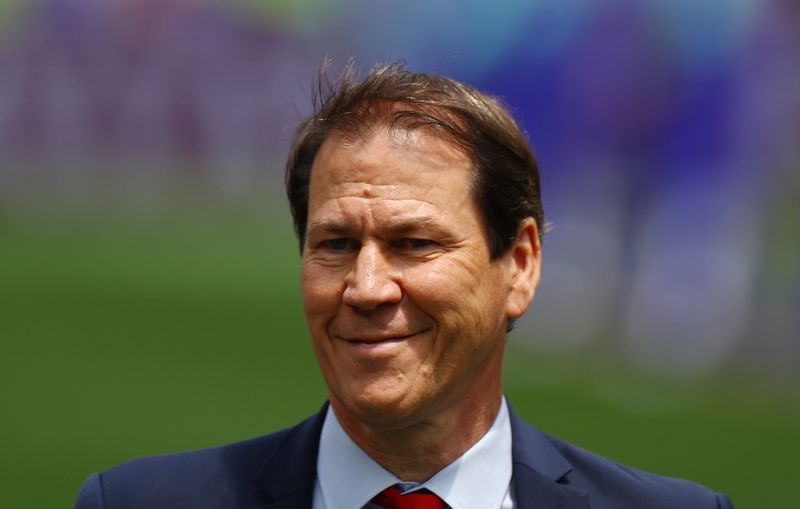
Rudi Garcia's tenure as Belgium national team coach will conclude on July 31 after the French tactician and the Belgian football association reached a mutual understanding not to extend his contract. The announcement came Monday, marking an orderly conclusion to an 18-month tenure that produced mixed results on both the domestic and international stage.
Garcia's most significant achievement during his watch was steering Belgium to the World Cup quarter-finals in what was meant to be a redemptive campaign for a squad that had underperformed in recent tournaments. However, the journey proved turbulent, beginning with a pair of unconvincing group-stage draws against Egypt and Iran before Belgium recovered to top their section with an emphatic 5-1 demolition of New Zealand. The inconsistency between those performances reflected the broader challenges Garcia faced in marshalling a squad in transition.
The pathway to the knockout rounds proved unexpectedly dramatic. Trailing Senegal by two goals with time ebbing away in the final 32, Belgium staged an unlikely comeback aided by a goalkeeping error that shifted momentum decisively in their favour. The comeback was sealed when a controversial VAR decision awarded Belgium a penalty in the dying moments of extra time, allowing them to secure a 3-2 victory and advance. This fortune-dependent progression sparked considerable debate about whether Belgium truly merited their knockout-stage progression.
Belgium's subsequent performance against hosts United States provided temporary vindication for Garcia's methods. The 4-1 victory was executed with such authority and tactical clarity that it temporarily silenced the mounting criticism that had shadowed the coach from the tournament's opening days. Sports media and punditry, which had subjected Garcia to intense scrutiny following the Egypt and Iran matches, briefly acknowledged the quality of his team selection and strategic approach during that commanding performance.
The satisfaction proved ephemeral. Garcia's decision-making in the quarter-final encounter against Spain, particularly his controversial substitution of goalkeeper Thibaut Courtois, became the focal point of intense recrimination. That tactical choice, viewed by many observers as questionable, crystallised the frustration that Belgian supporters and media had harboured throughout the tournament. Despite the team reaching the quarter-finals, the manner of their progression and elimination left substantial doubt about whether Garcia remained the appropriate custodian of the national team.
Garcia himself felt compelled to convene a press conference during the group stages to directly address and rebut the mounting criticism emanating from Belgian sports media. Such defensive engagement underscores the pressure cooker environment he navigated throughout the tournament, where every decision faced immediate scrutiny and second-guessing. The need to justify his tactical philosophy mid-tournament indicated the fractious relationship between coach and commentariat.
The decision to part ways was framed as mutual, with the Belgian football association's sports director Vincent Mannaert acknowledging Garcia's contributions while sketching a narrative of transition and restoration. In his official statement, Mannaert credited Garcia with restoring team cohesion during a challenging sporting and financial context following his appointment. The association recognised that the coach's experience and dedication had facilitated the generational transition within the squad, even if the tournament's conclusion raised fresh questions about the team's trajectory.
Garcia's own parting remarks emphasised gratitude toward the player group and well-wishes for Belgium's future development. His reference to initiating a generational transition suggests he viewed his primary legacy as structural rather than immediately trophy-focused, a perspective that may offer limited comfort to supporters seeking immediate competitive success. The coach departs without providing extensive public commentary on his tactical decisions or the controversies that defined his brief tenure.
Mannaert will assume responsibility for identifying Garcia's successor, a task that carries considerable weight given Belgium's Nations League commitments beginning in late September. The Red Devils face Italy in Rome before hosting France, fixtures that will immediately test whoever assumes the coaching role. The appointment process unfolds against a backdrop of European football's post-World Cup coaching upheaval, with the tournament's conclusion already triggering departures across numerous nations including France, Germany, Netherlands, and Portugal.
Garcia's exit exemplifies the precarious position of national team coaches operating within compressed tournament cycles and intense media environments. His 18 months encompassed the challenge of revitalising a squad that had disappointed in preceding campaigns whilst managing extraordinarily high expectations within a football-obsessed nation. The contradiction between reaching the quarter-finals—a respectable achievement by most metrics—and the overwhelmingly negative perception of his tenure illustrates the complex calculus governing international football management in contemporary sport.
For Malaysian and Southeast Asian observers, Garcia's departure underscores how even established European coaches struggle with the pressures of immediate tournament success. The incident also demonstrates how modern broadcast and social media ecosystems amplify criticism and generate toxic environments that can undermine coaching stability even when objective results are achieved. Belgium's transition period signals potential instability within European football's established hierarchies heading into the next competitive cycle.

