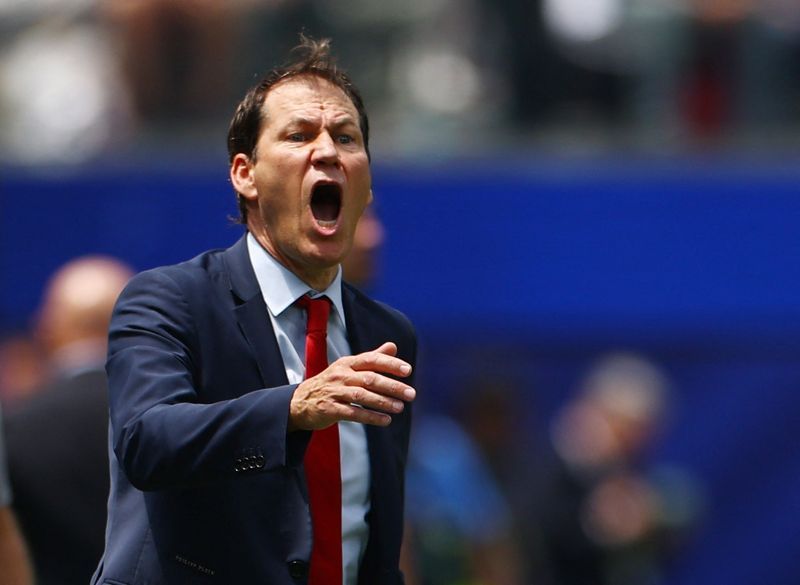
Belgium's World Cup campaign ended in disappointment on Friday when the team fell to Spain 2-1 in the quarter-finals, but the manner of defeat has cast serious doubt over the future of coach Rudi Garcia. At the centre of the controversy stands a single substitution that has ignited fierce debate in Belgian football circles and threatens to overshadow whatever positives the Belgian federation might otherwise extract from their tournament run.
The pivotal moment came in the 71st minute when Garcia withdrew first-choice goalkeeper Thibaut Courtois, despite the custodian's insistence that he could continue despite a minor leg complaint. Garcia's reasoning was uncompromising: Courtois was not operating at full physical capacity, and the coach maintained his tournament-long principle of fielding only completely fit players. The replacement, Senne Lammens, would prove unable to handle the pressure of the moment. Just 15 minutes later, a low strike from Pau Cubarsi slipped through his hands, and Mikel Merino capitalised on the error to seal Spain's advancement with what proved to be the winning goal.
The substitution decision has drawn withering criticism from prominent voices within Belgian football, most notably commentator Peter Vandenbempt, who questioned Garcia's strategic judgment on live radio. Vandenbempt's incredulity centred on the apparent contradiction between removing one of the world's finest goalkeepers mid-tournament because of concerns over his long-range distribution capabilities. The suggestion that tactical inflexibility had overridden common sense in a knockout match gained traction among observers who felt Garcia's rigid adherence to his fitness doctrine had backfired at the worst possible moment.
Garcia, however, has defended his approach with clarity and consistency. The 62-year-old Frenchman reiterated that his established policy throughout the World Cup had been to deploy only players operating at complete fitness levels, and he emphasised that Courtois himself fell under this requirement. He pointed to the tactical importance of the goalkeeper's distribution, noting that long passes to attacking midfielders Charles De Ketelaere and striker Romelu Lukaku had been integral to Belgium's game plan. Yet Garcia also acknowledged a duty of care, arguing that allowing an injured player to continue risked exacerbating the condition and potentially compounding the problem. In his calculation, preventing further injury took precedence over the marginal tactical gain of keeping Courtois on the pitch.
With Garcia's contract expiring at the end of this month, the Belgian Football Federation faces an imminent decision regarding his continued tenure. The 2-1 defeat to Spain will loom large in those deliberations, though his record in the position hardly screams failure. Since taking over at the start of 2025, Garcia has compiled a respectable mark of 12 wins, six draws and two defeats from 20 international matches. His appointment came with a mandate to revitalise the squad following the widely criticised tenure of Domenico Tedesco, whose period in charge was characterised as both toxic and demoralising.
Garcia successfully navigated his initial objectives. He secured Belgium's place among the top tier of the Nations League, guided the team to World Cup qualification, and delivered the primary target of reaching the last eight. These achievements suggest a degree of managerial competence, yet they may prove insufficient to outweigh the cumulative weight of concerns about his tactical approach, his substitution decisions, and his broader management philosophy. The narrow defeat to Spain, coming after a tournament in which Belgium showed considerable inconsistency, has provided his critics with compelling ammunition.
Belgium's World Cup journey itself reflected an underlying fragility that might reasonably be attributed to Garcia's stewardship. The team progressed from their group only after a succession of unconvincing performances, drawing with both Egypt and Iran before beating New Zealand to claim top spot. Against Senegal in the last 32, Belgium faced a two-goal deficit before mounting an improbable comeback, with Garcia having withdrawn his leading players as the scoreline deteriorated. Whether this tactical intervention demonstrated shrewd man-management or whether Senegal's defensive capitulation was primarily responsible for the reversal remains contested among analysts, illustrating the ongoing uncertainty around Garcia's decision-making.
There are genuine highlights to his record, however, that the federation cannot entirely discount. Belgium's devastating 4-1 victory over co-hosts the United States showcased attacking prowess and tactical sophistication. Moreover, Garcia has successfully integrated younger players into the squad, with Nathan Ngoy and Nicolas Raskin emerging as valuable contributors who delivered impressive performances at tournament level. These developments suggest that Garcia possesses the capacity to develop talent and rejuvenate a squad in transition.
Yet as the federation contemplates the landscape ahead, the target has shifted firmly toward the 2028 European Championship. The question becomes whether Garcia represents the right custodian for Belgium's ambitions to genuinely contend at that competition, or whether fresh leadership might unlock greater potential from a squad containing considerable talent. The Courtois substitution will inevitably feature prominently in those internal discussions, crystallising broader anxieties about his approach and reinforcing questions about whether his management style can deliver at the highest level when the stakes are elevated. The federation's decision will arrive within weeks, and Belgium's football future may well hinge on how they evaluate the lessons from Friday's quarter-final disappointment.

