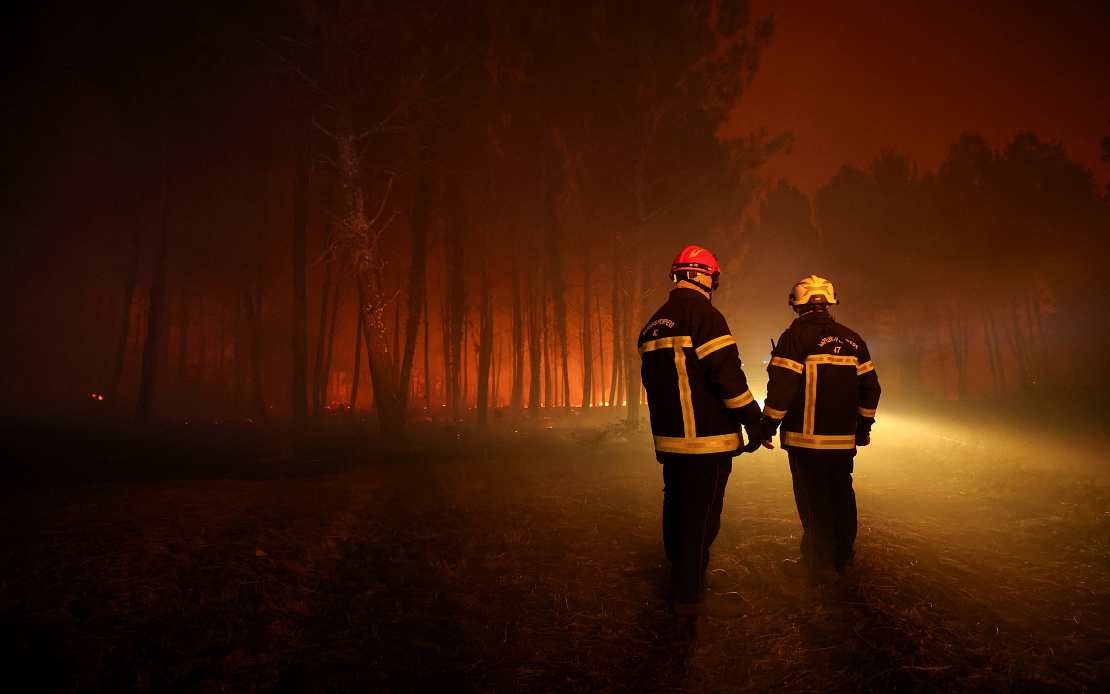
Belgium is grappling with its most severe wildfire in recorded history, with flames consuming approximately 2,700 hectares of the High Fens nature reserve by Saturday evening. The conflagration, which ignited around 2 pm on Friday near the German border in Liege province, represents an unprecedented environmental and humanitarian crisis for the country. The affected area has nearly doubled since the morning, demonstrating the fire's aggressive expansion and the significant challenge facing emergency responders across the region.
The evacuation has displaced roughly 600 residents from surrounding communities as authorities struggle to contain the advancing flames. Beyond permanent residents, the crisis has extended to seasonal populations, with tourists in the vicinity ordered to depart and a children's summer camp hastily vacated to ensure civilian safety. The scale of displacement underscores the rapid deterioration of conditions as the fire continues its relentless march across the landscape, driven by volatile meteorological patterns and terrain characteristics that obstruct containment efforts.
Comparative analysis with historical wildfire data reinforces the exceptional nature of this incident. The European Forest Fire Information System records indicate that a major 2011 wildfire burned approximately 1,400 hectares, making the current catastrophe nearly double the scale of Belgium's previous record. This milestone represents not merely a statistical anomaly but a stark indicator of shifting environmental conditions and increased fire vulnerability across Western Europe. The distinction carries implications for disaster preparedness strategies that have heretofore relied on historical baselines now proven inadequate.
The High Fens nature reserve's topographical characteristics have substantially complicated firefighting operations. The undulating, difficult terrain prevents emergency crews from deploying conventional close-range tactics effectively, requiring alternative approaches and considerably extending response timelines. This geographical disadvantage, combined with prevailing wind patterns that simultaneously threaten to accelerate fire spread and obstruct visibility, has created a multifaceted operational challenge that local resources alone cannot adequately address within necessary timeframes.
Recognising the gravity of the situation, Belgium has invoked the European Union Civil Protection Mechanism to mobilise international resources. This decision triggered rapid deployment of aerial firefighting assets from three EU member states: Czech Republic, Sweden, and the Netherlands dispatched aircraft to Belgium on Saturday. The activation represents a significant escalation in crisis response protocol, reflecting official acknowledgment that the incident exceeds Belgium's independent response capacity and demands coordinated continental intervention.
The firefighting operation has evolved into a multinational endeavour, drawing personnel from Belgium's own regional services alongside dedicated teams from neighbouring Germany and Luxembourg. Beyond traditional firefighting infrastructure, the Belgian military has committed resources to the operation, and local farming communities have volunteered logistical assistance and manpower. This heterogeneous response structure, while testimony to regional solidarity, also highlights the complexity of coordinating diverse command structures and operational doctrines during acute crisis management.
Meteorological conditions have proven instrumental in exacerbating the disaster. Belgium endured an intense heat wave throughout the week preceding the outbreak, with temperatures reaching 37 degrees Celsius in certain regions on Friday itself—the very day the fire commenced. These oppressive conditions desiccated vegetation and degraded soil moisture levels, creating ideal combustion environments. The combination of elevated temperatures, low humidity, and strong winds creates a trifecta of conditions that dramatically accelerates fire propagation and complicates suppression efforts using conventional methodologies.
The wildfire carries significant implications for Southeast Asian policymakers and disaster management authorities. As global climate patterns shift, regions traditionally considered low-risk for such phenomena increasingly experience unprecedented natural disasters. The Belgium incident illustrates how rapid environmental changes can overwhelm established emergency response frameworks and necessitate investment in advanced firefighting capabilities, international coordination mechanisms, and preventive land management strategies. Malaysia's own experience with transboundary haze from Indonesian forest fires demonstrates the necessity of regional cooperation protocols and advanced early warning systems.
The incident also underscores the vulnerability of biodiverse natural reserves to catastrophic fire events. The High Fens nature area represents crucial ecosystems that once destroyed require decades for regeneration. The ecological consequences extend beyond immediate habitat loss to encompass disruption of carbon cycles, species displacement, and long-term biodiversity impacts. For a region like Southeast Asia, heavily dependent on forest ecosystems for environmental services and economic resources, the Belgium wildfire serves as cautionary evidence of climate-related risks to protected areas previously assumed secure.
Looking forward, the scale of this disaster will inevitably prompt comprehensive reviews of Belgian disaster management protocols, mutual aid agreements with neighbouring states, and investment in preventive measures. The experience of other Mediterranean nations with recurring major wildfires—particularly Greece, Spain, and Portugal—provides instructive models for adaptation. These nations have progressively enhanced aerial assets, developed sophisticated early detection systems, and implemented landscape-level fire prevention through strategic vegetation management and controlled burning programmes.
For Malaysian observers, the Belgium wildfire validates concerns about climate-related intensification of natural hazards and the importance of regional preparedness frameworks. The Southeast Asian region, facing its own climate vulnerabilities and forest fire challenges, must consider whether current disaster management architectures prove adequate for emerging environmental realities. Enhanced investment in technology transfer, personnel training, and cross-border coordination mechanisms remains essential for building resilience against increasingly severe natural disasters in an evolving climate.

