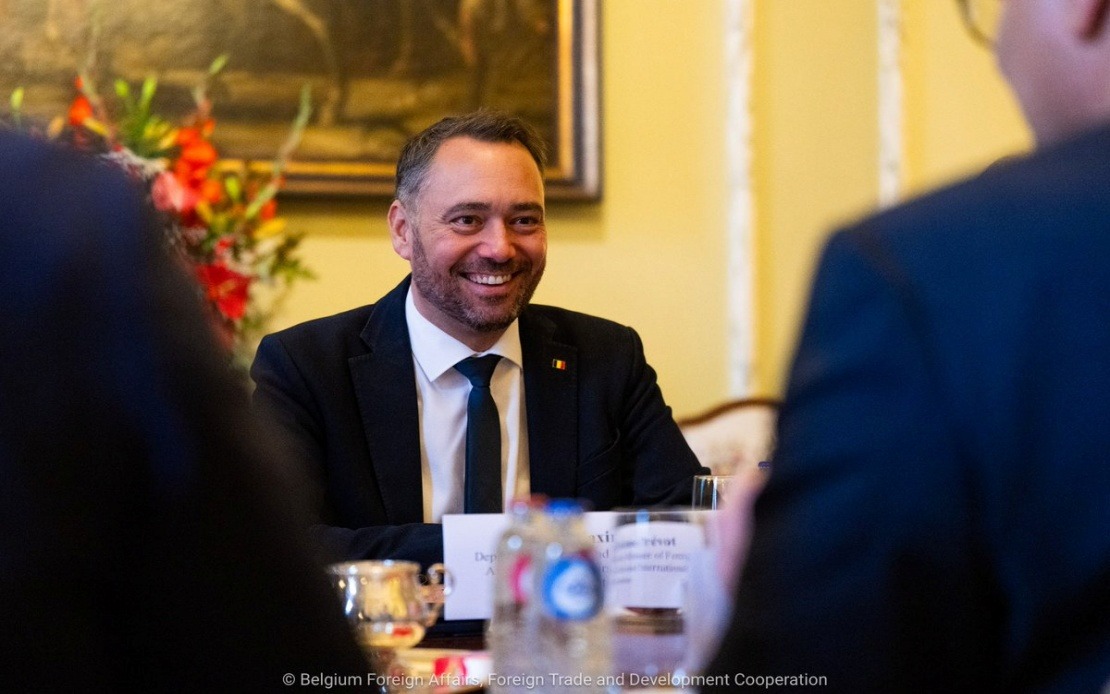
Belgium's Deputy Prime Minister and Foreign Minister Maxime Prévot is arriving in Malaysia this week for a two-day working visit centred on deepening bilateral cooperation in renewable energy, rare earth elements and the halal sector. The visit, which begins on Thursday, marks Prévot's inaugural journey to Malaysia since taking office in February 2025, signalling the European nation's intent to strengthen ties with the Southeast Asian nation at the ministerial level.
Proposed discussions will bring together Prévot and Malaysian Deputy Prime Minister Datuk Seri Fadillah Yusof, who also holds the Energy Transition and Water Transformation portfolio, on July 2. The pairing of these two officials underscores the centrality of energy matters to the bilateral agenda, given Fadillah's direct responsibility for Malaysia's transition toward cleaner power sources. Both ministers will undertake a comprehensive review of existing Malaysia-Belgium relations while charting paths toward expanded collaboration across key sectors relevant to both economies.
Renewable energy represents a natural focal point for the partnership, given Malaysia's ambitions to increase the share of clean energy in its generation mix and Belgium's substantial expertise in wind and solar technologies. The rare earth elements dimension reflects another strategic interest, as these materials are crucial for renewable energy infrastructure, electric vehicles and advanced manufacturing. Belgium's position within the European Union and its industrial capabilities make it a valuable partner for Malaysia as the country seeks to diversify its critical mineral supply chains and develop domestic processing capabilities.
The halal industry component of the visit acknowledges Malaysia's pre-eminence in this sector. As a globally recognised halal hub and certification authority, Malaysia can benefit from Belgian expertise in food processing, pharmaceuticals and cosmetics, whilst Belgium gains access to Malaysia's established halal standards and market networks. This intersection of trade opportunity and soft power demonstrates how sectoral cooperation can reinforce bilateral relations across multiple dimensions.
Beyond bilateral matters, Prévot will engage with broader regional frameworks during his stay. Malaysia-European Union relations will feature prominently in discussions, reflecting how bilateral ties are embedded within the larger architecture of Asia-Europe engagement. Both parties are also expected to exchange perspectives on regional and international developments of mutual concern, potentially including security challenges in the Indo-Pacific and global governance issues.
Proévot's schedule includes a ministerial address at the 39th Asia-Pacific Roundtable, an influential forum organised by the Institute of Strategic and International Studies (ISIS) Malaysia that brings together policymakers, academics and business leaders. Such a platform allows the Belgian minister to articulate his government's vision for Asia-Pacific engagement to a regional audience and to underscore the importance Belgium places on relations with Southeast Asia. The address may also touch on European perspectives on regional security and economic integration.
A diplomatic audience with the Sultan of Perak, Sultan Nazrin Muizzuddin Shah, forms part of the official programme and reflects protocol traditions in Malaysia. Such meetings carry symbolic weight, signalling respect for Malaysia's constitutional monarchy and providing opportunities for informal dialogue on issues of national importance outside formal government channels.
Bilateral trade figures underscore the economic substance behind this political engagement. In 2025, Malaysia-Belgium trade reached RM9.74 billion, with Malaysian exports comprising RM6.85 billion and imports totalling RM2.89 billion. This volume reflects a mature economic relationship, though the composition suggests room for deepening value-added collaboration beyond traditional commodity exchanges. Belgium's position as a European gateway and logistics hub also makes it attractive for Malaysian businesses seeking to access EU markets.
Belgian investment in Malaysia has been steadily accumulating. As of 2025, approved projects involving Belgian participation totalled 67 ventures representing RM5.1 billion in committed investments with the capacity to generate 4,605 jobs across sectors including manufacturing, chemicals and advanced industries. These figures indicate Belgium's confidence in Malaysia's investment climate and institutional frameworks, though further sectoral diversification into renewable energy and green technology could expand this footprint considerably.
The timing of Prévot's visit reflects broader geopolitical currents in Southeast Asia. European nations are increasingly recognising the region's strategic importance amid competition for influence and markets. For Malaysia specifically, Belgian engagement in renewable energy and critical minerals aligns with national development priorities outlined in recent policy frameworks. The visit also comes as Malaysia continues to position itself as a bridge between Europe and Asia, leveraging its diplomatic standing to facilitate meaningful partnerships.
From a Malaysian perspective, the Belgian engagement offers concrete opportunities to access European technological expertise and investment capital in priority sectors. Renewable energy remains critical to Malaysia's climate commitments and economic diversification, whilst rare earth elements processing could unlock new manufacturing opportunities. The halal industry collaboration provides pathways for Malaysian firms to penetrate high-value European markets in regulated sectors.
The visit exemplifies how smaller European nations leverage specialised expertise and sectoral strengths to build influence in Asia-Pacific. Belgium's absence of colonial history in the region and its role as a neutral EU member provide distinct advantages in building partnerships based on mutual economic interest. For Malaysia, engaging with Belgium offers opportunities to diversify its European partnerships beyond traditional interlocutors and to access specific technological capabilities crucial for green energy transition.
As Malaysia navigates the complexities of global economic competition and energy transformation, bilateral engagements with strategic partners like Belgium assume heightened importance. The substantive agenda spanning renewable energy, critical minerals and halal commerce reflects shared interests in sustainable development and economic resilience. Prévot's visit thus represents more than ceremonial diplomacy—it signals commitment to practical, sectoral cooperation that benefits both nations whilst contributing to regional stability and prosperity.

