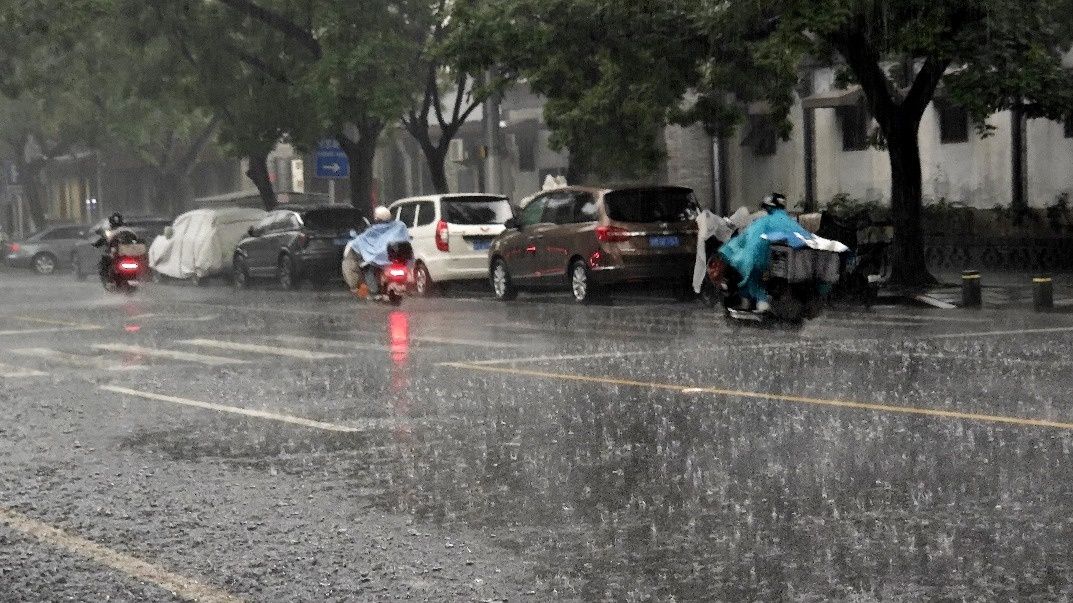
Beijing has activated its second-highest weather alert level as forecasters brace for a significant rainstorm system set to sweep across the Chinese capital over the coming weekend. The meteorological observatory released an orange-level alert on Thursday afternoon, signalling dangerous weather conditions that prompted authorities to simultaneously declare a Level-II flood control emergency response. This represents the opening salvo of what could be a challenging monsoon season for the city, which frequently experiences heavy precipitation during summer months that strain infrastructure and pose risks to residents and businesses alike.
The rainfall event is expected to intensify beginning Friday afternoon and persist through Sunday morning, with the heaviest downpours concentrated in five key districts: Huairou, Miyun, Pinggu, Shunyi and Fangshan. These areas, which encircle Beijing and contain a mix of urban settlements and mountainous terrain, face the greatest exposure to intense precipitation. Meteorologists anticipate that some localities could experience hourly rainfall exceeding 70 millimetres, an intensity sufficient to overwhelm drainage systems and trigger rapid water accumulation. The cumulative rainfall prediction exceeds 150 millimetres over the 24-hour period, a threshold that frequently triggers flooding in vulnerable neighborhoods and creates hazardous travel conditions across the metropolitan region.
The geographical distribution of expected impacts underscores why Beijing's authorities treat this weather system seriously. Mountainous and hilly districts face heightened meteorological hazards, including potential debris flows and landslides triggered by waterlogged soil. Simultaneously, lower-lying urban and suburban areas remain vulnerable to street flooding and waterlogging, particularly in older districts with aging drainage infrastructure. The convergence of these distinct hazards across such a large geographic footprint necessitates a comprehensive emergency response that coordinates multiple agencies and municipal services to protect both lives and property.
In response to the alert, the Beijing flood control office has implemented a structured emergency protocol designed to minimize public exposure to dangerous conditions. The Level-II activation represents a significant escalation from routine preparedness, involving enhanced monitoring of waterways, pre-positioning of rescue equipment, and mobilization of personnel across flood-prone areas. Authorities have explicitly advised residents to drastically reduce unnecessary outdoor activities and to monitor official weather updates continuously as conditions develop. The emphasis on public communication reflects lessons learned from previous flooding events across China, where inadequate information dissemination contributed to preventable casualties and property damage.
Transportation networks will face disruption during the rainfall period, prompting municipal guidance for commuters and employers. The flood control office has recommended that organizations shift to flexible working arrangements or stagger commuting schedules to reduce congestion and exposure during peak precipitation hours. Public transportation is being presented as a safer alternative to private vehicles, reflecting concerns about visibility impairment and flooding of underpasses that frequently occur during intense downpours. This guidance recognizes that despite modern infrastructure, Beijing's transportation system remains vulnerable to rapid water accumulation in subterranean passages and low points along major routes.
Educational institutions across the capital have received directives to suspend regular classes and in-person training activities, with schools empowered to make decisions based on localized conditions in their neighborhoods. This precautionary approach acknowledges both the difficulty of safely transporting students during severe weather and the potential for damage to school facilities. The suspension also reflects a broader public health principle that minimizes unnecessary exposure to hazardous conditions, allowing families to remain sheltered and permitting schools to preserve resources for emergency response if needed.
Beyond residential and commercial sectors, recreational and cultural activities face comprehensive restrictions. The alert explicitly prohibits visits to scenic areas involving mountains or rivers, as well as underground commercial facilities where flooding poses particularly acute risks. Geological hazard zones have been designated off-limits, a precaution that acknowledges the potential for landslides and rockfalls in unstable terrain saturated by heavy rainfall. The public has been warned to maintain distance from rivers and channels that may swell rapidly and dangerously during intense precipitation, a message reinforced by historical incidents of drownings in unexpectedly swift-moving waters.
Construction and outdoor industrial operations throughout Beijing must cease during the alert period. This blanket suspension of outdoor work recognizes that operating machinery, conducting excavation, or performing maintenance during torrential rain creates untenable safety risks for workers while potentially exacerbating erosion and water management problems. The directive effectively brings much of the city's outdoor economy to a standstill, a significant economic cost offset by the prevention of worker casualties and property destruction that would result from operations continuing during hazardous conditions.
China employs a standardized four-tier weather alert system that provides consistent messaging across the nation, with red representing the most severe category, followed by orange, yellow and blue in descending order of severity. The orange alert issued for Beijing therefore indicates serious meteorological danger requiring substantial public precautions, though not yet reaching the catastrophic threshold designated by red alerts. This tiered approach allows authorities to calibrate public response, resource allocation and emergency measures proportionately to actual threat levels, preventing both complacency and unnecessary panic. For Malaysia and other Southeast Asian nations, Beijing's systematic approach to weather emergency management offers instructive parallels, particularly as climate change increases the frequency and intensity of extreme precipitation events across tropical and subtropical regions.
The timing of this alert at the onset of the 2026 flood season suggests that meteorological conditions may prove particularly active in coming weeks and months. Beijing's location along the path of moisture-bearing systems from the Pacific and Indian Oceans creates recurring seasonal vulnerability to intense rainfall, though the specific intensity and frequency vary considerably year to year. This first significant weather event of the season will test Beijing's emergency response systems and reveal any gaps in preparedness that must be addressed before potentially more severe systems arrive. For the region more broadly, the event underscores the importance of investment in meteorological monitoring and flood management infrastructure as extreme weather episodes become more frequent and unpredictable.

