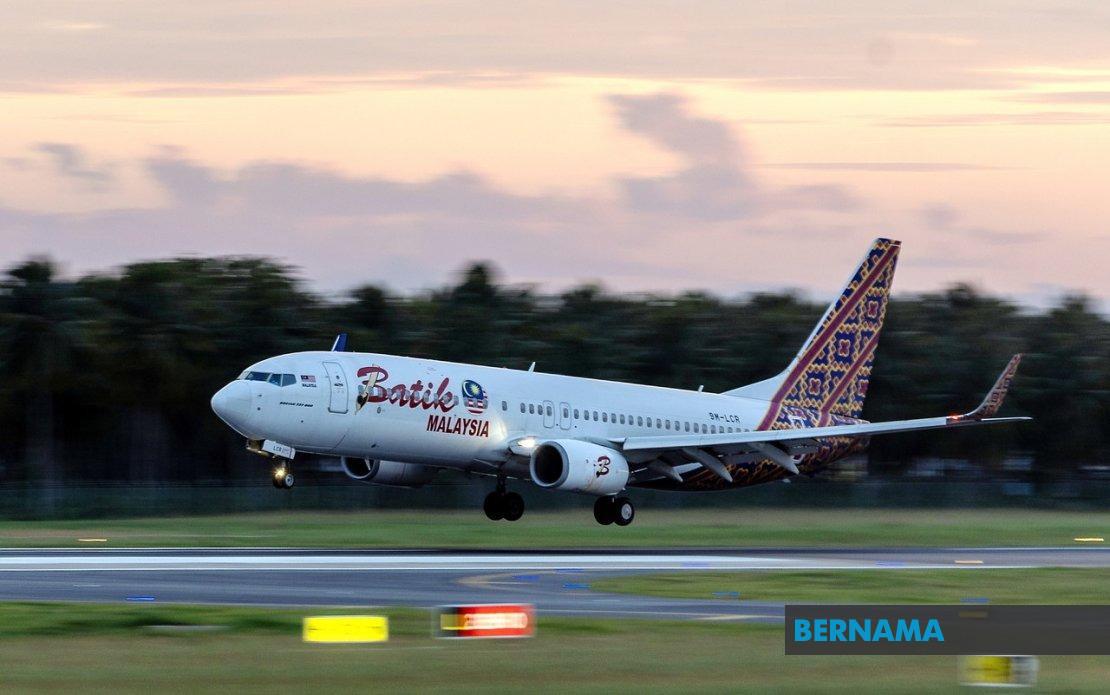
Batik Air is set to expand its presence on the Bintulu-Kuala Lumpur corridor beginning July 20 by introducing a second daily flight, marking a significant development for connectivity between the Sarawak interior and the capital. Tourism, Arts and Culture Minister Datuk Seri Tiong King Sing announced the expansion, characterising it as the result of sustained advocacy following mounting community dissatisfaction with reduced flight frequencies and escalating airfare costs.
The decision represents a partial victory for stakeholders who have grown increasingly frustrated with what they perceived as arbitrary service reductions and pricing volatility on this strategic route. Tiong's ministry had actively engaged with the airline to reverse the downward trajectory, with the minister initially seeking three daily rotations before eventually settling on the two-flight arrangement after commercial negotiations. The compromise reflects the delicate balance airlines must strike between operational costs and market expectations, a tension that frequently surfaces in secondary markets across Southeast Asia where passenger volumes do not always justify the frequencies passengers desire.
Under the new schedule, outbound flights from Kuala Lumpur to Bintulu will depart at 10 am and 2.30 pm, while return services from Bintulu will leave at 1.10 pm and 5.40 pm. These timings appear designed to cater to both business travellers requiring same-day round trips and leisure passengers with more flexible schedules. The spacing between services provides reasonable connectivity options for passengers whose plans might be disrupted by single daily frequencies, a particular concern for Bintulu residents who rely on air transport for essential services unavailable locally.
Bintulu's economic trajectory has been the primary driver behind increased travel demand. The town has transformed significantly over recent decades as an energy hub, with ongoing industrial development creating consistent business travel requirements. Beyond commercial activity, education and healthcare considerations compel Bintulu residents to travel to Kuala Lumpur regularly, while the growing tourism appeal of Sarawak's interior has introduced seasonal leisure demand. Tiong's framing of these diverse factors demonstrates a sophisticated understanding of the connectivity challenges facing Malaysian towns outside the peninsula's primary commercial centres.
The minister's public statements reveal considerable diplomatic effort in managing airline-public expectations. Rather than imposing service mandates, he emphasised voluntary coordination and mutual benefit, arguing that stable lower pricing would ultimately increase passenger volumes and airline profitability. This approach reflects broader challenges facing Malaysian aviation policy, where the government seeks to influence carrier behaviour without direct regulatory control over domestic routes. The implicit threat that further escalations could trigger regulatory intervention was notably absent, suggesting Tiong's preference for collaborative rather than confrontational engagement.
Pricing concerns have emerged as central to the dispute. Bintulu residents and business users reported alarming fare increases during periods of reduced capacity, with some commentators viewing the price-frequency nexus as evidence of capacity manipulation designed to maximise yield. The minister's explicit call for airfare moderation, framed as an appeal to the airline's long-term interests, attempts to reframe pricing as a customer service issue rather than a pure commercial calculation. This rhetorical strategy acknowledges that public tolerance for high domestic fares remains limited, particularly on routes connecting regional centres.
The potential for future expansion to three daily flights remains explicitly on the table, contingent upon demonstrated demand growth. This conditional commitment preserves flexibility for both the airline and the ministry while signalling openness to further expansion. In practical terms, however, achieving three daily services would require sustained passenger growth and the availability of additional aircraft capacity, hurdles that secondary routes frequently struggle to overcome. The language around demand-driven expansion thus serves as a prudent caveat against over-promising while maintaining political momentum.
Service reliability has been identified as a complementary concern to frequency and pricing. The minister specifically urged Batik Air to avoid cancellations and last-minute schedule alterations that plague some regional routes. This emphasis reflects accumulated frustration with operational unpredictability that undermines the utility of published schedules, particularly for business users whose travel timing is often constrained. Enhanced frequency without corresponding reliability improvements would represent a hollow victory for passengers, making Tiong's focus on operational stability a pragmatic inclusion in his negotiation framework.
From a regional perspective, this development underscores broader connectivity debates across Southeast Asia. Sarawak's rapid economic growth and geographical dispersal have outpaced aviation infrastructure development, leaving towns like Bintulu dependent on capacity decisions made by commercial operators based in more densely populated markets. Malaysia's experience mirrors challenges faced elsewhere in the region, where secondary cities struggle to attract airline investment despite possessing genuine economic and demographic justification for enhanced services. The political intervention evident in Tiong's case reflects the reality that market forces alone may not produce optimal regional aviation networks.
The timing of the announcement coincides with increased scrutiny of airline pricing practices across Malaysia. Recent fuel price volatility and currency fluctuations have reintroduced pricing pressures in the sector, prompting renewed public focus on the relationship between operating costs and fare levels. Batik Air's willingness to introduce additional capacity despite these cost pressures suggests either genuine confidence in demand recovery or political acknowledgement that maintaining market share on strategic routes justifies capacity investment even in challenging cost environments.
Government coordination roles have become increasingly important in Malaysian aviation as competition intensifies and consolidation reduces the number of domestic operators. Tiong's high-profile engagement in securing this service expansion demonstrates ministerial willingness to invest political capital in regional connectivity issues, potentially setting precedent for similar interventions elsewhere. The success or failure of this initiative will likely influence expectations among other communities regarding government advocacy for improved aviation services, with implications for future airline-government relations across the sector.

