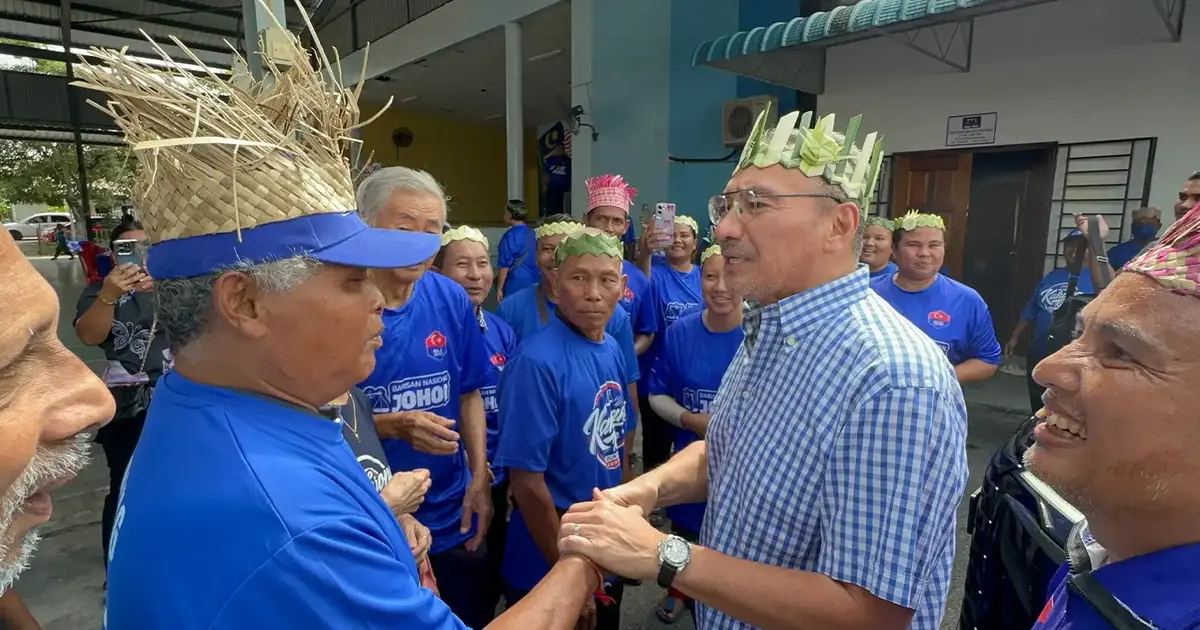
An Umno Member of Parliament from Sembrong has urged Barisan Nasional machinery to shift its strategic focus away from election predictions and towards substantive candidate engagement, arguing that such projections can distract campaign operatives from the ground-level work that genuinely influences electoral results. The directive reflects growing recognition within Malaysia's largest political coalition that polling data and expert forecasting, while informative, cannot substitute for disciplined grassroots organising and genuine voter connection.
Hisham's counsel to BN workers carries particular weight given the coalition's ongoing efforts to rebuild credibility following setbacks in recent electoral cycles. The emphasis on candidate-centric campaigning rather than predictive metrics suggests a strategic recalibration within Umno and its allied parties. This approach prioritises the direct relationship between elected representatives and their constituents, recognising that voters respond to tangible engagement and demonstrated commitment to community issues more readily than to numerical projections or media commentary about probable outcomes.
The Sembrong MP's message arrives at a moment when Malaysian political discourse frequently features opinion polling, seat projections, and analytical predictions from various research organisations. While such data provides useful context for political strategists and media observers, Hisham's intervention suggests that excessive focus on these metrics may inadvertently undermine the disciplined campaign activity that translates voter sentiment into actual electoral performance. This distinction between understanding the political landscape and allowing that understanding to paralyse or distract operational efforts represents a recurring tension in modern campaign management across democracies.
Barisan Nasional's coalition structure—spanning Umno, the Malaysian Chinese Association, the Malaysian Indian Congress, and various other component parties—historically relied on sophisticated grassroots networks and strong community ties to maintain electoral dominance. As Malaysian politics has evolved and voter behaviour has become increasingly volatile, the coalition has grappled with adapting its traditional strength-building mechanisms to contemporary electoral dynamics. Hisham's guidance seems designed to reinvigorate confidence in those proven organisational methods rather than permitting them to atrophy in favour of data-driven speculation.
The Umno politician's statement fundamentally reaffirms a democratic principle often overlooked in analysis-heavy campaign environments: voters themselves possess agency and decision-making power that cannot be reduced to predictive models. Regardless of how forecasters interpret demographic trends, polling samples, or historical voting patterns, the actual mechanics of elections depend on individual voter choice at the ballot box. This reality underscores the importance of maintaining direct channels of communication and building personal relationships between candidates and their communities, activities that prove difficult to quantify but remain essential to electoral success.
For Malaysian workers and supporters across the BN coalition, this refocused messaging provides both motivation and practical direction. Rather than becoming demoralised by projections suggesting unfavourable conditions or complacent because forecasts appear positive, party operatives are encouraged to view their individual efforts as determinative. Each door knock, each community engagement, each conversation about a candidate's platform and vision contributes to shaping outcomes that polls cannot predict with precision. This perspective potentially energises volunteer activity and professional campaign staff by emphasising the tangible impact of their labour.
The timing of Hisham's counsel also reflects awareness that Malaysian electoral politics has become significantly less predictable than during the pre-2018 era when Barisan Nasional enjoyed near-consistent dominance. The 2018 general election and subsequent state-level contests demonstrated that voter preferences can shift substantially and rapidly, particularly when motivated by specific issues or when alternative coalitions present credible candidates. This volatility suggests that reliance on historical patterns or conventional polling may generate false confidence, further vindicating the MP's emphasis on candidate-focused campaigning as more reliable than predictive engagement.
Moreover, Hisham's directive addresses an internal coalition dynamics question that remains relevant to Barisan Nasional's strategic planning. In multi-party coalitions, seat distribution and candidate selection frequently generate internal friction. By elevating the importance of individual candidates and their capacity to connect with voters, the Sembrong MP implicitly argues that quality of individual representation matters more than mathematical calculations about which party secures how many seats. This emphasis potentially serves to depersonalise some internal coalition tensions by reframing candidate selection around electability and community appeal rather than merely coalition mathematics.
For Malaysian voters observing Barisan Nasional's strategic communication, this message offers insight into how the coalition approaches contemporary electoral challenges. Rather than presenting itself as mathematically assured of victory or paralysed by unfavourable projections, BN positions itself as focused on substantive engagement. This stance may resonate with voters who appreciate direct candidate engagement over abstract political calculation, and it reflects a mature understanding that election outcomes emerge from cumulative individual voter decisions rather than from aggregate data points.
Hisham's guidance ultimately encapsulates a broader truth applicable across Malaysian politics and indeed to democratic contests internationally: while understanding electoral trends and voter sentiment through polling and analysis provides valuable strategic information, such tools serve as supplements to traditional campaign fundamentals rather than replacements. Candidates who engage authentically with constituents, listen to community concerns, and demonstrate genuine commitment to representing diverse interests typically outperform electoral forecasts that suggest they should struggle. The Umno MP's counsel to his party colleagues accordingly seeks to restore balance to campaign strategy, ensuring that the sophisticated analytical tools available to modern political operatives enhance rather than supplant the basic human connections that ultimately determine how voters cast their ballots.

