Barisan Nasional is banking on a resurgence of support among FELDA voters in the Kulai parliamentary constituency ahead of the 16th Johor state election, marking a significant shift after the coalition suffered notable setbacks in the agricultural communities during the 2018 polls. The coalition's optimism centres on four Federal Land Development Authority settlements spanning nearly 7,000 registered voters—FELDA Taib Andak, FELDA Inas, and FELDA Bukit Permai in the Bukit Permai state seat, alongside FELDA Bukit Batu in the Bukit Batu constituency.
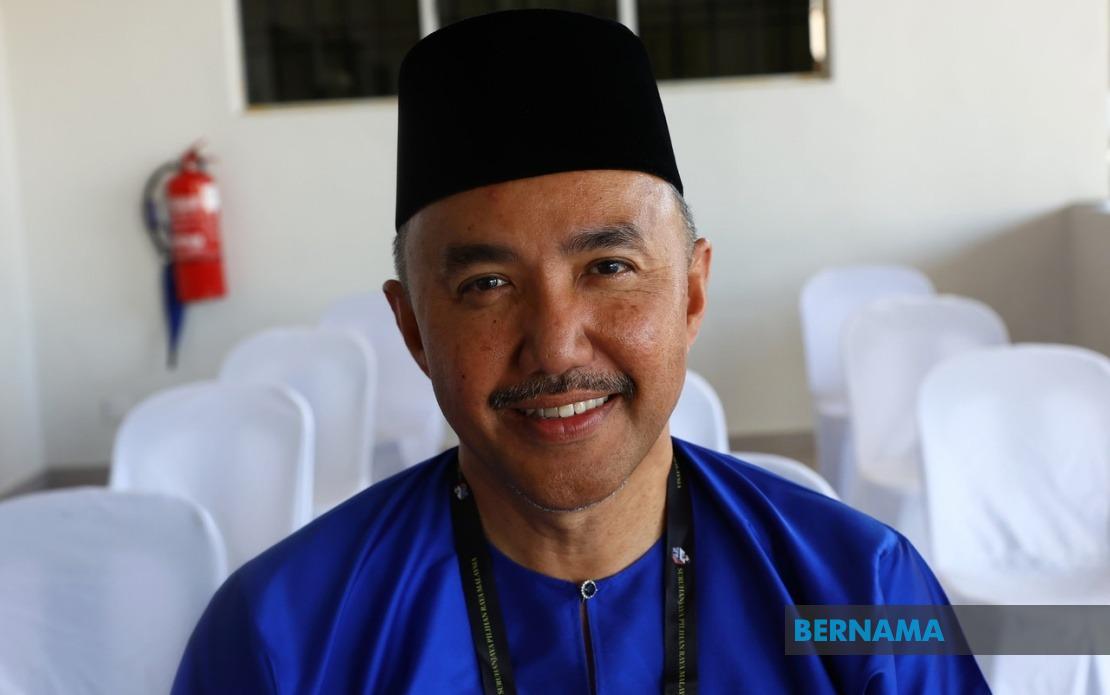
Kulai BN chairman Datuk Mohd Jafni Md Shukor, who is himself defending the Bukit Permai seat in the July 11 election, attributed the coalition's renewed confidence to tangible welfare improvements delivered by the Johor state government under Menteri Besar Datuk Onn Hafiz Ghazi over the past four years. The messaging reflects a deliberate strategy to remind FELDA settlers—a traditionally influential bloc in rural and semi-rural constituencies—of the government's track record in addressing community needs. Jafni's public comments represent an attempt to reverse the electoral damage sustained in 2018, when FELDA communities shifted significantly away from BN, a trend that only partially corrected in the 2022 state election.
The state government's support architecture for FELDA settlers has expanded considerably in recent years. Through the Johor Education Foundation (YPJ), the administration has channelled education assistance specifically targeting FELDA children, addressing one of the sector's persistent pain points. This targeted welfare approach demonstrates an understanding that FELDA communities operate with distinct economic pressures and aspirations compared to urban voters. The foundation's programmes represent a direct intervention to ease the financial burden families face in educating their children, a concern that resonates strongly in agricultural settlements where household incomes tend to be more volatile.
Beyond welfare support, the Johor state government has tackled a chronic administrative issue that had festered for decades: land title complications affecting FELDA settlers. According to Jafni, the administration has now resolved ownership applications for 99.9 per cent of affected settlers, a near-complete resolution of what had become a symbol of bureaucratic neglect. Land ownership security carries profound psychological and economic significance for FELDA communities, as property rights directly affect access to credit, investment capacity, and intergenerational wealth transfer. The clearing of this backlog, therefore, transcends mere administrative tidiness and touches on fundamental economic empowerment.
Jafni's framing of these achievements carries an implicit acknowledgment that FELDA voters are persuadable through performance-based politics rather than entrenched loyalty. The coalition's confidence rests on the theory that demonstrable delivery—tangible welfare cheques, resolved land disputes, educational support—can rebuild electoral dominance in constituencies where BN had previously taken FELDA support for granted. This represents a shift toward transactional campaigning where results matter more than historical relationships, a pattern increasingly visible across Malaysian electoral politics as voter sophistication grows.
The Bukit Permai seat itself carries particular significance. As the state housing and local government committee chairman, Jafni brings executive credibility to his candidacy, having overseen portfolios directly relevant to FELDA settlement development and administration. His four-cornered contest against candidates from Parti Bersama Malaysia (Bersaman), Pakatan Harapan (PH), and Perikatan Nasional (PN) indicates that opposition to BN has fragmented among multiple challengers rather than consolidating behind a single alternative. For Jafni, this fragmentation theoretically improves his chances of retaining the seat, particularly if FELDA settlement cohesion can be maintained and opposition votes split across competing parties.
The broader context of BN's FELDA strategy in Kulai reflects the coalition's need to stabilise its support base ahead of federal considerations. Johor remains politically consequential both within the larger Malaysian federation and as a testing ground for BN's ability to recalibrate its political messaging. The state's 56 state assembly seats represent approximately 17 per cent of Dewan Rakyat seats, making Johor critical to any future federal coalition mathematics. BN's performance among traditional supporters like FELDA settlers sends crucial signals to the broader electorate about the coalition's capacity to govern effectively and deliver on promises—signals that reverberate well beyond Johor's borders.
Menteri Besar Datuk Onn Hafiz Ghazi's administration appears to have adopted a deliberate strategy of consolidating support among constituencies where BN had previously experienced erosion. The FELDA focus exemplifies this approach: targeting communities with identifiable grievances, implementing visible solutions, and then translating those achievements into electoral messaging. The decision to highlight education grants, land title resolution, and development continuity suggests the government believes performance metrics, not ideological appeals, will determine voter behaviour among these communities.
Jafni's appeal for voters to grant BN a second term to implement additional development programmes reflects confidence that the current trajectory of Johor governance will continue to benefit FELDA settlements. The implicit promise is that a BN victory would allow the state government to deepen and expand the welfare architecture already established. This forward-looking pitch attempts to frame the election not as a referendum on past performance alone but as a choice between continuity and unknown alternatives represented by opposition parties.
The July 11 polling date, with early voting scheduled for July 7, gives the campaign roughly two weeks to crystallise voter sentiment across the Kulai parliamentary area. For BN, the outcome in FELDA settlements will serve as a litmus test for whether the coalition's welfare initiatives and administrative reforms have successfully rebranded its image among rural communities. For opposition parties, the challenge lies in convincing FELDA voters that alternative visions of governance and development offer greater long-term benefits than the incumbent administration's track record. The contest in Kulai, therefore, encapsulates a fundamental question animating Malaysian electoral politics: whether voters will reward competent delivery and welfare expansion, or whether they will prioritise change and new political directions.

