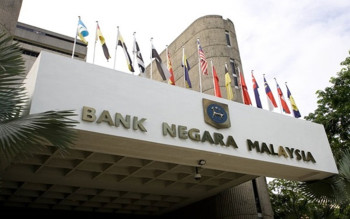
Malaysia's central bank sent five separate warning letters to Tabung Haji leadership alerting them to the dangerous gap between the institution's assets and liabilities, according to Minister in the Prime Minister's Department (Religious Affairs) Dr Zulkifli Hasan. Speaking during a parliamentary briefing on Tuesday regarding the Royal Commission of Inquiry report into the troubled pilgrimage fund, Dr Zulkifli disclosed that these warnings were directed at both the TH chairman and the Religious Affairs Minister at the time, emphasizing that immediate corrective action was essential to prevent the institution from breaching financial regulations.
The gravity of Tabung Haji's predicament went beyond ordinary institutional mismanagement. Dr Zulkifli underscored that the fund's financial distress represented a potential systemic threat to Malaysia's broader financial stability during the period these warnings were issued. Such language from a government minister signals how precarious the situation had become within one of the country's most prominent Islamic financial institutions, which manages billions of ringgit in pilgrim savings destined for the Hajj journey. The repeated nature of the warnings—five separate letters—suggests mounting frustration from Bank Negara as the institution failed to respond adequately to escalating concerns.
Despite the explicit cautions from Malaysia's financial regulator, the leadership of Tabung Haji chose not to heed these alerts. Dr Zulkifli's characterization of this inaction as letters being "ignored by TH's leadership" points to either a fundamental breakdown in governance or a deliberate disregard for regulatory guidance. This pattern of non-compliance would eventually culminate in far more serious institutional failures, with consequences that rippled through the regulatory and political ecosystem over subsequent years.
Bank Negara's formal warnings were subsequently reinforced by action from another key oversight body. The Auditor-General added its voice through a reprimand contained in the 2017 Financial Statements Report, raising specific concerns about how Tabung Haji was accounting for asset valuations. The Auditor-General's criticism focused on shifts to the institution's impairment policy—the methodology used to assess whether assets had lost value—and flagged that these adjustments were made twice within the same calendar year, an unusual pattern that appeared designed to artificially enhance reported profits for 2017.
The audit irregularities discovered by the Auditor-General revealed a troubling pattern of financial reporting practices that lacked credibility. By adjusting impairment policies twice in a single year, Tabung Haji appeared to be manipulating how losses were recognized to present a rosier picture of its financial health than was warranted. For an institution entrusted with the savings of ordinary Malaysians preparing for one of Islam's five pillars, such practices represented a serious breach of fiduciary responsibility and transparency obligations.
Following these regulatory rebukes, Tabung Haji's reconstituted board took what appeared to be a corrective step by engaging PricewaterhouseCoopers, one of the world's largest professional services firms, to conduct a comprehensive reassessment of the institution's actual financial position and historical performance. This 2018 engagement signaled an apparent shift toward accountability and proper accounting standards. However, the PwC investigation ultimately confirmed the worst suspicions about the extent of financial misrepresentation within the organization.
The PwC audit delivered damaging findings that vindicated the concerns raised by Bank Negara and the Auditor-General. According to the professional valuation conducted by PwC, only RM556 million of Tabung Haji's stated total assets of RM4.6 billion had been assessed by qualified professional valuers. This meant that approximately 88 percent of the fund's reported asset base lacked credible independent valuation, raising serious questions about whether the remaining RM4.044 billion in claimed assets actually existed or possessed genuine value. The implication was staggering: Tabung Haji had been operating with a fundamentally distorted balance sheet that bore little relationship to financial reality.
The establishment of the Royal Commission of Inquiry in 2021 represented the government's acknowledgment that Tabung Haji's problems demanded forensic scrutiny at the highest level. Commission members were appointed on January 20, 2022, tasked with examining the institution's management and operations during the turbulent 2014-2020 period, a six-year window that encompassed the regulatory warnings, audit failures, and the mounting financial deterioration. The RCI was designed to answer fundamental questions about how such extensive financial manipulation occurred within a government-linked institution and identify systemic weaknesses in oversight mechanisms.
When the RCI presented its 211-page report to the Yang di-Pertuan Agong on August 30, 2022, it provided comprehensive documentation of governance failures and operational deficiencies spanning the entire problematic period. Beyond cataloging what went wrong, the commission issued 25 recommendations aimed at preventing similar crises in the future. According to Dr Zulkifli's parliamentary statement, Tabung Haji had already implemented approximately 75 percent of these recommendations by late July 2023, suggesting at least some momentum toward institutional reform, though the depth and effectiveness of these measures remain to be fully assessed.
For Malaysian readers, the Tabung Haji scandal carries particular resonance given the fund's unique role in facilitating hajj pilgrimages for hundreds of thousands of Malaysians. The revelation that Bank Negara's multiple warnings were disregarded raises uncomfortable questions about regulatory authority and accountability mechanisms within Malaysia's financial system. The fact that such extensive manipulation could persist despite oversight from both the central bank and the Auditor-General suggests structural vulnerabilities in how government-linked financial institutions are monitored and held accountable, issues with implications extending well beyond this single institution to Malaysia's broader governance architecture.

