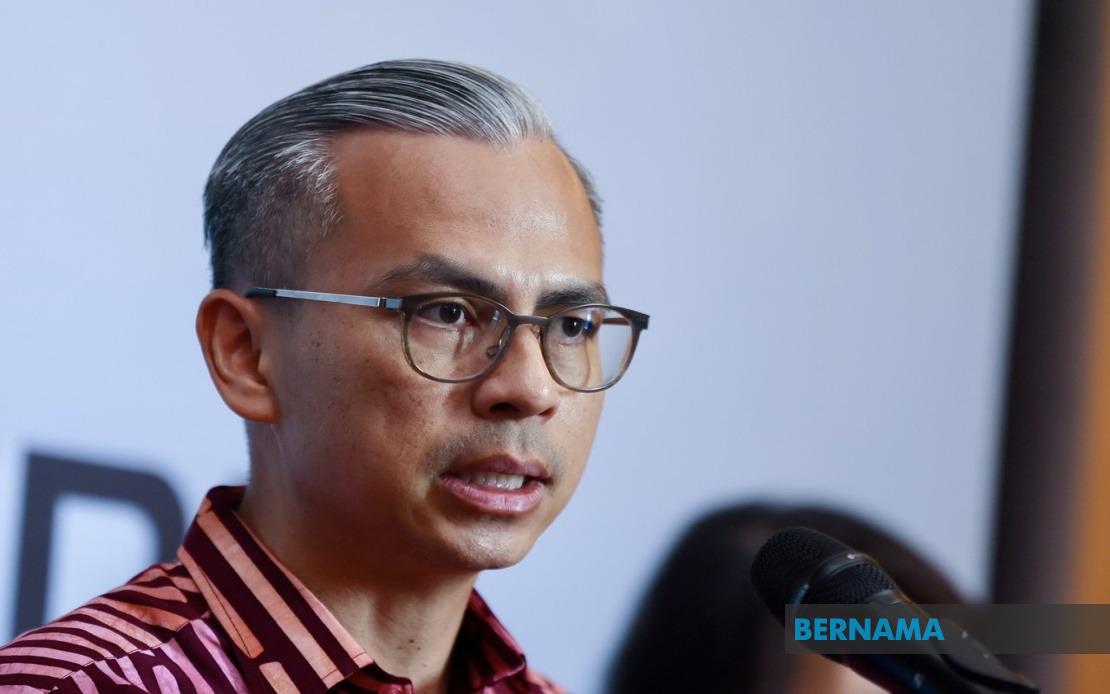
Bank customers continuing to face RM1 charges for withdrawing cash at interbank automated teller machines should immediately report the matter to Bank Negara Malaysia, Communications Minister Datuk Fahmi Fadzil has instructed, as the central bank stands ready to penalise any financial institution failing to honour the newly implemented fee waiver. The minister's directive came during the Communications Ministry's weekly press briefing in Kuala Lumpur on Wednesday, responding to reports that some customers had not yet experienced the expected elimination of charges despite the policy taking effect on July 1.
Fahmi clarified that the fee elimination applies exclusively to ATMs owned and managed directly by banks that participate in the nation's shared ATM network—a clarification deemed necessary after confusion emerged across social media platforms regarding which machines would be affected. The waiver now extends to approximately 16,000 bank-owned ATMs nationwide, representing roughly 84 per cent of the total bank ATM estate. This expansive coverage demonstrates a significant step toward reducing customer friction in the Malaysian banking system, addressing longstanding frustration over charges that had persisted despite multiple calls for reform from consumer advocacy groups and financial inclusion campaigners.
The remaining 16 per cent of cash dispensing machines operate under a distinctly different commercial framework. These are administered by private companies unaffiliated with banking institutions and operate pursuant to separate contractual arrangements outside the shared network structure. These private operators retain the authority to continue imposing the RM1 withdrawal charge, underscoring the distinction between bank-controlled infrastructure and third-party commercial ventures in Malaysia's ATM ecosystem. Understanding this distinction has become crucial for cost-conscious customers seeking to minimise transaction expenses.
To navigate this increasingly differentiated landscape, Fahmi advised customers to identify participating machines by examining the bank logos displayed prominently on the ATM units themselves rather than relying on location or assumptions. This practical guidance recognises that customers may struggle to distinguish between bank-owned and privately operated machines without clear visual cues. The minister's recommendation essentially places responsibility on users to exercise due diligence, though it also underscores the need for clearer signage across the banking sector to prevent continued confusion at point-of-use.
As part of the communications effort, the Association of Banks in Malaysia and the Malaysian Islamic Banking and Financial Institutions Association are preparing a joint statement to provide additional implementation specifics. Banking industry observers view this coordinated messaging as essential for ensuring consistent application of the waiver across Malaysia's diverse financial institutions, which range from conventional commercial banks to Islamic banking windows and fully-fledged Islamic banks. The timing of this industry clarification will be critical, as prolonged confusion could undermine public confidence in the policy's effectiveness and lead to further regulatory scrutiny.
Fahmi, speaking in his capacity as spokesman for the MADANI Government, framed the fee waiver as emblematic of the administration's broader commitment to improving financial accessibility for ordinary Malaysians. This positioning reflects how economic policies targeting consumer costs have become central to the government's narrative around inclusive growth and responsiveness to public grievances. The RM1 charge, though modest in isolation, had accumulated into a meaningful expense for frequent ATM users and those reliant on cash transactions—demographic segments that remain significant despite rising digital payment adoption.
In parallel remarks, Fahmi highlighted Malaysia's growing appeal as a destination for major international technology investment, specifically citing a global development centre being established by an international fintech company at the Tun Razak Exchange financial district. He argued that such commitments reflect strengthened foreign investor confidence in Malaysia's political stability and the economic framework implemented under the current administration. This assertion carries particular weight given ongoing regional competition from Singapore, Hong Kong, and emerging centres seeking to position themselves as Asia's leading fintech hubs.
Fahmi stressed that the fintech company's decision to locate its first such global centre in Malaysia—rather than elsewhere in Southeast Asia or the broader Asia-Pacific region—represented a validation of policy consistency and institutional predictability. In an era where technology companies rapidly shift investment allocations based on regulatory signals and political risk assessments, Fahmi's emphasis on stability and policy coherence reflects genuine concerns about Malaysia's competitive positioning. The MADANI Government has sought to distinguish itself through decisive economic management and targeted sectoral development initiatives.
The convergence of these two announcements—the ATM fee waiver and the fintech investment—illustrates the government's dual strategy of simultaneously addressing immediate consumer concerns whilst pursuing longer-term structural transformation toward higher-value economic activities. Digital financial services and Agentic AI capabilities represent growth frontiers that policymakers view as essential to Malaysia's economic evolution beyond traditional manufacturing and commodity exports. The fintech investment thus signals that international players view Malaysia as sufficiently advanced and stable to host sophisticated global operations.
For Malaysian consumers and businesses, these developments carry practical implications extending beyond the immediate ATM fee question. The fintech sector's expansion could eventually reshape how Malaysians conduct financial transactions, potentially accelerating the transition toward cashless payments and digital banking services. This technological shift intersects directly with the fee waiver policy—initiatives that might seem contradictory, as reducing ATM fees could theoretically slow digital adoption, yet both reflect government priorities around financial inclusion and competitive positioning within Southeast Asia's rapidly evolving financial services landscape. The challenge ahead lies in ensuring that policy implementation matches official rhetoric and that consumers actually experience the benefits promised.

