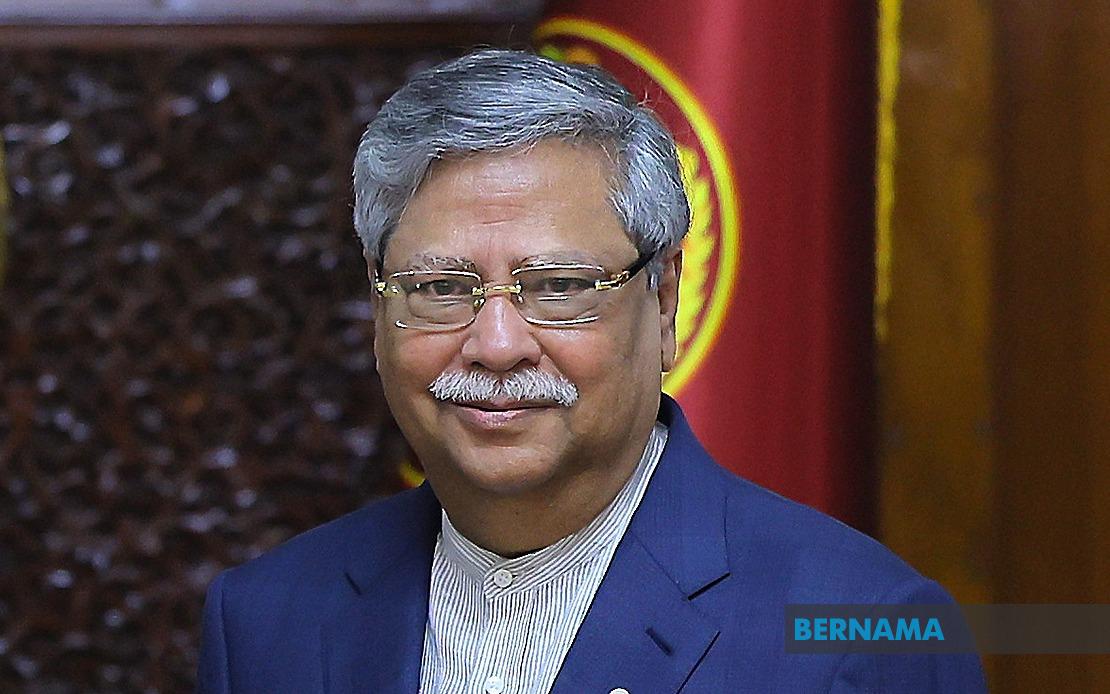
Bangladesh will conduct a presidential election when parliament holds its third session in September, according to Law Minister Md Asaduzzaman, marking a significant constitutional milestone for the South Asian nation amid ongoing political transitions. The timeline for the election is tightly constrained by constitutional requirements: President Mohammed Shahabuddin submitted his resignation to Speaker Hafiz Uddin Ahmad citing serious health concerns, triggering a mandatory 90-day window within which a successor must be elected. Parliamentary procedures dictate that the third session must convene no later than September 14, precisely two months after the second session concluded on July 15, providing elected lawmakers with a defined timeframe to fulfil this democratic obligation.
The constitutional framework governing Bangladesh's presidential succession reflects the nation's parliamentary system, wherein the head of state is elected directly by members of parliament rather than through popular vote. This mechanism concentrates electoral power among the 300-odd legislators who hold seats in the National Assembly, fundamentally distinguishing the process from presidential elections in neighbouring countries such as Indonesia or the Philippines, where voters directly choose their chief executive. Under this arrangement, parliamentary consensus and party discipline prove decisive in determining who assumes the presidency, making legislative strength and coalition mathematics central to understanding electoral outcomes.
Speaker Hafiz Uddin Ahmad has assumed the interim presidential functions in accordance with constitutional provisions governing vacancies in the office of president. Md Sarwar Alam, the presidential press secretary, confirmed that Shahabuddin's resignation letter was formally submitted to the Speaker, with the outgoing president citing serious health complications as the reason for his departure. This succession mechanism ensures governmental continuity during the interregnum period, preventing any institutional vacuum that might otherwise undermine executive authority or administrative functioning during the transition.
The political landscape surrounding the election virtually guarantees a particular outcome: Prime Minister Tarique Rahman's Bangladesh Nationalist Party commands a commanding parliamentary majority, positioning it to nominate and elect its preferred candidate with minimal resistance. In systems where a single party holds substantial legislative seats, the presidential election typically becomes a formality rather than a genuinely contested democratic exercise, as opposition parties lack the numerical strength to mount credible alternative candidacies. This structural reality reflects broader governance patterns in parliamentary democracies where executive appointments effectively flow from majority party preferences rather than emerging from vigorous multi-candidate contests.
For Malaysian observers and Southeast Asian analysts, Bangladesh's presidential succession illustrates critical differences in how neighbouring democracies operationalise their constitutional frameworks. Unlike Malaysia's constitutional monarchy, where the Yang di-Pertuan Agong represents the ceremonial head of state, Bangladesh's system vests presidential authority more actively in an elected official despite the prime minister holding executive power. This arrangement creates distinct accountability mechanisms and distributes constitutional roles differently across the region, demonstrating the diverse institutional approaches democracies adopt when balancing ceremonial and substantive authority.
The September timeline carries broader implications for Bangladesh's political stability and international standing. Timely presidential elections ensure unbroken constitutional governance and reinforce democratic legitimacy, particularly important for a nation navigating complex regional relationships and seeking to maintain investor confidence in institutional stability. The orderly transition underscores Bangladesh's capacity to execute constitutional procedures methodically, even amid health crises affecting senior officials—a reassuring signal for stakeholders concerned about governance continuity in South Asia's volatile political environment.
Parliamentary election procedures for the presidency reflect constitutional provisions specifying that legislators themselves constitute the electoral college for this office. This concentration of electoral power among elected representatives, rather than diffusing it across a broader citizenry, fundamentally shapes candidate selection processes and campaign dynamics. Political parties must secure internal consensus and manage parliamentary caucuses strategically, whereas popular campaigns carry less significance than legislative negotiations and behind-the-scenes consensus-building among party leadership.
The timing of Bangladesh's third parliamentary session within the constitutionally mandated two-month window demonstrates administrative efficiency in scheduling major legislative business. Parliament must balance routine governmental functions with extraordinary constitutional obligations, and the September convocation provides sufficient time for the BNP-led government to prepare its presidential nominee and manage any residual parliamentary procedures requiring attention. This orderly approach to democratic scheduling contrasts with occasional institutional irregularities witnessed elsewhere in the region, where constitutional deadlines sometimes prove contentious.
Beyond procedural technicalities, Shahabuddin's resignation highlights health-related vulnerabilities affecting senior government officials and the importance of succession planning in maintaining institutional effectiveness. Presidential office demands substantial physical and mental capacity, and Shahabuddin's acknowledgement of serious illness demonstrates responsible decision-making in recognising when health constraints prevent effective performance of constitutional duties. Such transparency, though sometimes politically complicated, ultimately serves institutional credibility by ensuring that office-holders can discharge their responsibilities fully.
The September election represents a pivotal moment for clarifying Bangladesh's political trajectory under the BNP-led government and Tarique Rahman's prime ministerial leadership. The presidency, while constitutionally subordinate to the prime minister's executive authority, carries symbolic weight and formal powers that influence governance dynamics. The choice of president signals the government's prioritisation of particular constituencies and institutional relationships, offering insights into broader strategic calculations shaping Bangladesh's domestic and foreign policy orientation moving forward.

