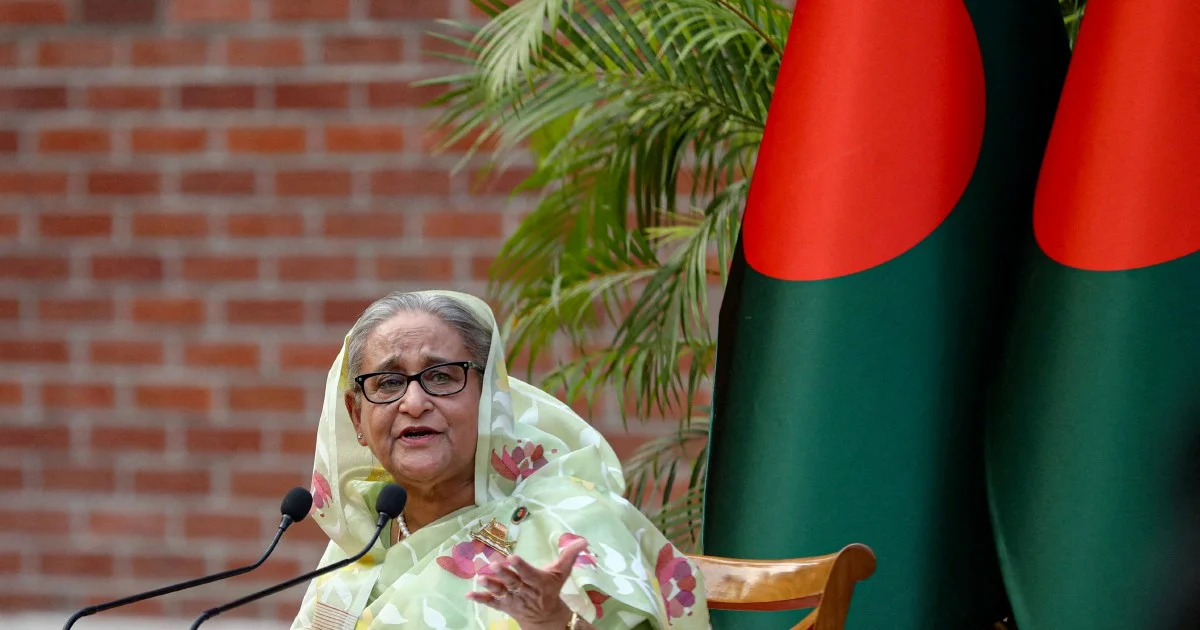
Sheikh Hasina, Bangladesh's ousted prime minister who fled to India following months of civil unrest, now faces the prospect of immediate imprisonment should she attempt to return to her home country. A senior minister in Dhaka issued this stark warning on Monday, signalling the government's uncompromising stance toward the former leader whose departure marked a dramatic turning point in the nation's recent political history.
The statement carries particular weight given Hasina's own public statements made just days earlier, where she disclosed plans to return in December and voluntarily appear before a court. This apparent disconnect between the government's hardline position and Hasina's expressed intentions underscores the treacherous political landscape she now navigates from across the border. The divergence suggests either a deliberate attempt by Hasina to position herself as cooperative with the justice system, or a fundamental disagreement about what her homecoming would entail in practical terms.
Hashina's exile in India represents the culmination of months of escalating instability that gripped Bangladesh during her tenure. Mass demonstrations and civil disorder had made her position increasingly untenable, forcing her to make the difficult choice to leave her country rather than face the mounting pressure from the streets. India, with its historical ties to Bangladeshi leadership and established protocols for welcoming political exiles, became her refuge during this turbulent period.
The charges and investigations against Hasina reportedly centre on serious allegations stemming from events during her administration, though the precise legal framework and specific accusations remain subjects of ongoing scrutiny. Bangladesh's interim government and judicial authorities have been methodical in building cases, suggesting that any return by Hasina would immediately trigger legal proceedings that could prove extraordinarily consequential for her personal freedom and future prospects.
For Malaysian observers, Hasina's predicament offers instructive parallels to Southeast Asia's own complex relationship with political accountability and exile. Like other regional figures who have faced similar circumstances, Hasina's case highlights the challenges inherent when political transitions occur amid civil unrest rather than through institutional mechanisms. The tension between justice and reconciliation, between punishment and pragmatism, resonates across the region where several nations have grappled with similar transitions.
The warning issued by Bangladesh's government carries implicit messaging as well. By publicly declaring that Hasina would face jail upon return, officials are simultaneously discouraging her from coming back and managing expectations among the public and international community about how they intend to handle her case. This preemptive communication strategy reduces any possibility of surprise or perceived leniency, establishing clear boundaries around her legal jeopardy.
Hashina's contemplated return in December, if it were to materialise, would represent an extraordinarily high-stakes gamble. Walking across the border would likely mean immediate apprehension, with little opportunity to negotiate terms or conditions. Her statement about voluntarily surrendering might represent an attempt to frame her return as cooperative and legally defensible, potentially influencing how courts and the public perceive her actions. However, the government's unambiguous warning suggests such framing exercises may prove futile.
The broader implications for Bangladesh's political stability merit consideration as well. Hasina's prolonged exile creates something of a political vacuum, with her Bangladesh Awami League party now operating without its most prominent figure. Whether she remains in India indefinitely, pursues legal strategies from abroad, or actually risks returning will significantly influence Bangladesh's political trajectory in coming months and years. Each scenario carries different consequences for national reconciliation and democratic development.
From a regional perspective, India's hospitality toward Hasina assumes greater significance as well. New Delhi has traditionally maintained pragmatic relationships with Bangladeshi leadership across the political spectrum, and Hasina's presence on Indian soil touches on diplomatic considerations that extend beyond bilateral relations. The situation illustrates how internal political crises in one South Asian nation can acquire regional dimensions that require careful handling by neighbouring countries.
International observers, including human rights organisations and diplomatic missions in Dhaka, are likely monitoring developments closely. Questions about fair trials, due process, and the rule of law become inevitable whenever a major political figure faces potential imprisonment, regardless of the underlying charges. How Bangladesh manages Hasina's case will send messages about the nation's commitment to justice systems that function independently of political considerations.
The financial dimensions merit attention too. Investigations into alleged wrongdoing during her administration apparently encompass economic matters, adding complexity to the legal terrain she would navigate upon return. Such cases often involve extensive evidentiary requirements and protracted court proceedings, meaning Hasina's legal exposure extends well beyond simple political persecution into technical and forensic questions.
Looking forward, the question of whether Hasina actually returns in December remains genuinely uncertain. Her public statements about voluntary surrender might represent genuine intention, tactical positioning, or both simultaneously. What seems clear is that Bangladesh's government has drawn a definitive line, making her return a perilous proposition that would immediately activate the full force of the legal system rather than permit any grace period for negotiation or settlement.

