%22%2F%3E%3C%2Fpattern%3E%3C%2Fdefs%3E%3Crect%20width%3D%22100%25%22%20height%3D%22100%25%22%20fill%3D%22url(%23ph1v8swg)%22%2F%3E%3Crect%20width%3D%22100%25%22%20height%3D%22100%25%22%20fill%3D%22url(%23ph1v8swp)%22%2F%3E%3Ctext%20x%3D%2250%25%22%20y%3D%2250%25%22%20text-anchor%3D%22middle%22%20dominant-baseline%3D%22central%22%20fill%3D%22rgba(255%2C255%2C255%2C0.95)%22%20font-family%3D%22Georgia%2C%20'Times%20New%20Roman'%2C%20serif%22%20font-weight%3D%22700%22%20font-size%3D%22136%22%20letter-spacing%3D%22-0.02em%22%3EBangladesh%3C%2Ftext%3E%3C%2Fsvg%3E)
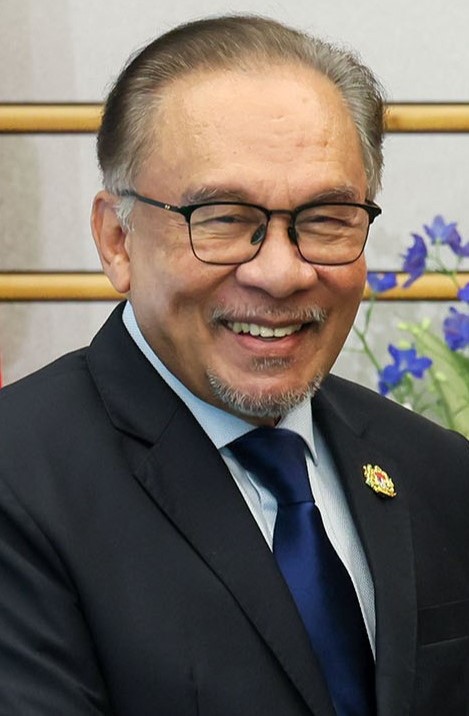
Bangladesh is taking a strategic step toward deeper regional integration by pursuing closer ties with ASEAN and eyeing membership in the Regional Comprehensive Economic Partnership. Prime Minister Tarique Rahman articulated these intentions during a bilateral visit to Malaysia, where he met with Prime Minister Datuk Seri Anwar Ibrahim in Putrajaya on June 22. The moves represent Bangladesh's recognition of Southeast Asia's economic dynamism and its desire to position itself as a key player in the region's expanding trade architecture.
Rahman's aspiration for ASEAN Sectoral Dialogue Partner status reflects a measured but deliberate approach to regional engagement. Currently, Bangladesh holds no formal institutional relationship with the 10-member bloc, despite its geographic proximity and significant cultural and economic links with several member states. The sectoral dialogue partner designation would give Dhaka a structured platform to collaborate with ASEAN on specific policy areas, potentially paving the way for deeper involvement in the group's decision-making processes. This intermediate status serves as a common entry point for countries seeking to strengthen relationships before advancing toward observer or full membership tracks.
The RCEP interest carries particularly weighty implications for Bangladesh's economic future. The 15-member trade pact, which already encompasses all 10 ASEAN states plus China, Japan, South Korea, Australia, and New Zealand, represents the world's largest trade bloc by GDP. Bangladesh's inclusion would provide unprecedented market access to over two billion consumers and strengthen its position within Asian supply chains. For a nation heavily dependent on garment and textile exports, participation in RCEP could facilitate smoother trade flows and attract investment from multinational firms seeking diversified manufacturing hubs across the region.
Malaysia has emerged as a critical ally in Bangladesh's regional integration strategy. Rahman specifically acknowledged Malaysia's backing, recognizing Kuala Lumpur's influence within ASEAN corridors. As the current or recent ASEAN chair and a major economic power within the bloc, Malaysia can facilitate Bangladesh's pathway toward institutional recognition. The bilateral relationship itself provides a testing ground for the kind of cooperation that could eventually characterize Bangladesh's engagement with the broader ASEAN framework.
The two nations reinforced their partnership through multiple instruments inked during the visit. An MoU on Cultural Cooperation underscores shared heritage and people-to-people connections, while separate Exchanges of Notes in Counter-Terrorism Research and Investment Promotion address contemporary security and economic concerns. These agreements, though typically modest in scope, signal mutual commitment to expanding collaboration across multiple sectors. The counter-terrorism focus reflects regional anxieties about transnational security threats, while the investment facilitation accord addresses the practical barriers that discourage capital flows between the two countries.
Bilateral trade data reveals a relationship with significant asymmetry but substantial volume. In 2025, two-way commerce reached RM12.18 billion, making Bangladesh Malaysia's 28th largest trading partner globally and second-largest in South Asia after India. However, the composition tells a revealing story: Malaysian exports to Bangladesh totalled RM10.08 billion, predominantly petroleum products, while imports from Bangladesh amounted to RM2.10 billion, concentrated in textiles, apparel, and footwear. This imbalance reflects Bangladesh's comparative advantage in labour-intensive manufacturing and Malaysia's role as a supplier of energy and higher-value goods. For Bangladesh, deepening regional ties could help rebalance this relationship by opening Malaysian markets to more diversified Bangladeshi products and enabling access to Malaysian capital and technology.
Bangladesh's demographic weight and manufacturing capacity position it as a strategically valuable partner for ASEAN. With a population exceeding 170 million, it represents an enormous consumer market. Its textile and garment sector, the world's second-largest after China, makes it an indispensable node in regional supply chains. Rising labour costs in advanced Southeast Asian economies have made Bangladesh an increasingly attractive location for manufacturers seeking cost-competitive alternatives. ASEAN membership or dialogue partner status could help Bangladesh leverage these assets while contributing meaningfully to the bloc's economic resilience and diversification.
The personal invitation extended by Rahman to Prime Minister Anwar to visit Bangladesh carries diplomatic significance beyond courtesy. High-level reciprocal visits consolidate relationships and provide opportunities for expanded discussions on bilateral and regional matters. For Bangladesh, hosting Malaysia's premier would signal its readiness to engage at the highest levels and demonstrate its institutional capacity to engage with major regional players. Such exchanges often result in expanded cooperation agreements and stronger personal relationships among top decision-makers, factors that smooth negotiations on contentious issues.
Bangladesh's strategic pivot reflects broader trends in South Asian geopolitics. Traditional South Asian frameworks like SAARC have stagnated due to India-Pakistan tensions, leaving countries like Bangladesh seeking alternative regional architectures. ASEAN offers a functional, consensus-based model that accommodates diverse member interests while maintaining institutional stability. For Bangladesh, integration into Southeast Asian structures could reduce its vulnerability to regional instability emanating from South Asia while enhancing its economic prospects through access to faster-growing markets.
The timing of Bangladesh's push for ASEAN engagement coincides with evolving geopolitical realignments in Asia. As major powers compete for influence and as countries reassess their regional positioning, Bangladesh's diversification of partnerships makes strategic sense. Closer ASEAN engagement complements rather than replaces relationships with China, India, and other powers, reflecting a pragmatic balancing approach.
For Malaysia and other ASEAN members, Bangladesh's interest presents opportunities and considerations. An expanded ASEAN with Bangladesh could enhance the bloc's demographic and manufacturing capabilities while adding weight to regional discussions on economic and security matters. Conversely, expansion requires consensus and careful institutional planning to ensure the bloc's effectiveness remains intact. Malaysia's advocacy for Bangladesh's integration will be crucial in facilitating discussions among ASEAN's decision-making bodies.