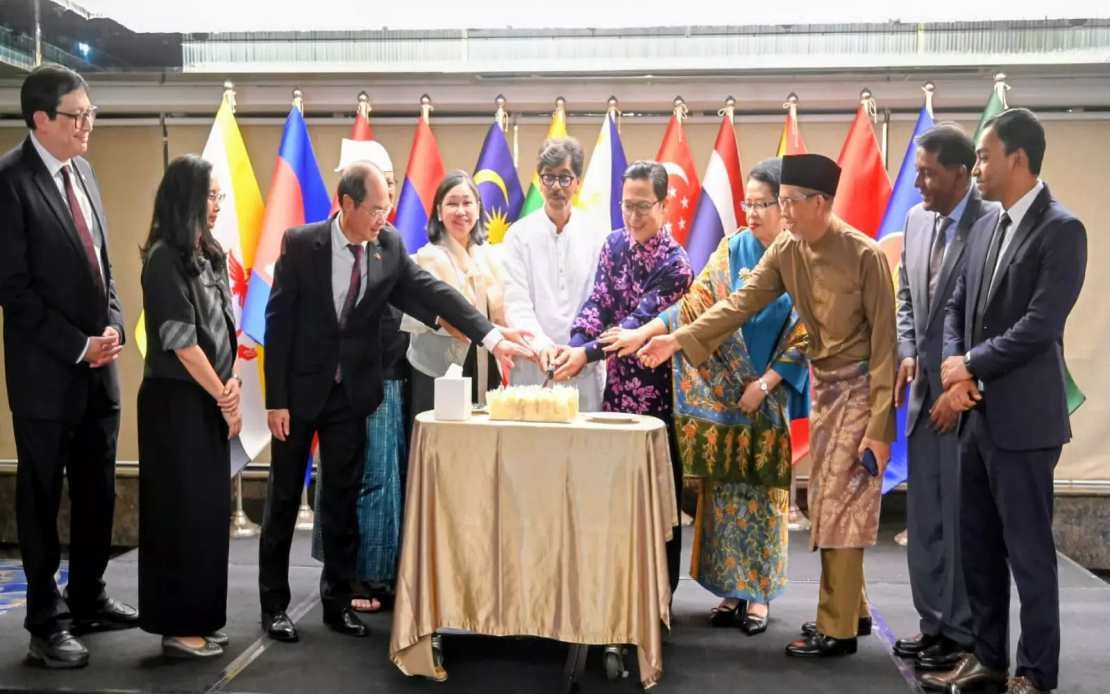
Bangladesh is pursuing a more structured relationship with ASEAN, having formally submitted an application for Sectoral Dialogue Partner status as part of a broader strategy to strengthen ties across the region. The announcement came during a reception marking ASEAN's 59th founding anniversary in Dhaka, where Fisheries, Livestock and Agriculture Minister Mohammed Aminur Rashid emphasised the government's determination to elevate partnerships with all member states to unprecedented levels of cooperation.
The move signals a significant shift in Bangladesh's regional diplomacy under Prime Minister Tarique Rahman's administration, which has made ASEAN engagement a cornerstone of its foreign policy framework. Aminur underscored that the Prime Minister's selection of Malaysia for his first official overseas visit reflects this commitment, with officials expressing confidence that the bilateral visit will yield tangible benefits for both nations and the broader Southeast Asian region. This prioritisation of Malaysia as a first destination carries symbolic weight in regional politics, suggesting Bangladesh views its relationship with the ASEAN chair and its largest economy as foundational to broader integration efforts.
The application for SDP status represents a calculated bid to formalise Bangladesh's participation in ASEAN mechanisms beyond its current observer capacity. Such designation would enable Bangladesh to participate in sectoral dialogue meetings and coordinate on specific policy areas rather than remaining on the periphery of regional decision-making. For a nation of over 170 million people sharing maritime boundaries with multiple Southeast Asian states and serving as a crucial transit corridor for regional trade, the upgrade in status would address long-standing asymmetries in how Bangladesh engages with ASEAN institutions.
Several concrete initiatives underway demonstrate Bangladesh's practical commitment to sectoral engagement. The US$1 million Bangladesh-ASEAN Cooperation Project on Fisheries and Aquaculture, managed through Aminur's ministry, addresses shared challenges in managing marine resources and promoting sustainable aquaculture across the region. Additional bilateral and multilateral projects spanning tourism promotion, information and communications technology development, and cultural exchange are currently in advanced planning stages, suggesting that Bangladesh envisions cooperation extending far beyond trade statistics into people-to-people connections and knowledge sharing.
The emphasis on cultural and agricultural heritage at the reception itself carried diplomatic messaging. Traditional Bangladeshi dishes featuring Black Bengal Goat, a globally recognised Geographical Indication product, and biryani prepared with indigenous Kalijira rice were deliberately showcased to ASEAN representatives. This culinary diplomacy highlighted Bangladesh's agricultural distinctiveness and cultural identity within the regional family, subtly reinforcing the country's potential contributions to ASEAN's cultural and economic diversity.
For Malaysian readers particularly, Bangladesh's enhanced engagement matters considerably given Malaysia's leadership role within ASEAN and its substantial economic presence in Bangladesh. Malaysian companies operate across energy, manufacturing, and services sectors in Bangladesh, while bilateral trade relationships continue to expand. A more institutionalised Bangladesh-ASEAN relationship could create additional opportunities for Malaysian businesses seeking to leverage Bangladesh's position as a gateway to South Asia, particularly given Dhaka's own connectivity initiatives linking South and Southeast Asia.
The application process carries geopolitical dimensions beyond bureaucratic formality. Bangladesh's pursuit of closer ASEAN alignment reflects growing regional competition for influence and its desire to maintain balanced relationships across South and Southeast Asia. By securing SDP status, Bangladesh would join a selective group of dialogue partners, positioning itself as a bridge between ASEAN and the broader Indian Ocean region while avoiding exclusive alignment with any single power.
AMEAN's track record as one of the world's most successful regional organisations, built on consensus-based decision-making and non-interference in internal affairs, appeals strongly to Bangladesh's regional strategy. The bloc's expansion of dialogue partnerships and sectoral cooperation mechanisms over recent decades has created pathways for deepened engagement precisely suited to Bangladesh's capabilities and interests. Officials recognised that formalising association through institutional channels would transform bilateral relationships from ad hoc cooperation into sustained, structured engagement with measurable outcomes.
The high-level representation at the reception, including the Malaysian High Commissioner Mohammad Shuhada Othman chairing the ASEAN Dhaka Committee, Philippine Ambassador Neena Padilla Cinglet, and other ASEAN heads of mission, indicated receptivity to Bangladesh's initiatives. The gathering of business leaders and civil society representatives alongside diplomatic officials suggested that Bangladesh intends to mobilise multiple stakeholder groups behind its regional integration agenda, recognising that successful ASEAN engagement requires support extending beyond government ministries.
Bangladesh's application arrives at a moment when ASEAN itself is reassessing its engagement protocols and exploring enhanced partnerships with regional actors. The bloc faces mounting pressure to deepen integration while managing great power competition and internal diversity. Bangladesh's entry as a formal SDP could strengthen ASEAN's institutional architecture by adding a significant South Asian voice to regional deliberations on maritime security, climate adaptation, trade facilitation, and disaster management—issues where Bangladesh possesses both expertise and acute vulnerability.
Looking forward, Bangladesh's SDP application represents just the opening gambit in a longer-term engagement strategy. Officials hinted at potential expansion into additional sectoral frameworks and deepened participation in ASEAN-led mechanisms addressing regional challenges. The emphasis on mutual benefit and institutional sustainability suggests Bangladesh approaches these partnerships pragmatically, seeking genuine economic and social returns rather than symbolic recognition alone. Successfully transitioning from application to approved SDP status would mark a watershed in Bangladesh's regional positioning, establishing it as an indispensable participant in Southeast Asian affairs.

