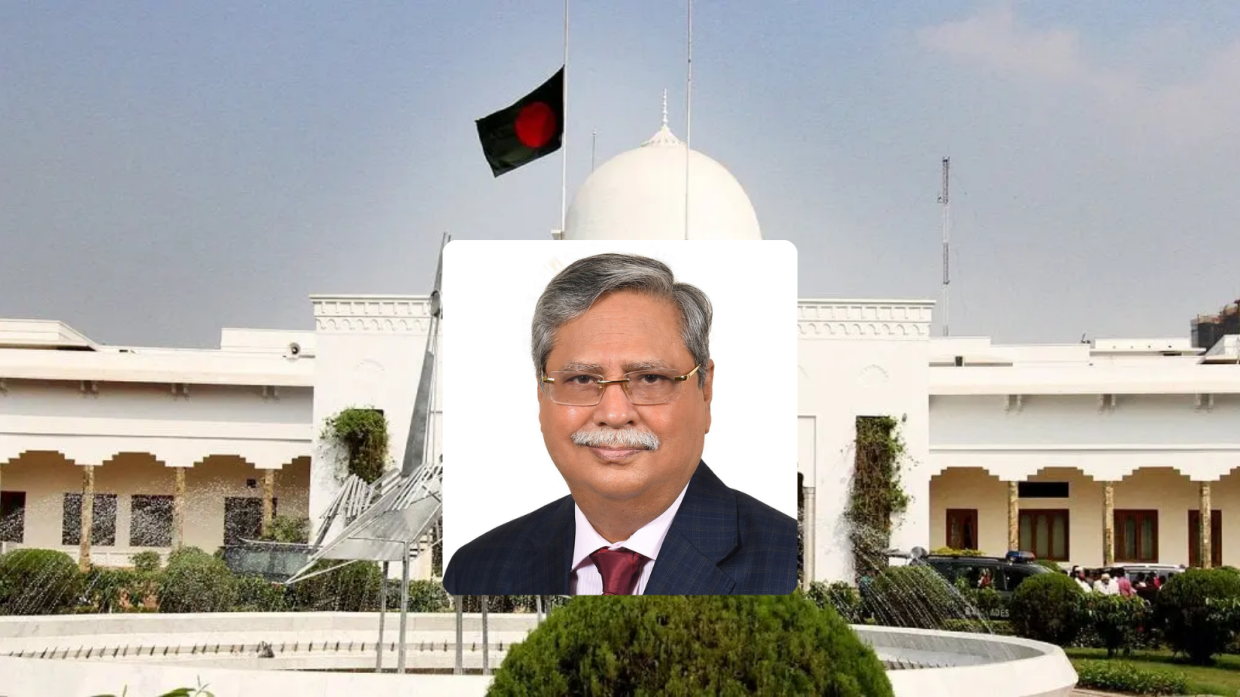
President Mohammed Shahabuddin appears poised to step down from his position, according to multiple sources within Bangladesh's political establishment, in what would represent a pivotal moment in the ongoing reshaping of the nation's governance structure following the transformative events of mid-2024. The president's departure would symbolize the final removal of a significant institutional holdover from the pre-uprising period, effectively completing a cycle of leadership change initiated by the popular mobilization that swept through the country in July 2024.
Shahabuddin's tenure, which began in April 2023, has become increasingly untenable as new political alignments have consolidated control in the hands of a rejuvenated Bangladesh Nationalist Party-led administration. The president now stands as the sole remaining high-ranking constitutional figure who occupied his position before the summer's dramatic upheaval, a distinction that has apparently become problematic for those now wielding executive authority. Government sources describe his continued presence as an anachronistic arrangement unsuitable for the present political configuration.
The catalyst for accelerated pressure on Shahabuddin appears to have emerged from his May conversation with former Prime Minister Sheikh Hasina, who has been residing in exile in India since fleeing during the July 2024 uprising. Intelligence agencies reportedly became aware of the telephone exchange during Hasina's medical visit to London, which triggered internal communications urging the president toward resignation. However, senior Bangladesh Nationalist Party figures characterize the situation as significantly more intricate than a single controversial phone call, pointing instead to deeper concerns about political stability and control.
Hasina's recent declaration that she intends to return to Bangladesh in December, along with senior Awami League members, has injected fresh urgency into discussions about institutional alignment. The former prime minister, who faces capital charges within Bangladesh and whose party has been proscribed, announced plans to surrender upon her return, yet her continued international prominence clearly unsettles the incumbent government. This looming development has apparently concentrated minds within the administration about ensuring that all constitutional positions are held by figures aligned with, or at minimum not perceived as sympathetic to, the ousted political faction.
Government authorities have simultaneously intensified monitoring of attempts by Awami League operatives inside Bangladesh to reorganize their banned party structure. Prime Minister Tarique Rahman directed all relevant agencies during a July Cabinet meeting to strengthen enforcement actions against the Awami League and its affiliated organizations, including the Bangladesh Chhatra League student wing and the Jubo League youth organization. This comprehensive drive against opposition infrastructure operates in tandem with the expected presidential transition, suggesting a coordinated approach to consolidating institutional control.
Official commentary on the anticipated resignation frames it as a natural and inevitable development rather than a forced removal. A senior government source characterized Shahabuddin's departure as historically predetermined, noting that retention of a pre-uprising figure in the nation's highest ceremonial post has become strategically inadvisable. The source specifically cited government displeasure over reports that the president had been attempting to reestablish dormant political networks, suggesting that active political engagement beyond strictly constitutional boundaries contributed to the pressure for his exit.
The mechanics of succession remain undetermined, with no formal announcement yet regarding the timing of resignation or identification of a successor. The Bangladesh Constitution provides that the Speaker of Parliament would assume the role of acting president pending election of a new occupant, ensuring continuity in ceremonial functions during any transition period. This procedural framework allows for an orderly handover without constitutional disruption, though the ultimate selection of a replacement president remains subject to broader political calculations.
Shahabuddin himself has demonstrated awareness of his precarious position, having previously indicated flexibility regarding his tenure. During December 2025, while serving under the interim government that preceded the current administration, he stated his intention to depart mid-term following the February parliamentary election, claiming to have experienced humiliation from the interim leadership. After the Bangladesh Nationalist Party government assumed power following those elections, Shahabuddin adopted a more diplomatic stance, declaring in a February newspaper interview his willingness to either remain or resign depending upon the government's preference.
This studied ambiguity has apparently exhausted its utility as political dynamics have evolved. The government's evident desire for his removal has shifted from implicit to explicit, with one source close to the Bangabhaban presidential residence suggesting that formal notification could arrive within days. A scheduled meeting between the president and non-resident ambassadors from four countries on July 29 may serve as either a final official engagement or simply routine diplomatic activity, depending on the timing of any announcement.
For Malaysia and the broader Southeast Asian region, Bangladesh's continued institutional instability carries implications for regional stability and bilateral relations. The persistent tensions surrounding power consolidation raise questions about the durability of the current political arrangement and the government's capacity to address fundamental governance challenges. Malaysia, as a fellow Muslim-majority democracy with its own experiences of political transition, has maintained relatively steady bilateral relations with Bangladesh, though the prolonged period of constitutional uncertainty since July 2024 has created an unpredictable environment for high-level engagement. The removal of Shahabuddin would mark another step in the post-uprising reorganization, yet observers remain uncertain whether institutional reshuffling will address underlying political fractures or merely entrench new power configurations.

