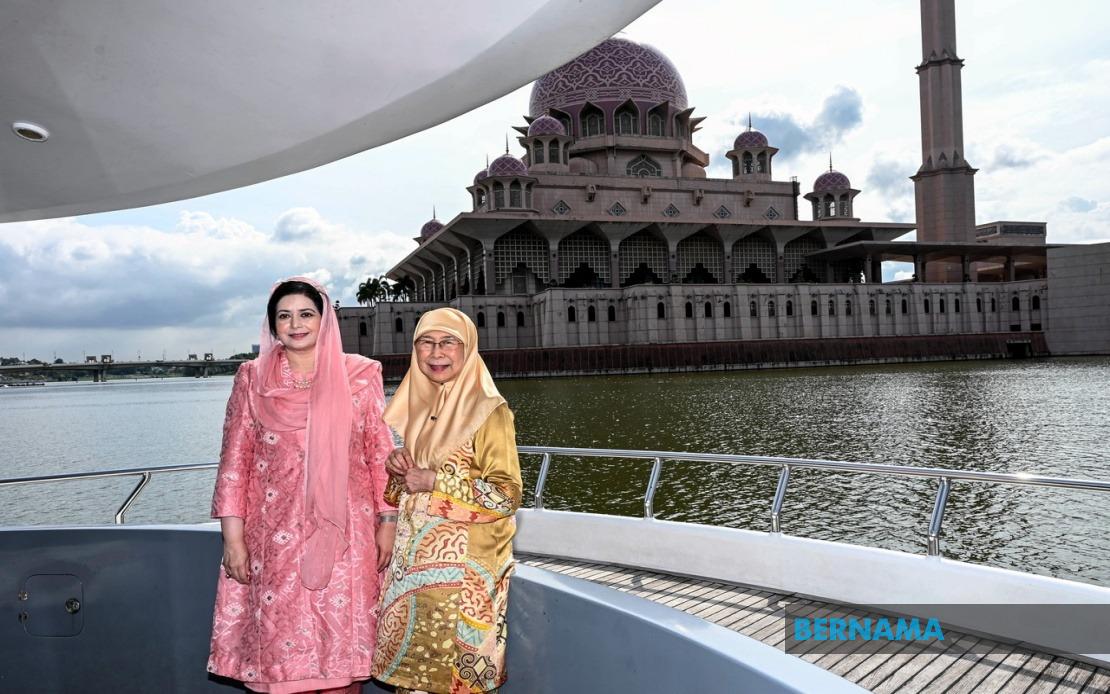
Dr Zubaida Rahman, spouse of Bangladesh Prime Minister Tarique Rahman, spent her Sunday morning traversing Putrajaya Lake aboard a scenic cruise, absorbing panoramic vistas of the administrative capital's most recognisable architectural landmarks and urban design features. The outing began at 9.30 am at the Putrajaya waterfront, where she was greeted by Dr Wan Azizah Wan Ismail, wife of Malaysian Prime Minister Datuk Seri Anwar Ibrahim, alongside Hannah Yeoh, who serves as Minister in the Prime Minister's Department overseeing the Federal Territories portfolio.
The leisurely boat journey provided an intimate setting for cross-cultural exchange, with Dr Zubaida engaging in animated conversation with her Malaysian counterparts for approximately one hour whilst absorbing Putrajaya's distinctive skyline. The lake cruise has become a customary component of the Malaysian diplomatic playbook, offering visiting dignitaries a relaxed yet formal introduction to the carefully planned urban landscape that symbolises the nation's contemporary governance and development vision.
The Bangladeshi delegation's presence in Malaysia represents a milestone in regional diplomacy. Prime Minister Tarique Rahman and Dr Zubaida touched down on Malaysian soil on Sunday evening, embarking on a two-day state visit strategically designed to reinforce the longstanding partnership between Dhaka and Kuala Lumpur whilst establishing fresh frameworks for collaboration across sectors of mutual benefit. This marks Tarique's inaugural official bilateral trip since assuming his position in February 2026, underscoring Malaysia's importance within his administration's early diplomatic priorities and regional engagement strategy.
The bilateral relationship carries substantial economic weight within Southeast Asia's broader architecture. Bangladesh currently ranks as Malaysia's 28th-largest trading counterpart on the global stage, with bilateral commerce reaching RM12.18 billion in total volume. More significantly, within the South Asian context, Bangladesh occupies second position in Malaysia's trading hierarchy, trailing only India in terms of commercial exchange and investment flows. This economic interdependence extends beyond goods and services, encompassing labour mobility, technology transfer, and financial cooperation mechanisms that sustain both economies.
Anwar's invitation to Tarique reflects a deliberate diplomatic positioning as Malaysia seeks to deepen engagement with the Indian subcontinent's emerging powers. Bangladesh, with its 170 million population and geographic position astride critical South Asian trade routes, represents both a significant market and an important political actor in regional multilateral forums. The timing of Tarique's visit signals Malaysia's interest in strengthening ASEAN-South Asia relations at a moment when geopolitical alignments across the Indo-Pacific are experiencing considerable flux.
The visit encompasses substantive discussions beyond ceremonial engagements, with both governments expected to explore avenues for expanding cooperation in manufacturing, renewable energy, digital infrastructure, and skilled labour exchange programmes. Malaysian companies operating in Bangladesh span textiles, petrochemicals, and financial services, whilst Bangladeshi investments in Malaysia cluster around real estate and commercial ventures, particularly within urban development corridors.
From a Malaysian perspective, the visit underscores Anwar's administration's commitment to diversifying international partnerships and reducing dependence on traditional engagement patterns. Bangladesh's growing stature as an emerging economy with expanding technological capabilities and a young, educated workforce makes it an attractive partner for Malaysian enterprises seeking regional expansion opportunities and supply chain diversification beyond China and Vietnam.
The lake cruise experience itself carries symbolic significance. Putrajaya, conceived as a showpiece of Malaysian planning and development expertise, stands as a testament to the nation's capacity for transformative infrastructure projects. By extending this experience to the Bangladeshi delegation, Malaysia implicitly communicates its development trajectory and invites Bangladesh to consider Malaysia as a model and collaborative partner in pursuing similar urban modernisation initiatives.
For Bangladesh, this visit represents an opportunity to strengthen ties with a nation that has successfully navigated middle-income status and maintained democratic institutions, challenges that Bangladesh itself confronts. Malaysia's experience in balancing rapid urbanisation with environmental sustainability whilst managing diverse ethnic and religious populations offers relevant lessons for Bangladeshi policymakers grappling with similar development pressures.
The diplomatic calendar significance of this visit deserves attention. In an era marked by strategic competition and regional realignment, bilateral engagements between non-aligned nations carry renewed importance. Malaysia and Bangladesh, both members of the Organisation of Islamic Cooperation and ASEAN-adjacent nations, share perspectives on issues ranging from Myanmar's political crisis to maritime security concerns in the Bay of Bengal and beyond.
Looking forward, observers will monitor the substantive outcomes from Tarique's state visit, particularly regarding trade facilitation agreements, educational exchange programmes, and potential cooperation within ASEAN frameworks where Bangladesh holds observer status. The informal interactions during the Putrajaya lake cruise, far from being mere ceremonial pleasantries, often catalyse the interpersonal connections that undergird formal diplomatic negotiations.